
You’ve got a degree, some strong academic knowledge, and a clear idea of the job you want. Yet the job adverts keep asking for things...
You might be reading this while comparing job ads, wondering whether bookkeeping could give you something steadier, more practical, and easier to build than a vague office role. That’s a sensible instinct. Bookkeeping suits people who like order, clear rules, and work that businesses need.
A free bookkeeping course is often the best first step. It lets you test the work before you spend money. You can learn the basic language of finance, see whether you enjoy working with figures, and build enough confidence to decide what comes next.
The key is knowing what a free course can do, and what it can’t. Some free options are excellent as a taster. Few are enough on their own if your goal is a real UK bookkeeping job, especially if employers want software skills, recognised training, and help with the job search. If you also want to move later into bookkeeping & VAT, advanced payroll, accounts assistant work, final accounts, business analysis, or data analysis, that first step matters even more.
Why a Bookkeeping Career is a Smart Move in the UK Today
A lot of learners come to bookkeeping after feeling stuck. They want a role with structure. They want skills they can prove. They want work that makes sense on Monday morning, not just something that sounded good in a course advert.
Bookkeeping fits that need well. Every business has to record money coming in and going out. Someone has to keep those records tidy, accurate, and ready for reporting. That matters whether the business is a small local shop, a contractor, a charity, or a larger company with a finance team.
Why employers keep needing these skills
The job market has shifted because businesses now have stronger digital reporting duties. In the UK, demand for bookkeeping skills rose after Making Tax Digital rules changed how VAT-registered businesses report to HMRC. The Association of Accounting Technicians says demand for trained bookkeepers increased by 25% between 2019 and 2023 according to OpenLearn’s bookkeeping course page.
That matters because it ties bookkeeping to a real business need, not a passing trend. Employers aren’t hiring bookkeepers as a luxury. They need people who can keep records straight and support compliance.
Practical rule: If a career is tied to everyday business operations and regulation, it tends to be more resilient than roles built on fashion or hype.
Who bookkeeping suits
You don’t need to be a maths genius. Most beginners get put off by that myth. Good bookkeeping is usually more about care, consistency, and logic than advanced maths.
It often suits people who like:
- Clear processes that can be learned and repeated
- Checking details and spotting mistakes
- Working with systems such as spreadsheets and accounting software
- Helping businesses stay organised and compliant
It also opens doors beyond the first role. A junior bookkeeping path can lead into accounts assistant work, payroll support, VAT processing, and later into broader finance and reporting work.
Why free learning makes sense at the start
If you’re unsure whether this path fits you, free study is a smart way to begin. You can explore the core ideas without pressure. You can learn the language used in interviews and job descriptions. You can also start building confidence before moving to more structured training.
That first taste is valuable. It helps you decide whether you enjoy the day-to-day thinking style of the work, which is often the biggest question for career changers and new graduates alike.
What to Expect from a Typical Free Bookkeeping Course
Before signing up, many want to know one thing. What will I learn?
A typical free bookkeeping course gives you the foundation, not the finished job-ready package. Think of it as learning the grammar of business finance. Before you write confidently, you need to understand the rules. Bookkeeping works in much the same way.
The core topics you’ll usually see
Most beginner courses start with the ideas below:
Double-entry bookkeeping
This is the basic rule that every transaction affects at least two accounts. If money goes out of the bank to pay rent, one part of the record shows the bank reducing and another shows rent expense being recorded.Debits and credits
These terms confuse many beginners because they don’t equate to “good” or “bad” or “money in” and “money out”. A free course should help you see them as recording directions within the accounting system.The accounting equation
This is the logic underneath the records. It helps explain why the books must stay balanced.Ledgers and journals
You’ll learn where transactions are first noted and where they are grouped.Trial balance
This is one of the early checkpoints. It helps confirm that the books are mathematically balanced before moving to reports.
The reports beginners learn to read
A good free bookkeeping course will also introduce the reports employers mention all the time.
Profit and loss account
This shows whether a business made a profit or a loss over a period. It records income and expenses. If a business sells services, pays wages, buys supplies, and covers rent, those movements end up shaping the final result.
Balance sheet
This gives a snapshot of what the business owns, owes, and has built up. New learners often find this more abstract than profit and loss, but it becomes clearer once you’ve practised a few examples.
Bookkeeping starts to make sense when you stop seeing transactions as isolated numbers and start seeing them as connected records.
Why these courses are popular
Free online courses clearly meet a need. The AAT reports that they’ve helped drive a 40% rise in Level 2 bookkeeping certifications among UK adults since 2020, with 52,000 new certificates issued in 2023 alone, as noted in this roundup of free online bookkeeping courses.
That doesn’t mean every free course is equal. It means many learners are using them as a starting point.
Where beginners usually get confused
Three areas trip people up early:
Debits and credits
Learners often try to memorise them without understanding the account type involved.The difference between bookkeeping and accounting
Bookkeeping focuses on recording and organising financial transactions. Accounting uses that information for reporting, interpretation, and decision-making.Theory versus workflow
Knowing what a trial balance is isn’t the same as entering transactions correctly in software.
That last point matters most for employability. Free learning is useful, but it usually teaches the language before the workplace.
Separating Quality Courses from Simple Content
Not every free bookkeeping course deserves your time. Some are thoughtful introductions. Others are little more than surface-level content with a certificate attached.
A course can look polished and still leave you with shaky understanding. That’s why it helps to judge the learning experience, not just the word “free”.
What quality looks like in practice
A stronger course usually gives you more than definitions. It helps you practise the logic behind the entries. It also stays close to UK bookkeeping conventions, especially if you want work in bookkeeping & VAT or accounts support.
Free bookkeeping courses from providers such as Oxford Home Study Centre include double-entry bookkeeping aligned with UK GAAP, and internal learner assessments reported that learners could prepare trial balances with 95% accuracy, according to Beginner Bookkeeping’s course overview. That’s a useful reminder that structured practice matters.
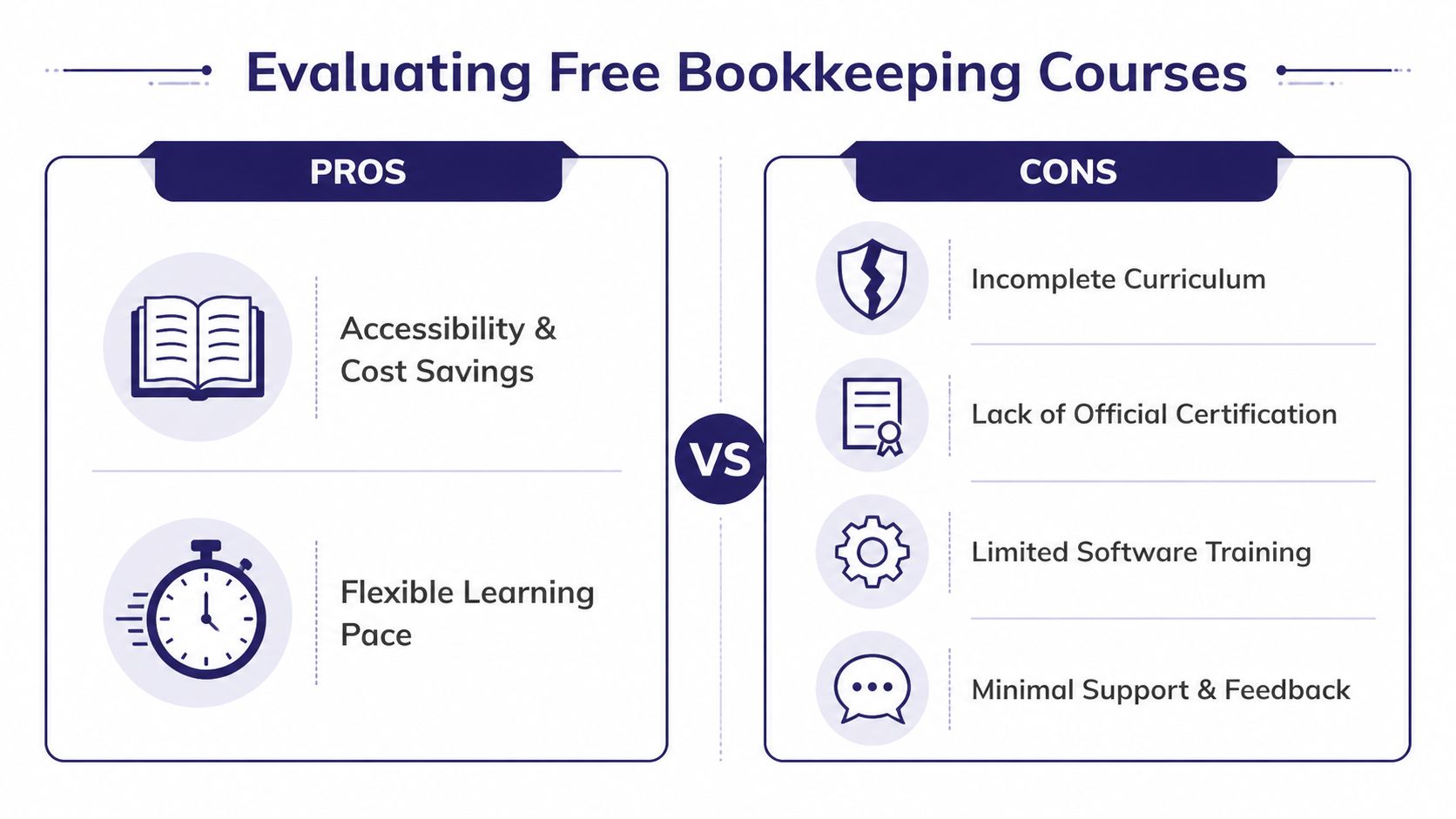
Evaluating a Free Bookkeeping Course
| Quality Indicator ✅ | Red Flag ❌ |
|---|---|
| Clear lessons on double-entry, ledgers, trial balance, profit and loss, and balance sheet | Vague promises about becoming “job-ready” without showing what is taught |
| Practice questions or exercises after each lesson | Only videos or reading, with no chance to apply the material |
| UK-relevant language and examples | Generic content that ignores UK bookkeeping and VAT context |
| Transparent provider information and clear course outcomes | No detail on who created the course or what standard it follows |
| Realistic claims about the certificate | A certificate presented as if it guarantees employment |
| Some pathway into further study | No next step for software, support, or recognised credentials |
A simple checklist before you enrol
Ask these questions before you start:
- Does it teach bookkeeping basics properly rather than rushing through terms?
- Does it include practice so you can test what you’ve understood?
- Is the material UK relevant if you want to work here?
- Does it say what the certificate means and what it doesn’t mean?
- Is there a clear progression path into software or more formal training?
If you’re comparing learning formats, this guide on choosing the right bookkeeping course online vs in person can help you think through the trade-offs.
What a weaker course often misses
The weaker options usually have one or more of these problems:
Thin explanations
They tell you what a debit is but don’t show why an entry works.No correction process
You can complete lessons without finding out where your mistakes are.Little realism
There’s no sense of actual finance tasks, such as posting transactions from invoices, receipts, and bank activity.
A free course is worth your time if it helps you think like a bookkeeper, not if it only helps you collect a completion badge.
That’s the standard to use. If a course gives you confidence with the rules and enough practice to explain your thinking, it’s a solid starting point.
The Hidden Gaps in Free Bookkeeping Training
Free learning is useful. It’s just incomplete.
That isn’t a criticism. It’s the business model. Free courses are built to introduce the subject, not to carry most learners all the way to employment.
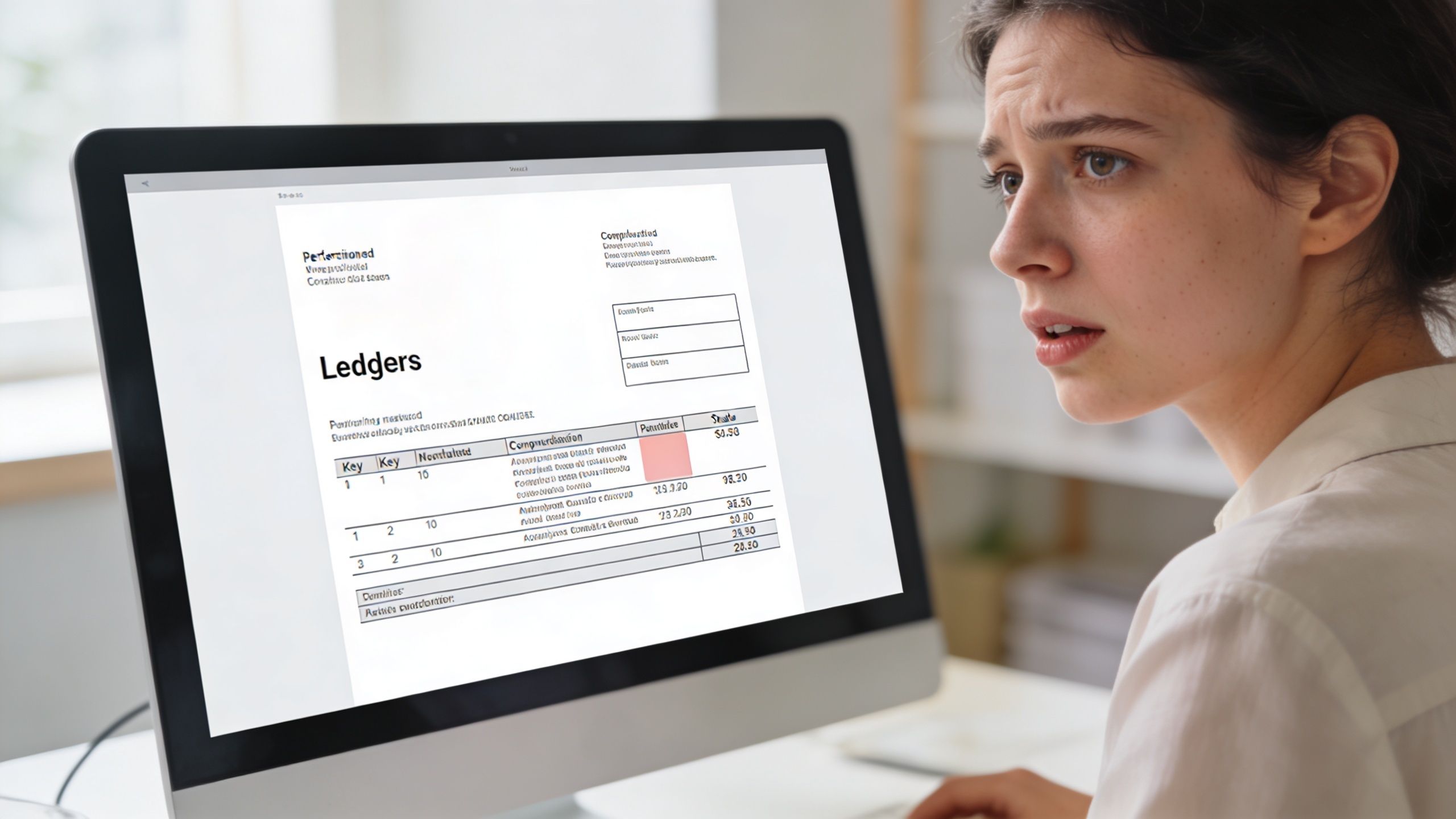
The first gap is software proof
This is the biggest issue for job seekers. Employers don’t only want someone who understands bookkeeping terms. They want someone who can work inside the systems their business already uses.
Data for 2025 shows 85% of UK bookkeeping vacancies list specific software certifications such as Sage, Xero, or QuickBooks, while 62% of employers prioritise practical software skills over theoretical knowledge, according to FreshBooks’ review of free online bookkeeping courses.
That changes the question you should ask. It’s no longer just, “Have I learned bookkeeping?” It’s also, “Can I prove I can do the work in the software employers use?”
The second gap is feedback
Bookkeeping looks straightforward until you make an error and can’t see why it’s wrong. Beginners often need someone to check their logic, not just their final answer.
Free platforms rarely offer personal feedback. That matters because two learners can finish the same lesson and leave with very different levels of understanding. One can explain each posting clearly. The other has merely followed the examples.
The third gap is job search support
Many learners underestimate this part. Even if you’ve finished a course, you still need to present your skills in a way employers understand.
That means being able to show:
- Relevant software exposure
- A CV that matches finance job wording
- A LinkedIn profile that looks credible
- Confidence in interviews and task-based questions
There’s a useful parallel in software buying. This article on the high cost of free event software makes the broader point well. Free tools often look like enough until you hit the missing pieces that matter in daily work. Training works in a similar way.
Free training often covers what the work is. Paid career-focused training usually covers how to do it, how to prove it, and how to get hired for it.
Why this matters for related career paths
These gaps don’t only affect bookkeeping roles. They also affect progression into:
- Advanced payroll, where process accuracy and software confidence matter
- Accounts assistant roles, where employers expect practical transaction handling
- Final accounts support, where the quality of the underlying records matters
- Business analyst or data analyst pathways, where clean financial data and system discipline are useful foundations
A free bookkeeping course can start your journey. It usually can’t finish it.
Mastering the Tools UK Employers Demand
Employers hire bookkeepers to work in live systems, not in theory alone. That’s why software training changes everything. Once you can post transactions, reconcile accounts, and review records in real platforms, the subject stops feeling abstract.
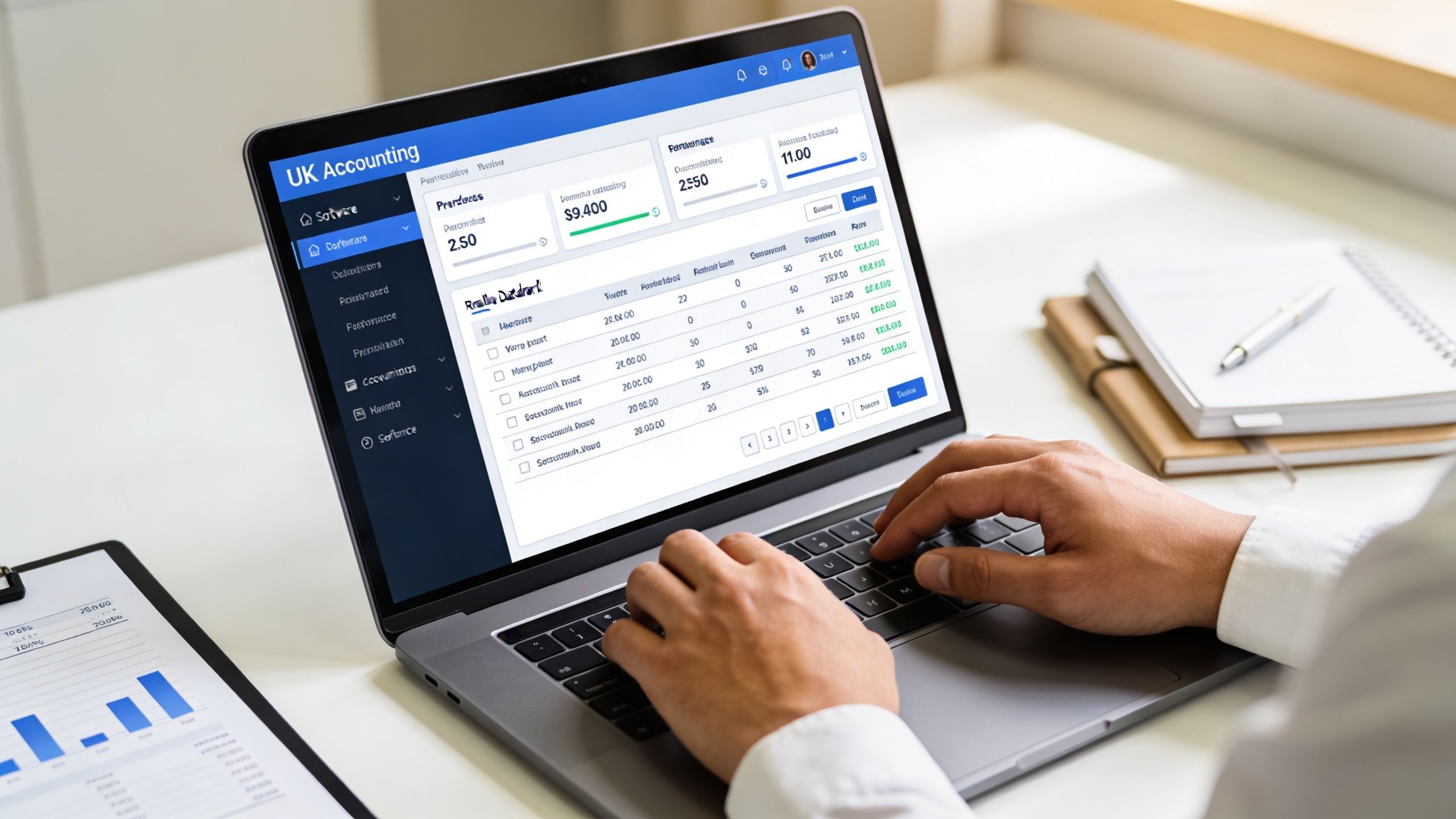
Sage, Xero, and QuickBooks
These three names appear again and again in UK finance training because they’re widely recognised in the market.
Sage
Sage is familiar to many established businesses and finance teams. If you want to work in an accounts department or support a business with structured internal processes, you may come across it often. It helps learners get used to formal bookkeeping routines and system-based record keeping.
Xero
Xero is strongly associated with cloud accounting. It’s popular with businesses that want modern online access, bank feeds, and smoother collaboration with bookkeepers and accountants. For many learners, Xero is where theory starts to feel practical because the workflow is more visible.
QuickBooks
QuickBooks is another major cloud platform and often appears in small business settings. It’s useful for learners who want exposure to day-to-day bookkeeping tasks in a digital environment, including invoice handling and routine account maintenance.
Why tool knowledge changes your confidence
Once you’ve used accounting software, you start seeing how bookkeeping happens in real life:
- Transactions are entered in context, not as isolated textbook examples
- Reports update from your entries, so the cause and effect becomes clear
- Errors become teachable moments, especially during reconciliations and reviews
If you’re interested in the wider admin and payroll side of business systems, it can also help to look at how specialist platforms structure pay processes. For example, tutor payroll software shows how payroll tools support repeatable operational tasks. That kind of workflow thinking is useful when you later branch into advanced payroll or accounts support.
What to look for in practical training
A strong next step after a free bookkeeping course includes time inside the actual software, not just screenshots or short demos.
Look for training that gives you:
- Hands-on tasks using Sage, Xero, or QuickBooks
- Realistic bookkeeping scenarios rather than isolated theory questions
- Correction and feedback when you post something incorrectly
- A clear view of the software stack used in modern bookkeeping and VAT work
For a closer look at the platforms commonly taught in job-focused finance training, this guide to top software tools taught in bookkeeping and VAT training is a useful reference.
Software skill supports wider careers too
Bookkeeping naturally links into other roles. A learner who becomes comfortable with finance systems often finds it easier to progress into accounts assistant work, payroll admin, reporting support, and even more analytical work later on. Software doesn’t replace the fundamentals. It gives those fundamentals a workplace shape.
Your Roadmap from Free Course to First Bookkeeping Job
The best route into bookkeeping is usually not one giant leap. It’s a sequence. You start with low-risk learning, then add practical skill, then turn that into a job search that makes sense to employers.

Stage one builds your foundation
Start with a good free bookkeeping course and use it properly. Don’t rush through it just to collect a certificate. Work through the examples. Write out entries by hand if needed. Pause when debits and credits feel fuzzy.
At this stage, your aim is simple. You want to understand the language of bookkeeping well enough to explain basic transactions, follow a ledger, and read simple financial statements.
Good habits here matter:
- Keep a study notebook with examples in your own words
- Repeat weak topics until they feel natural
- Treat exercises seriously rather than guessing your way through
Stage two turns knowledge into evidence
Many learners need structured support. Employers don’t interview you on effort. They interview you on proof.
That proof usually comes from practical training that includes software, guided tasks, and recognised outcomes. You want to move from “I’ve studied bookkeeping” to “I can complete bookkeeping tasks in Sage, Xero, or QuickBooks and explain what I’ve done.”
A useful next step is following a more structured path like this guide to your path through our bookkeeping courses, which helps learners think beyond the free taster stage.
Career advice: Treat the free course as exploration. Treat the next stage as preparation for a hiring decision.
Stage three focuses on getting hired
Plenty of capable learners stall here. They’ve learned the material, but they don’t package it well.
A practical job search in bookkeeping should include:
A CV built for finance roles
It should highlight bookkeeping tasks, software exposure, and organised record-keeping skills.A LinkedIn profile with a clear direction
Recruiters should be able to see the role you want and the tools you’ve trained on.Interview practice
You need to explain reconciliations, postings, invoice handling, and your software exposure in plain language.Applications targeted to the right level
Junior bookkeeping, accounts assistant, payroll support, and trainee finance roles often overlap. Apply where your current skill set fits.
A short visual walkthrough can help if you prefer to see the journey laid out clearly:
What a complete pathway usually includes
The strongest training routes combine three things that free content rarely combines in one place:
- Theory you can understand
- Software work you can demonstrate
- Recruitment support that helps you present yourself well
That combination is what turns study into employability. It also helps if you’re entering the UK market as an international student, returning to work after a gap, or changing careers from another field.
Bookkeeping rewards learners who build steadily. You don’t need to know everything at once. You do need to move from curiosity, to competence, to evidence.
Beyond Bookkeeping Your Future Career Path
Bookkeeping is a practical entry point, but it doesn’t have to be the end point.
Once you understand financial records, business transactions, and system-based working, you’ve built a foundation that supports several career directions. That’s one reason this field appeals to both recent graduates and career changers. The first role can lead somewhere wider.
Where learners often move next
Some progress into accounts assistant roles. That usually brings broader finance admin, reconciliations, invoice work, and support across the accounts function.
Others develop into advanced payroll work. That path suits people who like rules, deadlines, process, and handling sensitive data carefully.
Some move towards final accounts support over time. That requires stronger understanding of how the underlying records feed into reports and compliance work.
The link to analysis roles
Bookkeeping also helps with more analytical careers than people expect. If you later move into business analyst or data analyst training, you’ll already be used to structured information, consistency, and spotting anomalies in data.
That doesn’t make bookkeeping the same as analytics. It does mean the habits overlap:
- Accuracy
- Pattern recognition
- System thinking
- Confidence with business data
The first finance role often matters less than the direction it gives you. Bookkeeping gives many learners a credible place to begin.
If you’re looking for a career with a clear starting point and room to grow, that’s a strong reason to take it seriously.
Frequently Asked Questions
Can a free bookkeeping course get me a job on its own
It can help you start, but for most learners it won’t be enough by itself. A free course usually builds understanding of the basics. Employers often want software ability, practical examples, and clearer proof that you can do day-to-day tasks.
Is bookkeeping hard for beginners
It can feel unfamiliar at first, especially when you meet debits, credits, and the accounting equation. Most beginners improve once they stop trying to memorise everything and start practising simple examples repeatedly.
Which is better, bookkeeping theory or software training
You need both. Theory helps you understand why entries are made. Software training helps you apply that knowledge in the way employers expect. If you only study theory, you may struggle in a practical role. If you only click through software, you may not know how to fix mistakes.
Do free bookkeeping courses cover VAT and payroll well
Some touch on them, but usually only at an introductory level. If you want to work in bookkeeping & VAT or advanced payroll, you’ll usually need more structured and practical training.
I’m changing careers. Is bookkeeping still a realistic option
Yes, it can be a very realistic option for career changers. The field values organisation, reliability, and process. Those strengths often transfer well from admin, retail, hospitality, customer service, teaching support, and many other backgrounds.
What should I do after finishing a free bookkeeping course
Review what you’ve learned, identify your weak areas, and move into practical training. The most useful next step is usually software-based learning, followed by CV improvement and job application support.
If you’re ready to move beyond a free bookkeeping course and turn your learning into a job plan, Professional Careers Training offers flexible 1-2-1 training with ACCA qualified Chartered Accountants and CPD approved trainers, official Sage, Xero, and QuickBooks certification support, software help, and recruitment guidance including CV preparation, LinkedIn optimisation, career coaching, and employer referrals.


