If you're training to become a business analyst, or you already work as one, you've probably noticed AI tools turning up in more of your...
It usually doesn’t.
Coaching for career development matters because it turns that drift into a plan. It gives structure to your next move, especially when your goal is specific: move into bookkeeping and VAT work, become an accounts assistant, step into advanced payroll, or pivot into business analysis or data analysis. On its own, advice is rarely enough. What moves people forward is a combination of honest diagnosis, targeted training, and clear action.
From Career Crossroads to Clear Direction
A common pattern shows up in career conversations. Someone is employed, capable, and dependable, but their role has stopped growing. They may be doing purchase ledger tasks and want to become an accounts assistant. They may work in administration and keep getting told they’re “good with numbers”, yet don’t know how to turn that into bookkeeping or payroll. Others come from customer service, operations, or retail and can see that data analyst or business analyst roles offer a stronger future, but the route in feels confusing.
The problem isn’t always motivation. It’s usually direction.
In the UK, career guidance is part of the wider employment sector, not a fringe service. The National Careers Service has been running since 2012 and reported more than 1.5 million customer contacts in 2023/24, which shows how established career support has become in practice in the UK labour market, as noted in this review of UK coaching statistics. That matters because many people still assume career coaching is only for executives. It isn’t. It’s useful for graduates, returners, career changers, and professionals who need a better route to progression.
Practical rule: If your goal is still “something better”, you’re not ready to job hunt properly. A coach helps you turn “better” into a role, a skills gap, and a short list of actions.
That shift matters most when the target role is concrete. If you want to work in bookkeeping, your next step may involve VAT returns, reconciliations, and accounting software confidence. If you want to move into data analysis, you may need a portfolio that proves you can clean data, analyse it, and explain what it means to a hiring manager. If you want to become a business analyst, you need more than interest in problem-solving. You need evidence that you can gather requirements, map processes, and communicate clearly with stakeholders.
For career changers, practical guidance is often the difference between endless browsing and a genuine move. That’s why many readers start by exploring advice specific to transition points such as career change support and practical guidance.
Understanding Professional Career Coaching
Professional career coaching works best when you stop treating it as motivation and start treating it as performance support.
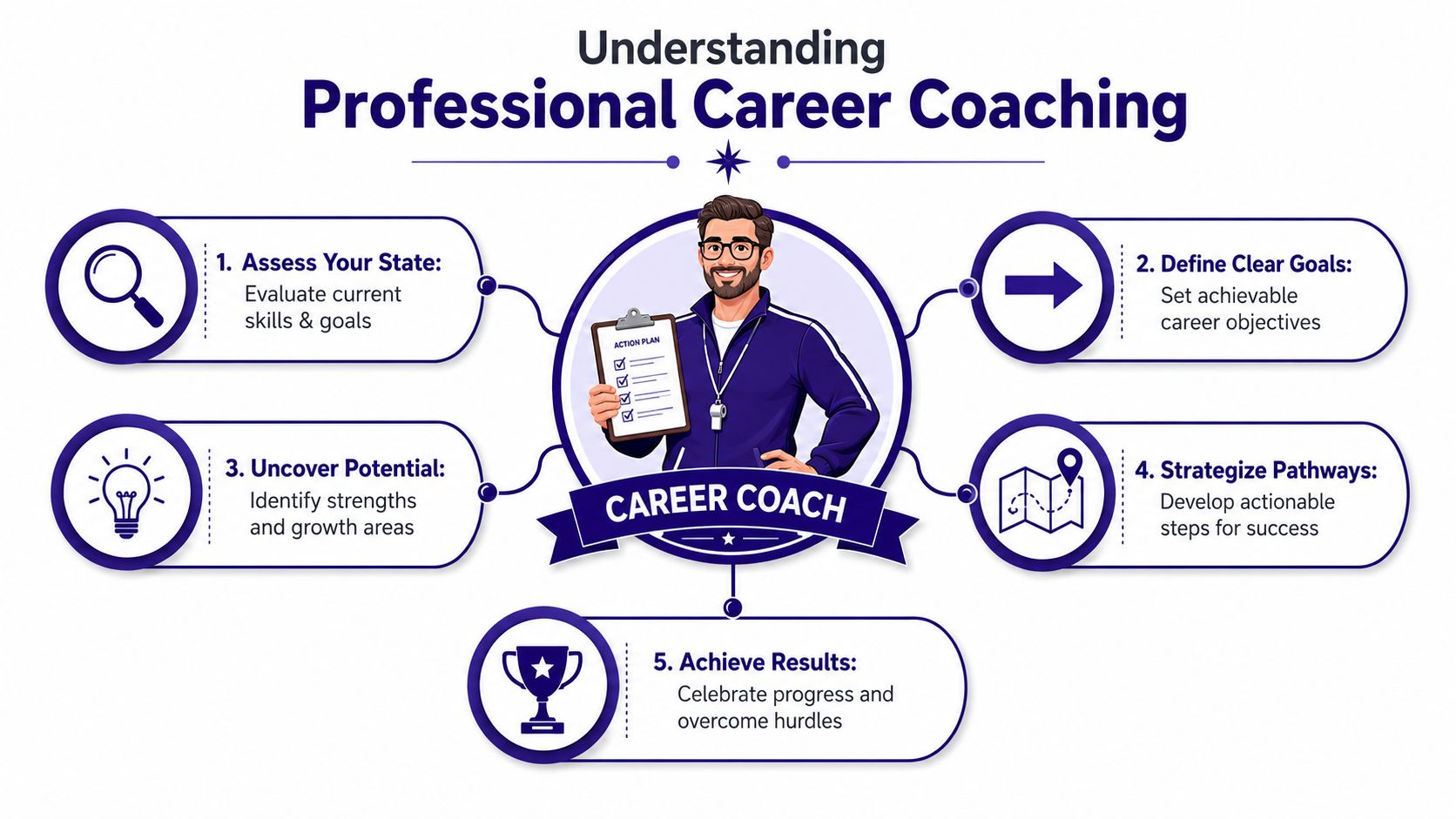
A good coach is a bit like a personal trainer for your working life. They assess where you are now, challenge vague thinking, help you choose a realistic target, and keep you accountable while you build the evidence needed to get hired or promoted. That’s very different from casual encouragement.
What coaching is and what it isn’t
It isn’t therapy. Therapy focuses on mental health, emotional healing, and past experiences. Career coaching may touch confidence, setbacks, or fear of change, but its main job is forward movement in your working life.
It isn’t mentoring either. A mentor usually shares experience from their own field and tells you what helped them. That can be valuable. But coaching is more structured. It asks better questions, tests assumptions, and helps you make decisions based on your goals rather than someone else’s career story.
If you want a broader framing of understanding professional growth for job seekers, that resource is useful because it places development in the context of employability rather than abstract self-improvement.
The forms coaching usually takes
Career coaching tends to fall into a few practical categories.
| Type of coaching | Best for | Example in real roles |
|---|---|---|
| Career direction coaching | People who feel stuck or torn between options | Choosing between advanced payroll, accounts assistant, and bookkeeping pathways |
| Job search coaching | People getting little response from applications | Tailoring a CV for assistant accountant or business analyst vacancies |
| Interview coaching | People who reach interviews but don’t convert | Practising answers on reconciliations, VAT, stakeholder communication, or dashboards |
| Skills-to-role coaching | People training for a move into a new field | Linking SQL, Excel, Power BI, Sage, Xero, or QuickBooks skills to actual job requirements |
What a strong coaching relationship should produce
A proper coaching process should leave you with more than confidence. It should leave you with sharper positioning.
For example:
- Bookkeeping and VAT learners need to show they can handle day-to-day finance tasks, not just pass a course.
- Advanced payroll learners need to speak clearly about pay runs, compliance routines, and payroll software.
- Accounts assistant candidates need to connect software use with transaction processing, reconciliations, and support for month-end.
- Business analyst learners need to explain how they gather requirements and improve processes.
- Data analyst learners need projects that show Excel, SQL, Python, or Power BI in action.
Coaching is useful when it leads to visible evidence. If nothing changes in your CV, interview answers, LinkedIn profile, portfolio, or weekly actions, it’s probably too vague.
That’s the test. A strong coach doesn’t just help you “feel clearer”. They help you become easier to hire.
How Coaching Accelerates Your Accounting or Data Career
The strongest results come when coaching sits alongside practical training. Skills without direction often stay hidden. Direction without skills leads to frustration. You need both.
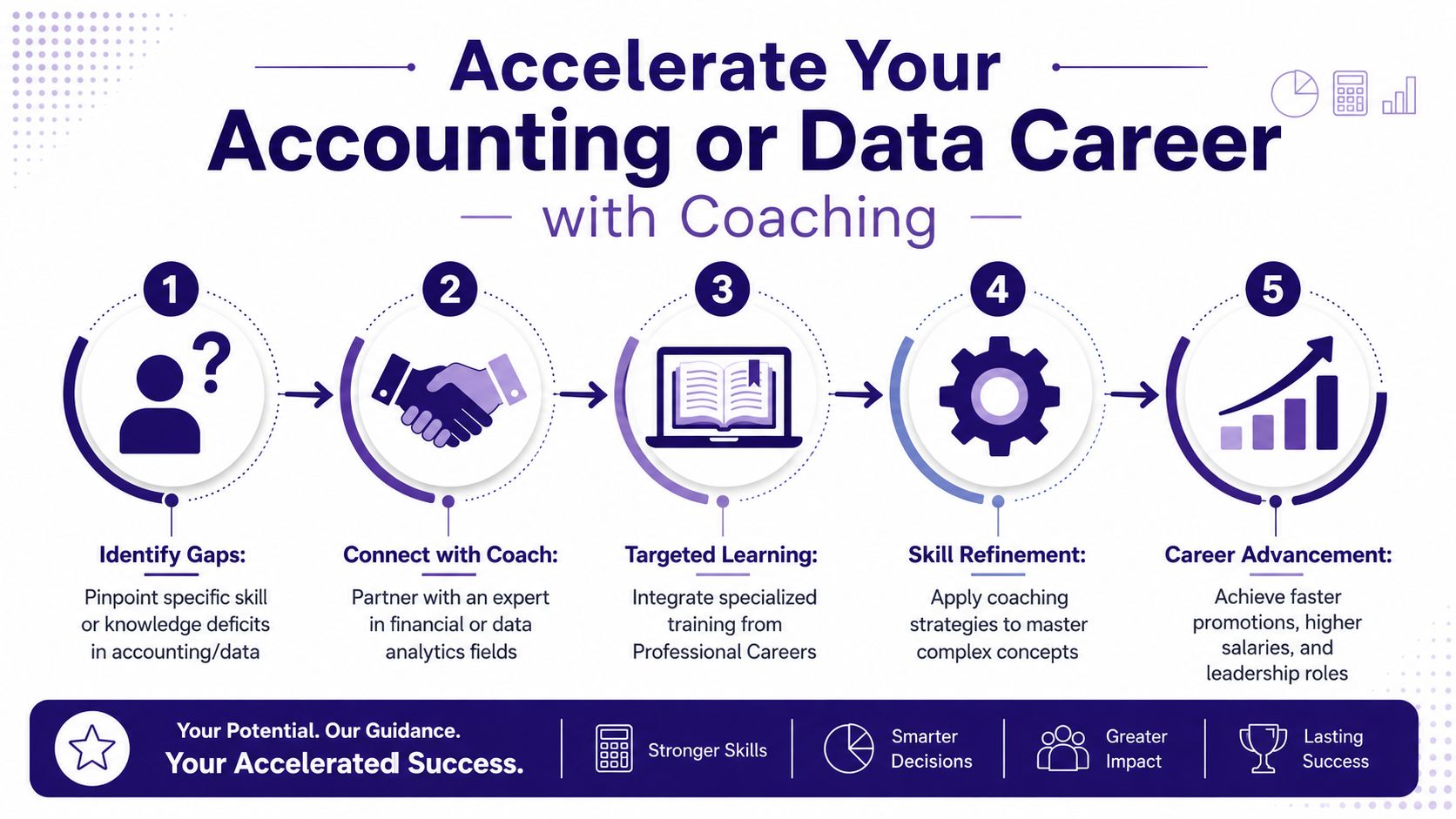
That’s one reason coaching has become more visible inside workplace development. In the UK, 46% of learning and development professionals said coaching and mentoring were among the most effective methods for developing managers, according to the CIPD-related figures cited here. That matters because employers don’t see coaching as a soft extra. They use it to build capability and progression.
Bookkeeping and VAT careers need more than course completion
A learner may finish bookkeeping training with a decent grasp of double-entry, VAT basics, bank reconciliation, and software such as Xero or QuickBooks. Yet employers won’t see “course completed” and assume job readiness. They want to know whether you can support real finance work.
Coaching helps by turning a course into a job-facing story:
- Targeting the right employers: Small businesses, accountancy practices, and finance teams often need support with day-to-day bookkeeping, but the language used in adverts varies.
- Reframing existing experience: Someone from retail admin may already have invoice handling, record-keeping, or spreadsheet exposure that can be positioned better.
- Building proof: The candidate can prepare examples of reconciliations, invoice workflows, or VAT-related tasks completed in training.
A useful next read for finance learners is continuing professional development for accountants, because progression in accounting often comes from stacking practical capability over time rather than making one dramatic jump.
Accounts assistant and payroll roles reward precision
Accounts assistant and payroll jobs often look “entry level” from the outside. They aren’t simple. They require trust, accuracy, consistency, and software confidence. That means coaching often focuses on avoiding weak applications rather than making flashy ones.
Here’s what usually works.
Clear software mapping
If a vacancy mentions Sage, Xero, Excel, or payroll systems, your CV and interview examples should show where you used comparable tools and what task you completed with them.
Task-based interview practice
Generic answers hurt otherwise good candidates. It’s far better to rehearse direct responses on invoice matching, payroll processing routines, handling discrepancies, or supporting month-end activity.
Professional language
Many candidates know more than they think but describe their work too casually. A coach helps translate “I helped the team with spreadsheets” into a stronger statement tied to finance tasks, deadlines, and accuracy.
Hiring reality: Employers rarely reward effort alone. They reward evidence that you can perform the tasks their team needs next week.
Data analyst and business analyst moves need visible thinking
Career changers often struggle most with their presentation. They train in Excel, SQL, Python, or Power BI, but present themselves as if the qualification should speak for itself. It won’t.
For a data analyst, coaching usually sharpens three things:
-
Portfolio selection
Don’t show everything. Show projects that demonstrate cleaning data, analysing trends, and presenting findings clearly. -
Business explanation
Hiring managers want more than code. They want to know what your analysis revealed and how someone could act on it. -
Role targeting
Some vacancies lean towards reporting, others towards dashboarding, and others towards broader analytical problem-solving. Applications need to match that reality.
For a business analyst, coaching often focuses on structure. Candidates need to show they can gather requirements, understand processes, communicate with stakeholders, and document change clearly. A coach helps you tell that story even if your background comes from operations, administration, customer service, or project support.
What doesn’t work
Some habits slow people down even when they’re studying hard:
- Collecting certificates without a target role
- Applying to every finance or analyst vacancy
- Using one CV for bookkeeping, payroll, data, and business analysis
- Talking about training but not outcomes
- Waiting until after the course to think about employability
The better approach is simple. Learn with the job in mind. Then use coaching to present that learning in a way employers can trust.
Signs It Is Time to Invest in a Career Coach

Many people wait too long to get support. They assume they need to try harder first. Sometimes that’s true. Often it isn’t. Often they need a sharper strategy.
One of the biggest blind spots in career support is the person who is already employed but not progressing. Much career advice focuses on changing jobs, yet the harder question is often how to move up from where you are. That matters in the UK because real wage growth can be slow in many sectors and progression can feel blocked, as discussed in this piece on stalled progression and career coaching.
You’re qualified enough to start, but not moving
This happens a lot in finance support roles. Someone can already process invoices, use Excel daily, help with reconciliations, and understand basic bookkeeping. Yet they stay in the same post because they haven’t positioned themselves for the next one.
The same applies in analyst pathways. You may already work with reports, KPIs, or operational data, but if no one sees you as a business analyst or data analyst candidate, your current experience stays trapped in your current title.
You keep training but still feel unsure
Training should reduce confusion. If you’ve completed modules in bookkeeping, VAT, payroll, SQL, Power BI, or business analysis and still can’t answer “Which role am I targeting next?”, coaching is worth considering.
A coach can help narrow the field:
- Bookkeeping or accounts assistant
- Advanced payroll or finance officer support
- Business analyst or data analyst
- Short-term progression in your current employer versus a full move
That decision matters because each path needs a different CV, different evidence, and different interview language.
Interviews aren’t turning into offers
If you’re getting interviews, the issue usually isn’t visibility. It’s conversion.
Common causes include weak examples, unclear explanations of software use, poor answers to “tell me about yourself”, and difficulty linking previous work to the target role. This affects accounts assistant, payroll, and analyst candidates alike.
A short explanation often helps more than a perfect answer. This video gives a useful starting point for thinking about direction and next steps:
You’re returning after a break or changing field
A returner to work often has more transferable value than they realise, but the market may have changed. Hiring processes now expect stronger LinkedIn profiles, tighter CVs, and clearer software familiarity. A career changer into bookkeeping, payroll, or analysis also has to bridge the credibility gap between “interested in the field” and “ready to contribute”.
The right time to get coaching is usually before frustration turns into drift.
If you recognise yourself in more than one of these situations, support is likely to save time rather than add another layer of effort.
Finding the Right Coach and Preparing for Success
A career coach can help a lot. The wrong one can waste your time.
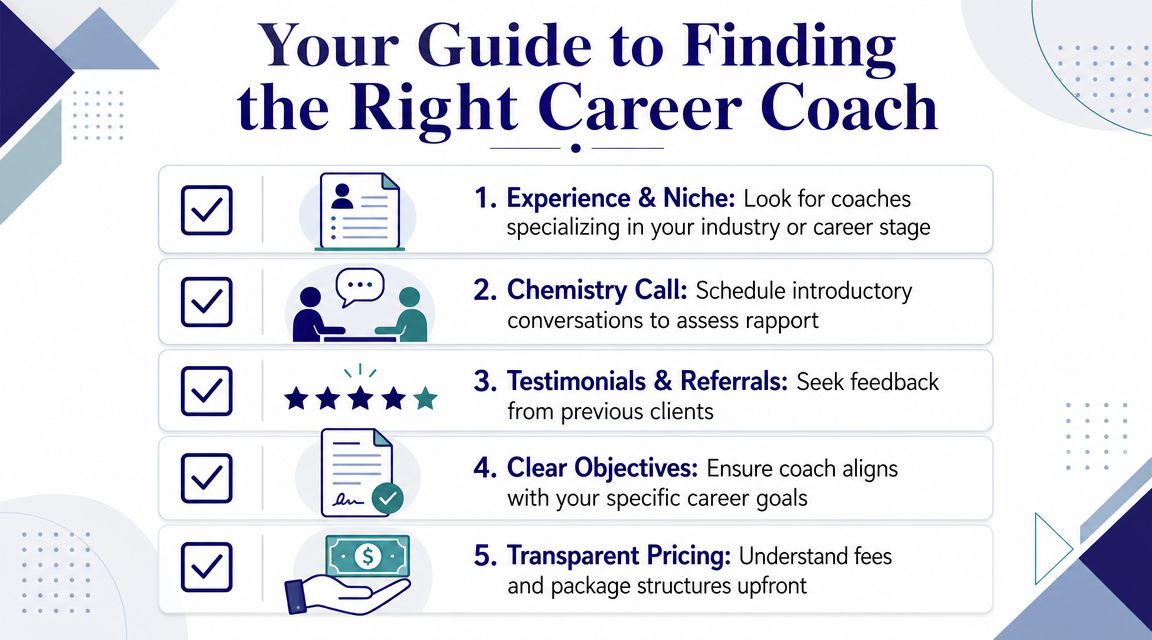
The difference usually comes down to relevance and structure. If your target is bookkeeping, advanced payroll, accounts assistant, business analyst, or data analyst work, choose someone who understands those role paths well enough to challenge your assumptions. General motivation won’t be enough.
What to look for in a coach
Effective career coaching follows a structured process: assess current skills, define a target role, set weekly actions, and review progress. That workflow is described in this overview of structured career coaching, and it’s a useful benchmark when you’re deciding who to work with.
Use that benchmark to assess fit.
-
Relevant role knowledge
If you want to move into bookkeeping or payroll, your coach should understand how those vacancies are written and what employers ask in interviews. If your goal is business analysis or data analysis, they should know the difference between a learning project and a portfolio piece that supports an application. -
A clear process
Good coaching should have stages. Diagnosis first. Role choice second. Application strategy after that. If every session feels open-ended, progress will be slow. -
Honest feedback
You need someone who’ll tell you when your target is too broad, your examples are weak, or your CV reads like a training record rather than a hiring case. -
Accountability
Progress often depends on doing the small tasks you’d otherwise postpone. If accountability is the part you struggle with most, resources on when to hire an accountability coach can help you think through what sort of support model suits you.
How to prepare before the first session
Don’t turn up and hope the conversation creates direction on its own. Bring useful material.
| Prepare this | Why it matters |
|---|---|
| Your current CV | It shows how you currently present your experience |
| A short target list of roles | It helps narrow the discussion quickly |
| Three recent job adverts | They reveal the language employers use |
| A skills inventory | Include software, training, work tasks, and projects |
| Your sticking points | Interviews, confidence, no responses, unclear path, or lack of experience |
How to judge whether coaching is working
The result shouldn’t just be that you feel motivated after each session. Motivation fades. Systems matter more.
Look for signs such as:
-
Sharper role focus
You stop applying at random and start targeting a defined role family. -
Better evidence
Your CV, LinkedIn profile, and portfolio become more specific. A bookkeeping CV should look different from a data analyst CV. -
Weekly movement
You know what to do next. That may be rewriting your profile, building one stronger project, practising payroll interview questions, or selecting a better sample of business analysis work.
A useful test: after a month, can you point to changed documents, changed behaviour, and clearer decisions? If not, the coaching may be too loose.
The best coaching is practical enough to leave a trail.
Your Practical Next Steps to Employment
Career progress rarely comes from a single breakthrough. It usually comes from a smarter sequence.
Start by choosing a role, not just a subject. “Accounting” is too broad. “Accounts assistant with strong Excel and Sage skills” is clearer. “Data analyst focused on Excel, SQL, and Power BI” is clearer. “Business analyst with process mapping and requirements skills” is clearer. So is “bookkeeping and VAT support for SMEs” or “advanced payroll support role”.
Then choose training that matches the job, not just your curiosity. If you’re aiming for bookkeeping or final accounts work, focus on the software and workflows employers expect. If you’re aiming for data analysis, build practical competence in tools such as Excel, SQL, Python, and Power BI, then turn that learning into visible projects. This matters even more for people trying to pivot into AI-affected or data-heavy roles without going back into full-time study. In that situation, coaching helps you decide whether short-form credentials, role redesign, or a full career change makes more sense, as outlined in this overview of career coaching types and digital role pivots.
A simple route that works
-
Pick one target first
Accounts assistant, payroll, bookkeeping, business analyst, or data analyst. Don’t chase all of them at once. -
Match your training to that role
Learn the software, processes, and language the vacancy uses. -
Market the skill properly
Your CV, LinkedIn profile, interview answers, and portfolio must all support the same career story.
That last point gets missed constantly. Good candidates still lose opportunities because they present strong learning poorly. Your digital profile now plays a real part in whether employers take you seriously, so reading about managing your online presence for careers is worthwhile if your LinkedIn presence is weak or inconsistent.
For job seekers targeting finance or analyst roles, LinkedIn also needs to support the same message as the CV. A practical guide to using LinkedIn for job search effectively can help tighten that side of your application.
If you want a better result, treat coaching for career development as part of employability, not as a separate add-on. Learn the skill. Build evidence. Position it well. Then repeat until your applications look like they belong to the role you want.
If you’re ready to move from vague ambition to a clear job plan, Professional Careers Training offers practical training in bookkeeping and VAT, advanced payroll, accounts assistant work, final accounts, business analysis, and data analysis, alongside CV support, job-hunting strategy, LinkedIn optimisation, and career coaching designed to help you turn training into employment.