
It's 4:45 on a Friday. Payroll is due, a VAT payment is close, two customers still haven't paid, and the bank balance looks tighter than...
It's 4:45 on a Friday. Payroll is due, a VAT payment is close, two customers still haven't paid, and the bank balance looks tighter than the profit report suggested. That is the moment employers stop caring whether you can post entries neatly. They care whether you understand cash.
For UK businesses, cash flow is the operating reality. It determines whether wages clear, suppliers stay on side, and growth plans survive first contact with real payment timings. HMRC's Making Tax Digital rules for VAT pushed businesses further into digital record-keeping and software-based reporting. That matters for your career because better digital records lead to better forecasts, and better forecasts lead to better decisions.
This is why cash flow skill carries weight in bookkeeping, accounts assistant, and junior analyst roles. Anyone can learn where to click in a ledger. The stronger candidate can explain why a profitable business still runs short of cash, spot pressure points before month end, and build a forecast that management can use. If you need to sharpen the fundamentals first, start with this guide on how to prepare a cash flow statement.
Mastering cash flow also gives you a direct route into higher-value work. You move from processing transactions to interpreting them. You learn bank feeds, debtor timing, creditor cycles, VAT deadlines, reporting packs, and scenario planning. Those are the same practical skills taught in bookkeeping, accounts assistant, and business analysis training because they make you more employable, more credible in interviews, and more useful from day one.
Use the tools in this list that way. Don't treat them as software to memorise. Treat them as training grounds for forecast thinking, financial control, and commercial judgement. If you're also exploring modern finance workflows, this short course on mastering finances with Claude AI is a helpful companion to software training.
1. Float
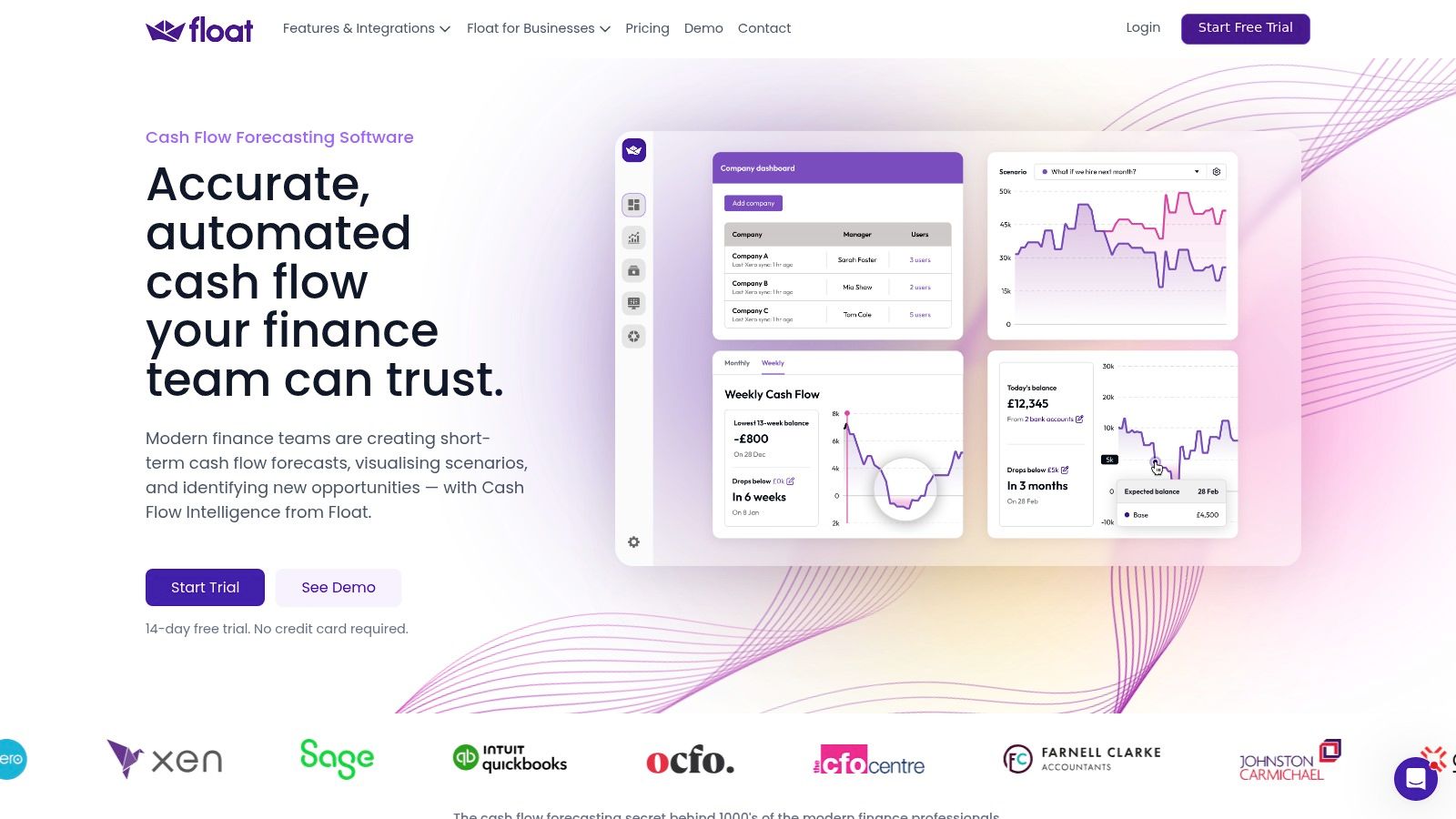
Float is one of the easiest cash flow management tools for UK learners to grasp quickly. It connects neatly with Xero, QuickBooks Online, and FreeAgent, which makes it practical for trainee bookkeepers, accounts assistants, and junior analysts who need to turn ledger data into a working forecast.
Its real strength is visibility. Float shows cash movement in a way that feels operational rather than theoretical. If you're learning how invoices, bills, VAT entries, and bank movements affect short-term liquidity, this is the sort of software that makes the lesson stick.
Why it works for training
Float is strong for short-to-medium-term forecasting. It supports daily and weekly views, a 13-week cash forecast, and longer monthly planning. That makes it a solid bridge between bookkeeping knowledge and advisory skills.
A learner using Float builds skills such as:
- Ledger interpretation: You learn how posted sales and purchase data influence future cash.
- Scenario thinking: You test what happens if receipts land late or costs rise.
- Forecast discipline: You stop treating month-end reports as enough.
Practical rule: If you can explain why the forecast moved after a bookkeeping entry, you're already thinking like a finance professional rather than a data entry clerk.
Float also pairs well with formal study of the cash flow statement preparation process. That's especially useful if you're taking bookkeeping, final accounts, or accounts assistant training and want to connect software output to accounting logic.
Best fit
Choose Float if you want a forecasting tool that doesn't bury you in complexity. It's ideal for trainees who use Xero or QuickBooks and need fast confidence with 13-week forecasting, visual cash timelines, and practical scenario work.
The limitation is clear too. It's focused on operational cash management, not full three-statement modelling. If your goal is advanced FP&A or group-level reporting, you'll probably outgrow it. But for employability in SME finance, Float is an excellent first serious tool.
2. Futrli by Sage
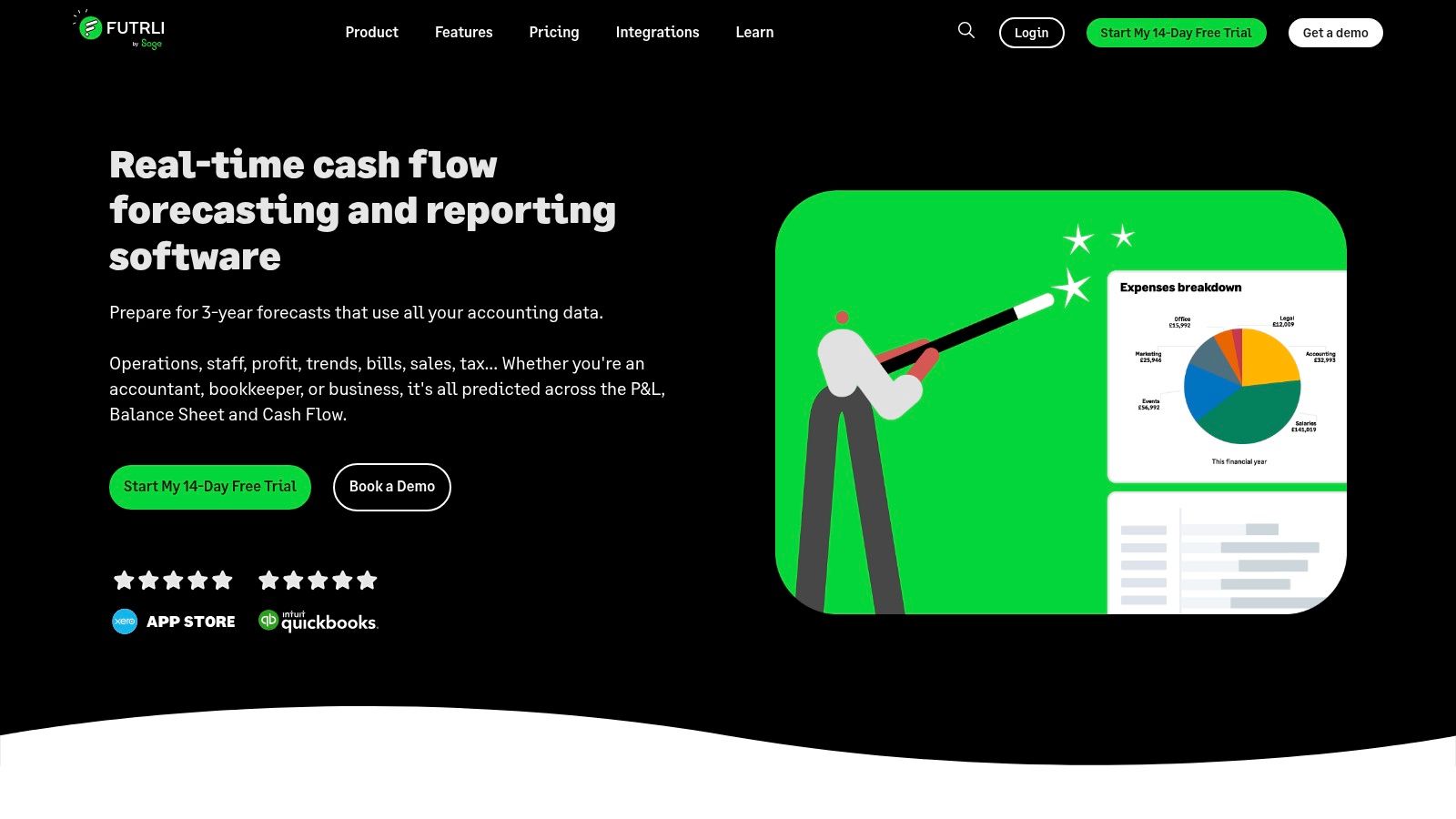
If your career path points towards Sage-heavy employers, Futrli by Sage deserves your attention. It sits in the useful middle ground between a simple cash planner and a broader advisory platform, which makes it a strong learning environment for anyone taking Sage, accounts assistant, or management reporting training.
Futrli is built for forecasting, scenario planning, and reporting packs. It handles data from Sage Accounting, Xero, QuickBooks Online, and Excel uploads. That last point matters because real jobs often involve messy client files, partial exports, and non-standard workflows.
Where it builds stronger skills
Futrli isn't just about showing a cash number. It teaches structure. You start to think in terms of assumptions, forecast drivers, and reporting outputs that a manager or client can act on.
That links directly to the kind of learning covered in budgeting and forecasting training. If you're moving towards business analyst or data analyst work, this matters because employers don't just want someone who can run a report. They want someone who can build one, explain one, and defend the assumptions behind it.
Useful strengths include:
- Three-year forecasting: Good for planning beyond immediate cash pressure.
- Excel uploads: Helpful when clients aren't fully integrated.
- Reporting packs: Useful for presenting clear financial stories.
Best fit
Pick Futrli if you want a tool that aligns with Sage training and stretches your forecasting skills beyond basic bookkeeping. It's well suited to trainees who want to move into advisory, accounts preparation support, or finance analyst work.
It does take more effort to learn than simpler tools. That's not a drawback if your aim is career growth. It's exactly the kind of stretch that turns software familiarity into a professional skill.
3. Agicap
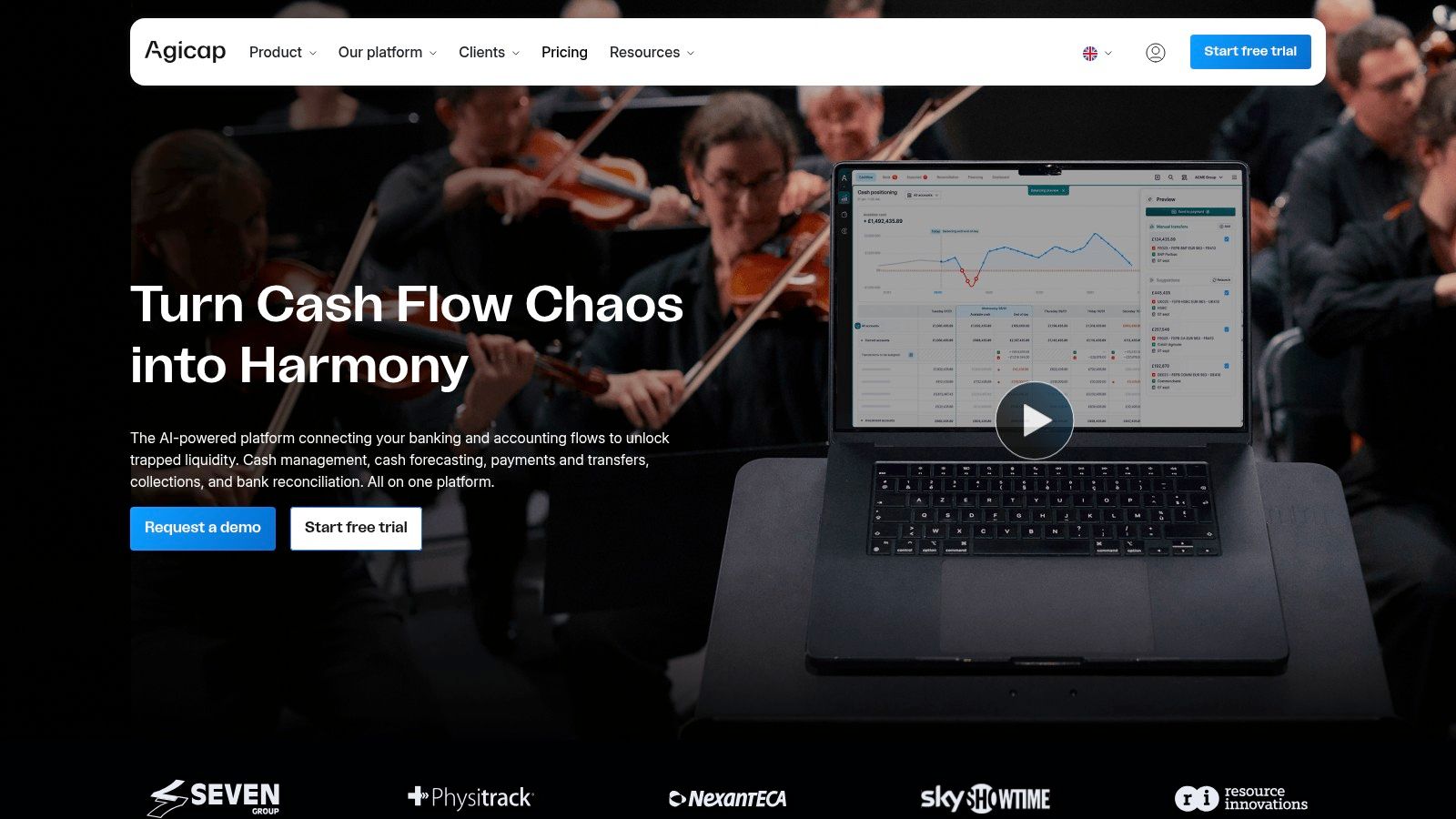
It's 8:30 a.m. Payroll is due, supplier payments are queued, and the owner wants to know how much cash is free to use today. Agicap is built for that job.
Agicap suits firms that manage multiple bank accounts, regular payment runs, and constant pressure on short-term liquidity. It shifts your attention to daily cash position, timing, and control. Those are practical finance skills employers value because they sit between bookkeeping, operations, and decision-making.
Where it builds stronger skills
Agicap is a good training ground for working capital discipline. You monitor receivables, plan outflows, and spot timing gaps before they become funding problems. That is the kind of judgement that separates a data-entry bookkeeper from someone who can support a finance manager or advise a growing business.
If you're learning working capital management principles in a practical finance context, Agicap gives the topic real operational meaning. You can see how overdue invoices, supplier terms, and payment scheduling affect available cash on a live basis.
Research cited in a market overview found that in the UK, 33% of small firms use accounting software, 28% use a bank feed solution, and 24% use forecasting software. That gap matters. Employers need people who can do more than post transactions. They need staff who can turn current cash data into action.
Good cash control starts with accurate timings, clean bank data, and disciplined follow-up.
Best fit
Choose Agicap if you want to build skills in live cash visibility rather than long-range modelling. It fits scale-ups, multi-account businesses, and trainees aiming for accounts assistant, assistant management accountant, or junior analyst roles where daily cash awareness matters.
It is less focused on full three-statement forecasting. That's fine. For many UK businesses, getting control of short-term cash is the first skill that improves decision-making and employability.
4. Xero Analytics and Analytics Plus

Monday morning. The bank feed is up to date, supplier bills are waiting, and a director wants to know whether cash will stay stable through the next few weeks. If you already work in Xero, the right answer is simple. Start forecasting in the same system.
Xero UK gives trainees a practical place to learn that discipline. Xero Analytics and Analytics Plus connect day-to-day bookkeeping work to cash forecasting, so you can see how invoicing, bill entry, reconciliation, and payment timing affect the position the business is in.
That matters for employability. Employers do not just want someone who can post transactions. They want someone who can keep records clean, spot pressure early, and explain what the next few weeks look like in cash terms. That is exactly the kind of skill developed in bookkeeping, accounts assistant, and business analysis training.
What it teaches well
Xero Analytics is strongest as a teaching tool for short-range cash awareness. It helps learners understand that forecast quality depends on basic accounting habits done properly. Late reconciliations, missing bills, and poorly maintained debtor records all weaken the forecast.
It also fits the UK push toward digital record-keeping and software-based tax compliance. HMRC's guidance on Making Tax Digital for VAT makes that direction clear. For trainees, this is practical reality, not theory. If you want to work in modern finance support roles, you need to be comfortable using cloud accounting data to support decisions.
Used well, Xero Analytics helps you build job-ready skills such as:
- Reconciliation discipline: forecasts are only useful when bank and ledger data are current
- Cash timing judgement: you learn that payment dates matter as much as invoice values
- VAT awareness: upcoming tax liabilities affect available cash and need to be planned for
- Communication skills: you can explain forecast movements clearly to a manager or client
Best fit
Choose Xero Analytics if you are early in your finance career and want to build forecasting habits inside a familiar accounting platform. It suits bookkeepers, accounts assistants, and learners working toward Xero certification or broader accounting support roles in SMEs.
Analytics Plus adds more depth, so it is a better choice if you want to move beyond transaction processing and start interpreting trends. That step matters. It starts to shift your value from software user to finance support professional who can read the numbers, explain the pressure points, and contribute to better decisions.
5. QuickBooks Online Cash Flow Planner
A junior accounts assistant closes the books for the week, sees healthy sales, and assumes cash is fine. Then payroll, pension payments, supplier bills, and HMRC deadlines hit before customers pay. That gap is where weak finance teams get exposed.
QuickBooks Online UK gives learners a practical way to spot that problem early. Its Cash Flow Planner pulls from accounting records and bank activity, then lets you add expected inflows and outflows manually. That combination matters because entry-level finance work is rarely about building complex models from scratch. It is about reading live records properly, checking timing, and keeping forecasts grounded in what the business has committed to pay.
This makes QuickBooks a strong training tool for learners on bookkeeping, accounts assistant, and finance support pathways. You are not just clicking around software. You are building the judgement employers want from someone trusted with sales ledger, purchase ledger, payroll support, and basic cash reporting.
Why it matters for early career roles
Cash flow discipline is one of the clearest employability signals in small business finance. U.S. Bank has reported that poor cash flow management is a major reason small businesses fail. Employers know this. They value people who understand that profit on paper does not guarantee money in the bank on the due date.
QuickBooks Online Cash Flow Planner teaches that lesson in a useful format. You can see expected receipts, scheduled payments, and near-term gaps without leaving the core accounting system. For a trainee, that builds the right habits early.
You learn to check whether customer payment timing is realistic. You learn to account for recurring costs instead of reacting to them late. You learn to explain why a business can look busy and still face a cash squeeze.
Those are job skills, not software tricks.
Best fit
Choose QuickBooks Online Cash Flow Planner if you want the simplest route into practical forecasting while building confidence in a widely used accounting package. It suits learners working toward QuickBooks certification, entry-level bookkeeping roles, and accounts assistant jobs where cash awareness matters every day.
Use it to build the fundamentals first: timing judgement, clean record-keeping, and clear communication with managers or clients. Then move to heavier forecasting and reporting tools once those basics are second nature.
6. Fathom
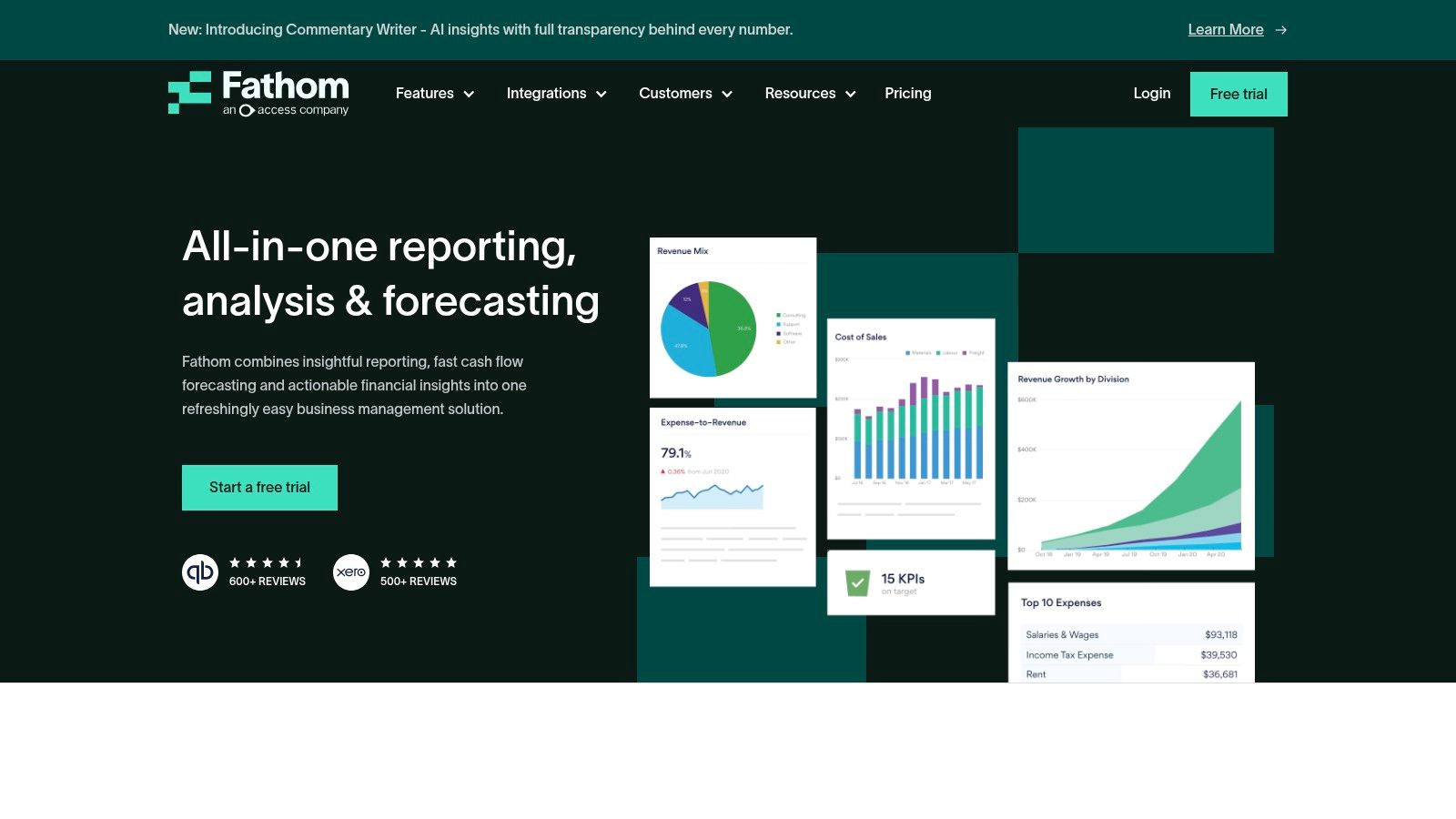
Fathom is where you go when you're ready to stop thinking only about cash-in and cash-out. It brings profit and loss, balance sheet, and cash flow together. That makes it one of the strongest learning tools for ambitious trainees who want to move into management accounts, final accounts support, or finance analysis.
Many learners hit a wall when they realise that a cash issue doesn't always come from poor sales. It can come from stock, debtors, creditors, loan repayments, or VAT timing. Fathom helps you see that relationship clearly.
Skills you build in Fathom
This tool supports three-way forecasting, scenario planning, consolidations, and reporting packs. Those are higher-value skills. They matter in firms with multiple entities, group reporting needs, or more serious advisory work.
It's also a useful bridge for final accounts learners. If you understand how the balance sheet and profit and loss feed the cash flow impact, you're no longer just posting entries. You're interpreting the financial position.
Strong applications include:
- Three-way modelling: Essential for analyst-level thinking.
- Consolidation work: Useful for multi-entity or group environments.
- Report presentation: Good preparation for client-facing or manager-facing roles.
Best fit
Choose Fathom if your goal is to move beyond entry-level bookkeeping into advisory, FP&A support, or advanced reporting. It's especially strong for business analyst and data analyst learners who need to connect financial statements to decision-making.
It does have a steeper learning curve than simple cash-only tools. That's exactly why it's valuable. Harder tools often teach better habits.
7. Spotlight Reporting
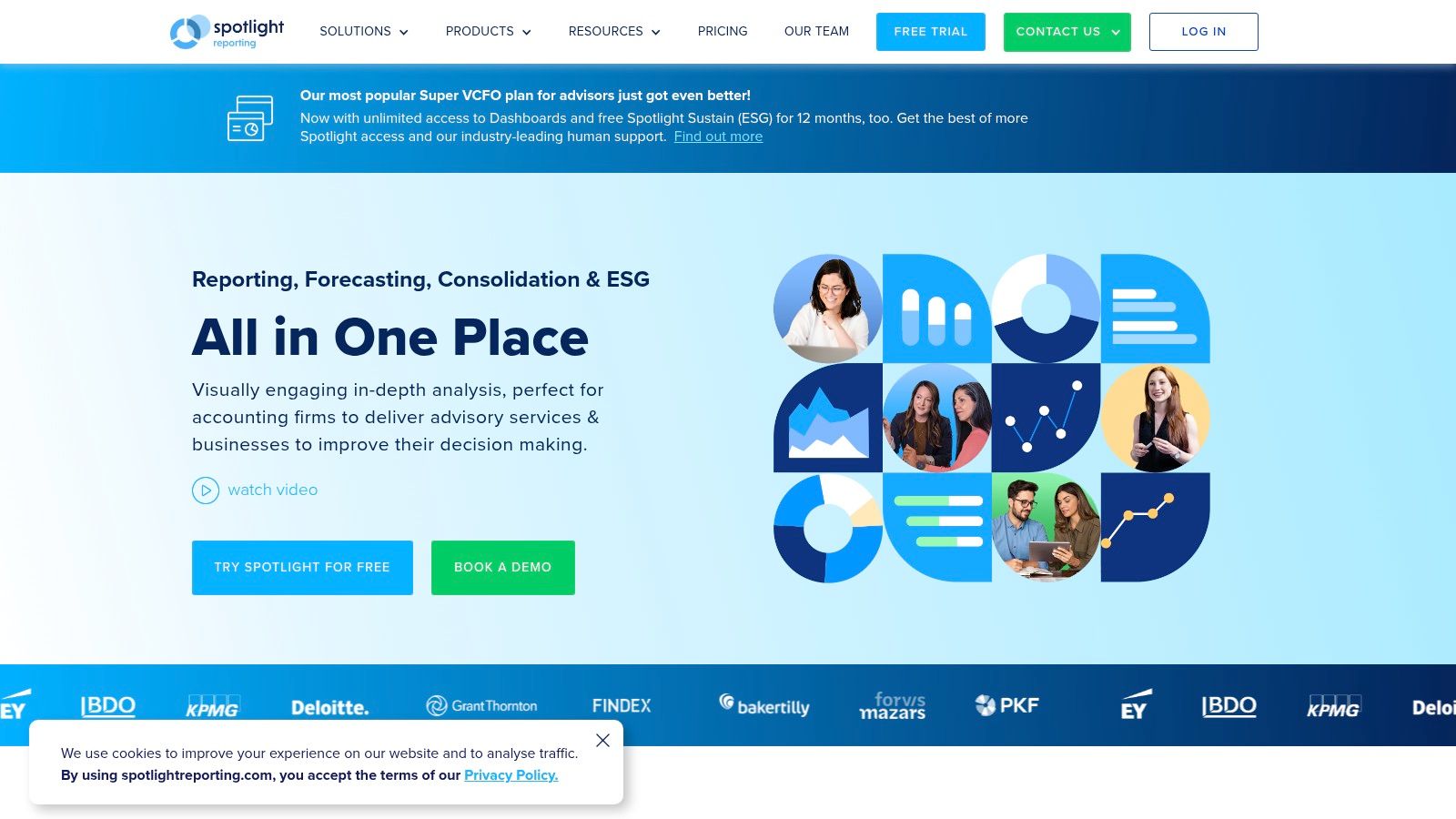
Spotlight Reporting is built for people who need to present finance clearly. If your career aim includes management accounts, group reporting, or client advisory work, this platform gives you a serious training ground.
Its forecasting capability goes beyond simple cash tracking. You can work with three-way models, scenarios, budgets, and consolidated forecasts. That makes it useful not just for accountants, but also for data-focused learners who need to communicate results.
Why presentation matters
A forecast has little value if you can't explain it. Spotlight is good at turning data into board-ready or client-ready output. That's a marketable skill.
It also teaches discipline around assumption-setting and reporting structure. You're not just producing numbers. You're framing a decision. Should a business delay a spend, accelerate collections, seek finance, or tighten controls? Spotlight supports that advisory style of thinking.
One important point sits behind all of this. Independent treasury commentary has noted that traditional cash flow tools can fall short when they sit in isolation from core systems. That's why a tool like Spotlight is most useful when you also understand integrations, source data quality, and mapping.
Best fit
Spotlight Reporting is a strong choice for advanced learners who want to practise consolidated forecasting, polished reporting packs, and advisory communication. It fits well with final accounts, management accounts, and business analysis development.
It's heavier than a lightweight cash planner. That's fine. Serious reporting work usually is.
8. Syft Analytics
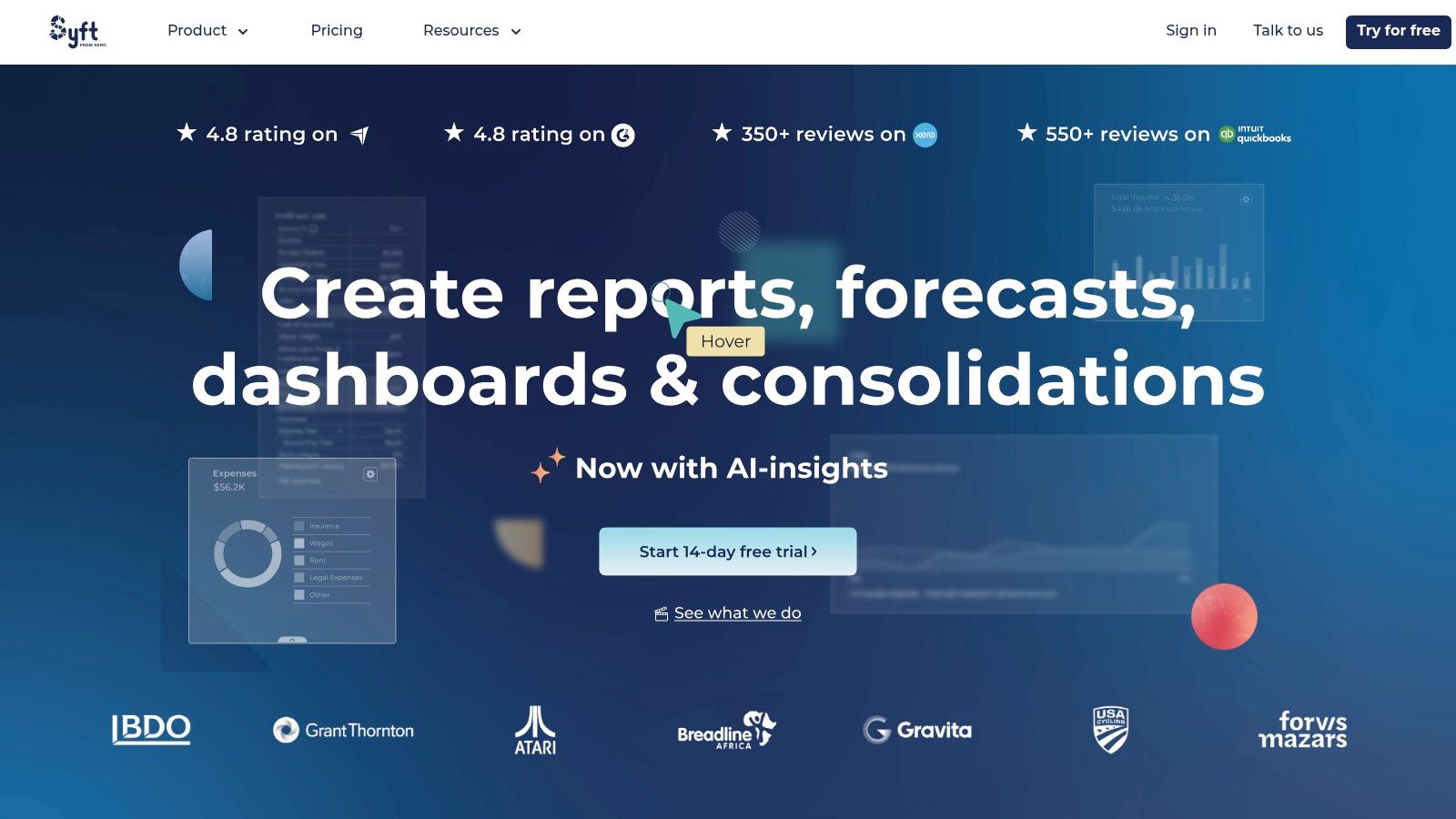
Monday morning. A manager wants to know whether cash will hold through payroll, a VAT payment, and a planned spend. In the same week, you may also need to help prepare a management report or support a budget review. Syft Analytics is useful because it trains you for that reality, not just for a single cash question.
Its strength is range. Syft combines visual reporting with forecasting that supports both short-term cash control and longer planning cycles. That makes it a good fit for learners building practical finance skills through bookkeeping, accounts assistant, and business analysis training. Employers do not just want software familiarity. They want people who can turn live accounting data into a forecast, explain the result clearly, and spot timing risks before they become bank problems.
Where Syft stands out
Syft is a better learning tool than a basic cash planner if you want to build judgment as well as reporting speed. You can work across weekly and monthly views, compare expected movements, and present the output in a format that non-finance colleagues can follow. That matters on the job. Junior staff who can explain why cash is tightening are more useful than staff who only export a chart.
The VAT angle matters too. UK learners need to get comfortable with the fact that tax timing changes cash reality. A forecast can look fine on paper and still fail in practice if VAT liabilities are ignored or placed in the wrong period. Syft helps you build the habit of checking timing, not just totals.
Useful learning gains include:
- VAT-aware forecasting: Good preparation for bookkeeping and finance admin work where tax timing affects day-to-day cash decisions.
- Weekly and monthly forecast views: Helpful for learning the difference between immediate cash control and broader planning.
- Clear visual outputs: Strong practice for management accounts, stakeholder updates, and assignment work where presentation quality matters.
A useful forecast reflects payment timing, tax timing, and real trading patterns.
Best fit
Syft Analytics suits trainees who want stronger forecasting and reporting skills without moving straight into a full FP&A platform. It is a smart choice for anyone preparing for bookkeeping, final accounts, management reporting, or entry-level analyst work.
If your goal is employability, this is the right reason to learn Syft. It teaches the practical skill employers pay for. Turning accounting data into decisions.
9. Cash Flow Frog
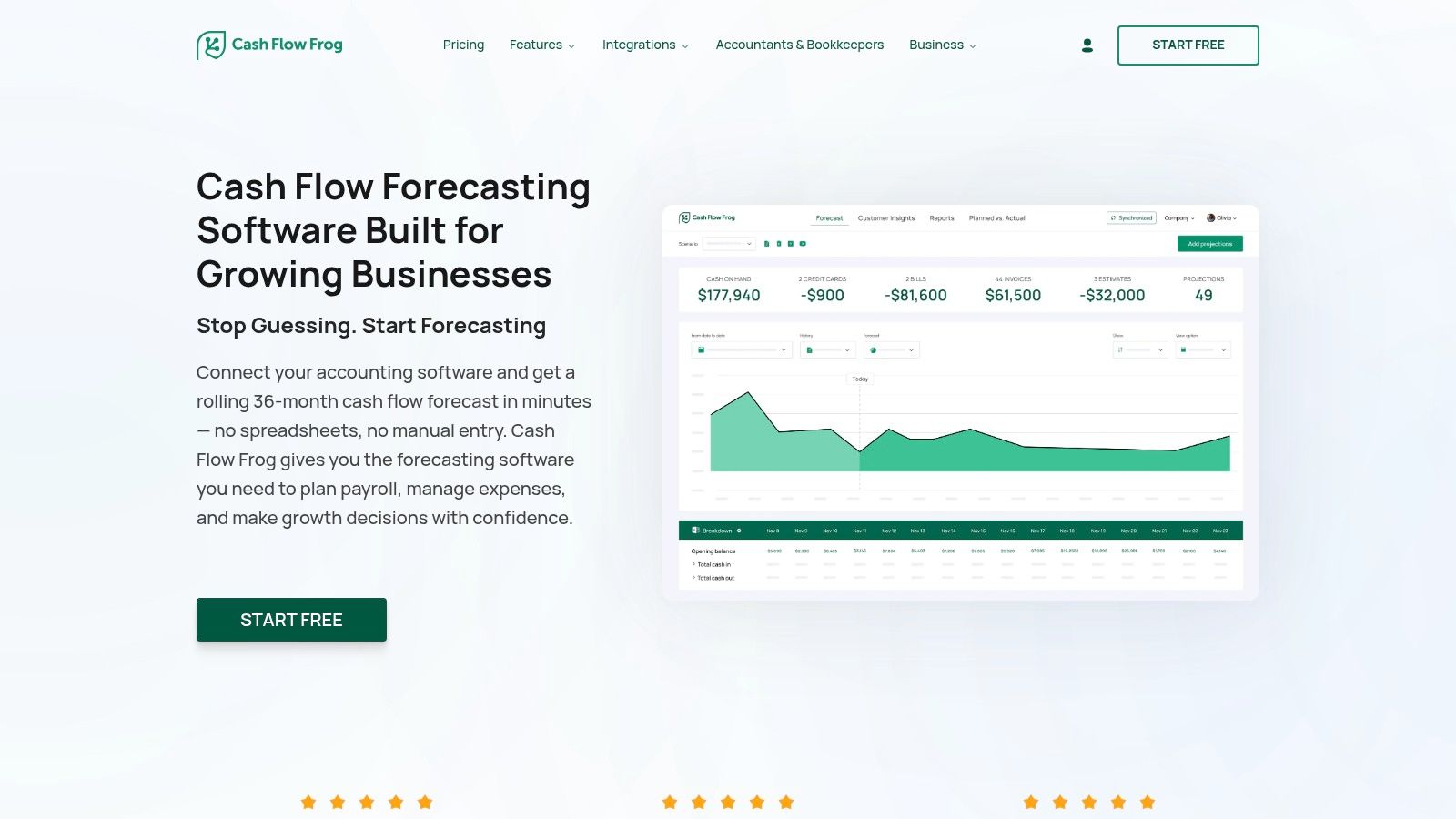
Cash Flow Frog is a practical choice for learners who may work across more than one accounting ecosystem. It connects with Xero, QuickBooks, Sage Intacct, Zoho Books, FreshBooks, and others, which makes it valuable if you expect varied client or employer environments.
That flexibility matters in training. Real careers rarely unfold in one perfect software stack. You may start in a small firm using Xero, move into a business on QuickBooks, then support an employer with a different setup altogether.
What it teaches well
Cash Flow Frog is strong for rolling cash forecasting and straightforward scenario planning. It helps you practise an important skill that junior staff often miss. Forecasts should update as new data arrives, not stay frozen after month-end.
It also supports the kind of cadence that can be useful in pressure periods. Guidance on cash flow management has stressed the importance of first deciding whether a shortfall is a timing problem or a deficit problem, and has also noted that some organisations benefit from a 13-week forecast updated weekly. That's a valuable discipline to learn, especially when cash stress is immediate.
Best fit
Choose Cash Flow Frog if you want a versatile forecasting tool that works across different finance systems and teaches rolling forecast habits. It's useful for SME finance roles, outsourced bookkeeping support, and junior analyst work.
It isn't the strongest option for full driver-based FP&A. But if your immediate job goal is better forecast control across mixed software setups, it's a very sensible choice.
10. Helm
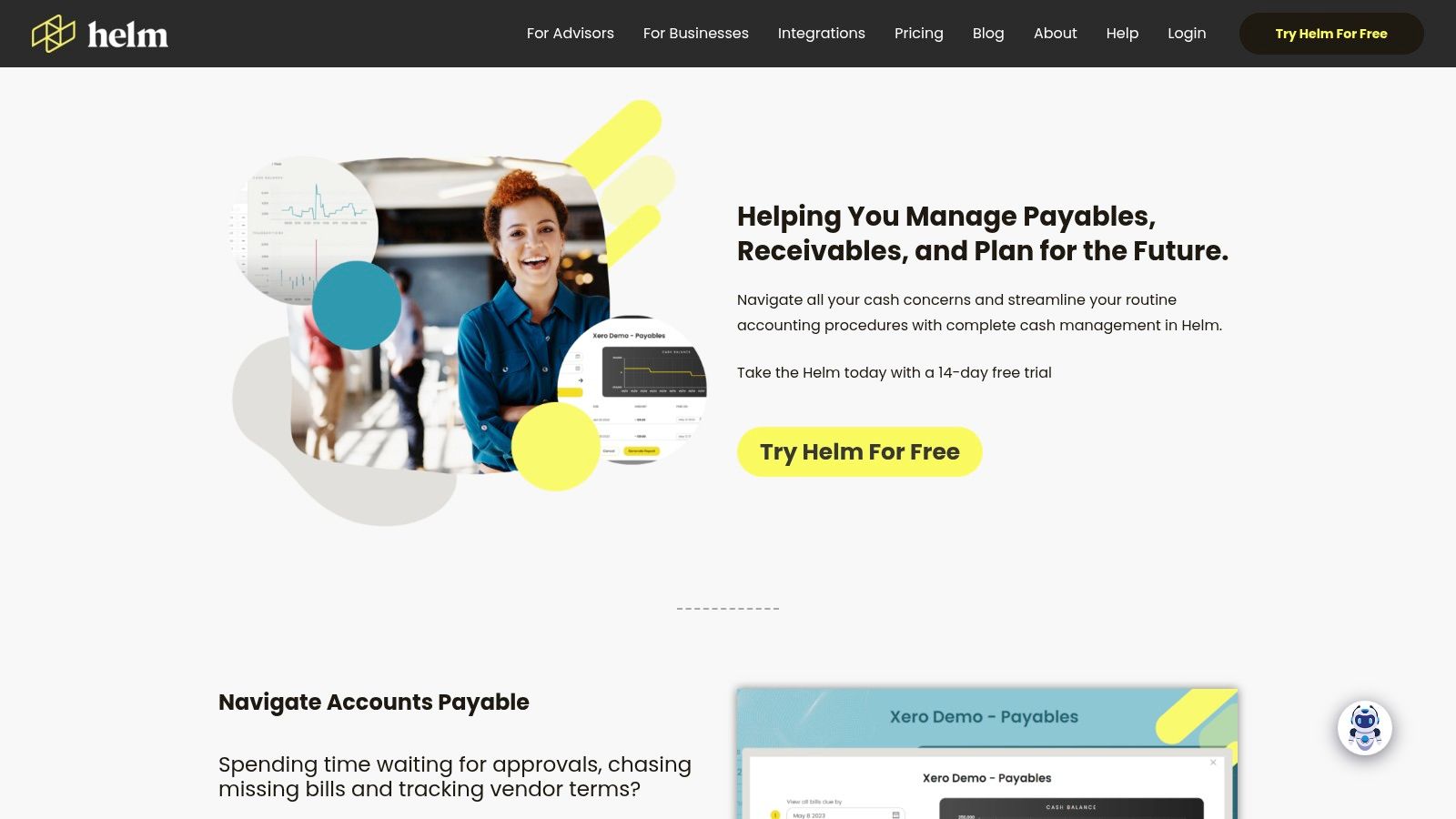
Helm focuses on one of the hardest real-world cash problems. Timing. That makes it a useful tool for learners who need to understand operational cash decisions rather than just forecast outputs.
A business can look profitable and still struggle because payments go out before receipts come in. Helm keeps attention on that daily reality through cash scheduling, accounts receivable and payable management, and a drag-and-drop cash calendar.
Why timing skills matter so much
Many trainees become valuable contributors. Employers need people who can spot which bills can wait, which customer receipts need chasing, and how small schedule changes affect available cash.
Helm is especially strong for practical exercises. You can model best, likely, and worst-case views, move payments around, and understand how timing choices shape the runway. That kind of work maps well to accounts assistant duties, credit control support, and operational finance roles.
Its learning value is simple:
- Payment scheduling: Strong for AP and AR understanding.
- Scenario practice: Good for short-term cash judgement.
- Accessible interface: Easy for learners to use with confidence.
Best fit
Pick Helm if you want a hands-on cash scheduling tool that teaches real operational judgement. It's best for people who want to become stronger in receivables, payables, and short-term cash planning.
It's narrower than a full reporting suite, but that focus is exactly why many learners will benefit from it first.
Top 10 Cash Flow Management Tools, Features & Comparison
A trainee opens two client files at 9 a.m. One business needs a simple short-term forecast inside its bookkeeping system. The other needs group reporting, scenario planning, and a clear explanation for directors. That is why tool choice matters. The right platform does more than produce a forecast. It builds the practical judgement employers want from bookkeepers, accounts assistants, and junior analysts.
Use this comparison to match software features with the skills you need to learn. If you are training through bookkeeping, accounts assistant, or business analysis study, pick the tool that strengthens the work you want to do.
| Tool | Core features ✨ | Ease & quality ★ | Pricing / Value 💰 | Target audience 👥 | Best for / Unique strength 🏆 |
|---|---|---|---|---|---|
| Float | 13 week to 36 month forecasts; scenario modelling; auto budgets; Xero/QBO/FreeAgent | ★★★★, visual, trainee friendly onboarding | 💰 Listed plans; good entry ROI | 👥 Trainees, small advisory teams | 🏆 Quick visual timelines and easy one-to-one setup |
| Futrli by Sage | 3 year forecasts; scenarios; reporting packs; Excel import | ★★★★, powerful, steeper mastery | 💰 Tiered or region pricing; can be confusing | 👥 Sage users, advisors, UK firms | 🏆 Prediction led forecasting that fits Sage workflows |
| Agicap | Live bank sync across many banks; daily liquidity; alerts; treasury controls | ★★★★, operational, bank centric UX | 💰 Sales led; contact for quote | 👥 UK and EU SMEs, scale ups with multi bank needs | 🏆 Strong bank connectivity and daily cash operations |
| Xero Analytics / Analytics Plus | 7, 30, 60, and 90 day cash views; dashboard scenarios; Business Snapshot KPIs | ★★★, integrated, minimal extra learning | 💰 Included on some Xero plans | 👥 Xero trainees and bookkeeping learners | 🏆 Native teaching aid for cash flow basics inside Xero |
| QuickBooks Online Cash Flow Planner | Up to 24 month projections; invoice timing predictions; manual inflows and exports | ★★★, basic but smooth for QBO users | 💰 Included with UK QBO subscriptions | 👥 QBO trainees and small businesses | 🏆 Direct learning path with QuickBooks certifications |
| Fathom | Three way forecasting; consolidations; Smart Predictions; report packs | ★★★★★, advanced FP&A, steeper learning | 💰 USD tiers; company based pricing | 👥 Advanced trainees, firms with multi entity clients | 🏆 Detailed 3 statement modelling and consolidation |
| Spotlight Reporting | 3 way forecasting up to 5 years; consolidated packs; custom dashboards | ★★★★★, advisor grade, in-depth | 💰 Sales or contact pricing for plans | 👥 Practices teaching consolidations and advisory | 🏆 Strong reporting and group forecasting capability |
| Syft Analytics | Monthly and weekly forecasting up to 10 years; VAT automation; Cash Manager | ★★★★, balanced long and short range views | 💰 Regionally gated pricing; Plus and Advanced tiers | 👥 Trainees needing VAT aware forecasts and reports | 🏆 VAT automation plus daily Cash Manager predictions |
| Cash Flow Frog | Rolling 36 month forecasts; daily updates; scenario cohorts; multi connectors | ★★★★, fast time to value, clear timelines | 💰 Revenue based pricing calculator | 👥 SMEs to mid market advisors | 🏆 Rapid rolling forecasts and easy multi platform sync |
| Helm | 52 week scheduling; AP and AR drag and drop calendar; unlimited scenarios and users | ★★★★, highly approachable UI focused on timing | 💰 Pricing in USD; contact for UK billing | 👥 Trainees and practitioners focused on cash scheduling | 🏆 Practical cash timing tools and advisor resources |
A few clear recommendations.
Choose Xero Analytics or QuickBooks Cash Flow Planner first if you are still building bookkeeping confidence. They keep cash forecasting close to bank feeds, invoices, bills, and reconciliations. That matters in entry-level finance roles because employers expect you to understand how day-to-day posting affects liquidity, not just how to read a dashboard.
Choose Float if you want the best balance between usability and forecasting discipline. It is one of the strongest tools for learning rolling forecasts, scenario changes, and the link between accounting data and forward planning. For many trainees, that is the point where bookkeeping starts turning into analysis.
Choose Futrli, Fathom, or Spotlight Reporting if your goal is advisory, management accounts, or group reporting. These tools train you to present numbers properly, structure assumptions, and explain forecast movement to decision-makers. That is higher-value work, and it is exactly the kind of step up that helps candidates move beyond processing tasks.
Choose Agicap, Syft, Cash Flow Frog, or Helm if you want sharper operational cash skills. These platforms are useful for learning liquidity monitoring, VAT-aware forecasting, short-term timing control, and scenario pressure testing. Those skills fit real responsibilities in SME finance teams, especially where cash pressure shows up weekly rather than once a month.
The best tool is the one that matches the job skill you need next. Learn the software, then learn the finance logic behind it. That combination is what improves employability.
Turn Cash Flow Data into Career Growth
Software alone won't make you valuable. The person using it does.
This is the message behind all of these cash flow management tools. Float can teach you forecasting discipline. Futrli can sharpen your reporting structure. Agicap can build your working capital instincts. Xero and QuickBooks can ground you in the daily habits that employers expect. Fathom, Spotlight, and Syft can stretch you into analysis, presentation, and multi-statement thinking. Cash Flow Frog and Helm can train you to manage timing pressure with confidence.
Those skills map directly to real UK job roles. A bookkeeper needs to understand how VAT, invoices, and bank reconciliation affect cash. An accounts assistant needs to see how payroll dates, supplier terms, and debtor delays create pressure. A final accounts learner needs to connect the balance sheet and profit and loss to actual liquidity. A business analyst or data analyst needs to turn system data into decisions that managers can use.
The best candidates don't just know where to click. They know why the figures move. They can explain what caused the pressure, what the likely next step is, and what action should happen now. That's the difference between basic software exposure and genuine employability.
This matters even more in the UK because digital finance work is now normal practice. MTD pushed businesses towards software-based record keeping. Forecasting is no longer treated as a specialist luxury. It's part of routine finance work. At the same time, under-adoption of bank feeds and forecasting tools shows there is still room for professionals who can bridge bookkeeping accuracy and forward-looking insight.
If you're early in your career, start with one platform that matches your target role. If you want bookkeeping or accounts assistant work, begin with Xero, QuickBooks, or Float. If you want Sage-focused employment, Futrli is a smart move. If you're aiming higher into reporting, business analysis, or finance support, build towards Fathom, Spotlight, or Syft. If you want strong operational judgement, study Agicap, Cash Flow Frog, or Helm.
Then pair the software with structured training. That's where your progress speeds up. A good course gives you context, corrections, and practical routines. You don't waste time guessing whether you're doing the right work. You learn how bookkeeping, VAT, payroll, forecasting, and reporting connect.
That's how careers move forward. You stop being someone who only processes transactions. You become someone who helps a business plan, respond, and stay in control.
Professional growth in finance starts with practical skills that employers can recognise straight away. Professional Careers Training offers one-to-one accountancy training with ACCA qualified Chartered Accountants and CPD approved trainers, flexible evening and weekend study options, official Sage, Xero and QuickBooks certification support, software installation help, and career support that includes CV preparation, LinkedIn optimisation, job hunting strategy, and employer referrals. If you want job-ready training in bookkeeping and VAT, advanced payroll, accounts assistant work, final accounts, business analysis, or data analysis, this is the right place to build it.