
If you're looking at HR jobs and thinking, “I'm not a typical HR person, I'm better with numbers, systems, spreadsheets, payroll or reporting”, you may...
If you're looking at HR jobs and thinking, “I'm not a typical HR person, I'm better with numbers, systems, spreadsheets, payroll or reporting”, you may be closer to this career than you realise.
A lot of people still think HR is mainly about interviews, policies and difficult conversations. Those things matter. But in day-to-day UK workplaces, many of the duties of human resources depend on accurate records, clean data, reliable payroll, compliant processes and clear reporting. That means finance and data skills are no longer side skills. In many roles, they're part of the job.
This matters whether you're a recent graduate, a career changer, or someone already working in bookkeeping, payroll, accounts support or analysis. HR often needs people who can work carefully, follow process, use systems well and turn messy information into practical action.
Understanding the Modern HR Department
HR sits at the centre of business operations. When a new employee joins, HR helps put the contract in place, supports onboarding, records key details, and makes sure pay, policies and legal checks are handled properly. When a problem happens, HR often coordinates the process that protects both the employee and the employer.
That's why the duties of human resources go well beyond the old stereotype of “hiring and firing”. In the UK, the scale alone shows why HR matters. The Office for National Statistics reported that 1.5 million businesses were operating in the UK in 2024, and for each one, HR's core duties include managing recruitment, contracts, pay and compliance, making these tasks central operational controls for business continuity across millions of workplaces, as outlined in this overview of key HR functions.
What modern HR really covers
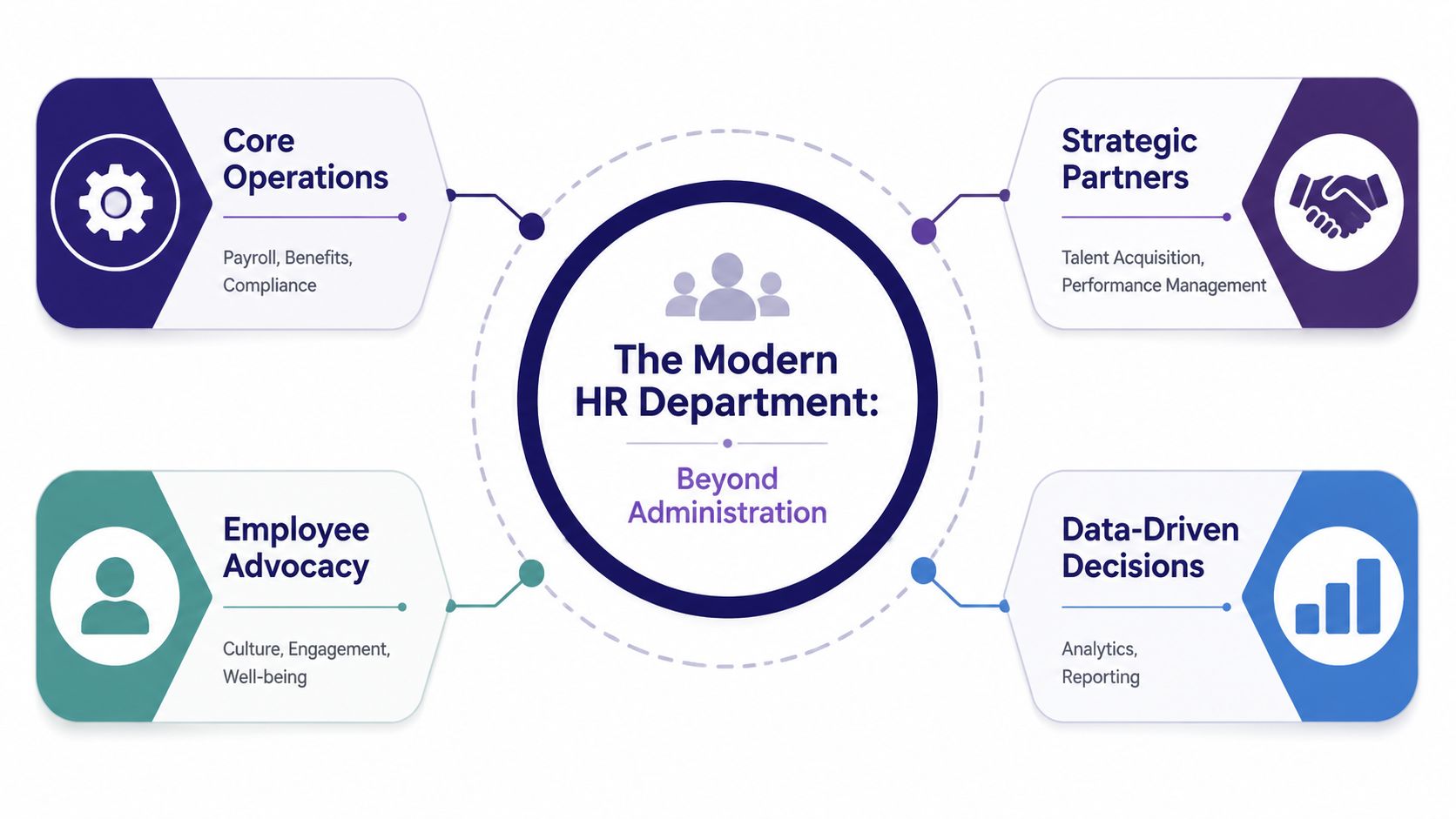
A modern HR team often handles several types of work at once:
- Operational tasks like payroll coordination, contracts, employee records and holiday tracking
- People support such as onboarding, absence follow-up and policy guidance
- Risk control through documentation, procedure and legal compliance
- Decision support using reports, HR software and workforce data
In some businesses, these duties sit in one HR department. In others, they're shared across finance, operations and line managers. Smaller employers may outsource some work, which is why it helps to understand understanding PEO and ASO options when comparing in-house HR support with external service models.
Why finance and data skills fit naturally
Many readers get stuck on one question. If HR is about people, why do numbers matter so much?
They matter because people processes create financial and legal consequences. If a salary is wrong, staff lose trust. If absence records are poor, managers can't act fairly. If onboarding paperwork is incomplete, compliance problems appear later. If reporting is weak, leadership can't spot turnover issues or skills gaps early enough.
Practical rule: HR decisions are only as good as the records, systems and processes behind them.
That's one reason candidates with bookkeeping, payroll, accounts support and data analysis training can move into HR work successfully. They already understand accuracy, deadlines, software and documentation. Those are core strengths in many HR roles.
If you're exploring routes into the field, this guide to how to get a job in human resources can help you connect your current skills to likely entry points.
Core Financial and Administrative Duties
Many HR jobs start with work that looks administrative on the surface but carries real financial and compliance weight. Consequently, detail matters most.
A contract has to match the agreed terms. A starter must be added to the right systems. Payroll data has to be correct before deadlines. Benefits, leave, pension information and employee records must be handled consistently. One error can create confusion across several departments.

Payroll is an HR duty with finance discipline
Payroll is one of the clearest examples of overlap between HR and finance. In some firms, finance runs payroll. In others, HR owns it or shares it. Either way, the work requires the same habits that strong payroll and accounts staff already use.
That includes:
- Checking input data such as pay rates, working hours, starters, leavers and absence records
- Following deadlines so pay runs happen on time
- Keeping audit trails when changes are made to employee records
- Using software confidently to process and review payroll information
An Advanced Payroll course can be a strong fit here because it builds practical confidence with pay processing, deductions, record checks and reporting. If you've worked with payroll software or reconciled figures before, you'll already understand why one small input mistake can affect trust across the whole business.
Bookkeeping habits help HR stay accurate
Bookkeeping and HR may seem like separate fields, but the working style is often similar. Both depend on careful input, consistent categorisation and reliable record-keeping. When HR teams manage benefits, expenses linked to staff, payroll support or employee cost records, bookkeeping habits become useful fast.
A Bookkeeping & VAT course can support HR work in a few practical ways:
- Structured record management helps with employee files and transaction-linked records
- Confidence with financial documents helps when HR works with pay, expenses or benefits administration
- Software familiarity with tools like Sage, Xero or QuickBooks makes cross-team work smoother
Clean administration isn't “just admin” in HR. It's the base layer for pay accuracy, legal compliance and employee confidence.
Onboarding is process work, not just welcome emails
New starters often judge an employer early. If their contract arrives late, system access fails, pay details are wrong or key forms are missing, confidence drops quickly.
Good onboarding administration includes:
- Preparing documents before the employee starts
- Collecting required details accurately
- Coordinating payroll setup with the right information
- Recording policy acknowledgements and core employment data
- Keeping records updated when roles, hours or terms change
This is why accounts assistant training can also support an HR pathway. People in those roles are used to reconciling details, updating systems, checking supporting documents and working across teams. HR departments value that mindset because much of the work depends on consistency rather than guesswork.
Strategic Duties in Performance and Development
Once the operational basics are under control, HR has to help the business answer harder questions. Which teams are struggling to hire? Where are skills gaps growing? Which managers need support with performance conversations? Which training efforts are helping employees improve, and which are just being completed without impact?
That's where HR becomes more strategic.

According to the CIPD's Good Work Index, 74% of UK workplaces used HR software for people management in 2023, while only 36% used people analytics. That gap points to a strong opportunity for people who can turn workforce records into useful insight for hiring, retention and performance, as noted in this summary of HR specialist skills and analytics use.
Performance management needs evidence
Managers often say an employee is doing well, underperforming, or ready for promotion. HR's job is to help make those judgments fair and structured. That usually means gathering evidence from reviews, absence patterns, training records, role expectations and manager feedback.
A Business Analyst mindset helps here. You're not only collecting information. You're clarifying the problem, checking the process, identifying gaps and helping people make better decisions.
For example, HR might look at:
- Review completion data to see where performance processes are slipping
- Training records to identify whether a team has the skills expected for a role
- Absence trends when performance concerns may connect to wellbeing or workplace issues
- Role-based comparisons to check whether standards are being applied consistently
Training and development are more than course booking
A common misunderstanding is that HR “does training” by arranging workshops. In practice, HR also has to ask whether learning activity links to business needs.
That's where Data Analyst skills become valuable. If you can clean data, build dashboards, spot patterns and explain findings clearly, you can support HR in a more strategic way.
Useful tasks include:
- Creating reports from HR systems
- Tracking completion and follow-up across departments
- Identifying skills gaps before they affect delivery
- Presenting trends in a format managers can act on
A short video can help make that shift from admin to analysis easier to visualise.
Why this opens doors for analysts
Many businesses already have HR software. Fewer have people who can use that data well. That creates a practical opening for candidates with experience in Excel, Power BI, SQL, Python, reporting logic or business process analysis.
The strongest HR professionals don't just store information. They interpret it and help managers act on it.
That doesn't mean every HR role is heavily technical. It means the duties of human resources increasingly reward people who can combine people awareness with reporting skill. If you can explain a trend clearly and back it up with clean data, you bring something many HR teams need.
Managing Employee Relations and Legal Compliance
This is the part of HR that many people notice only when something goes wrong. A grievance is raised. A conduct issue appears. An employee says they've been treated unfairly. A manager wants to act quickly, but the process has to be fair.
In the UK, that's not optional. A major historical shift in HR came through milestones such as the Health and Safety at Work etc. Act 1974 and the Equality Act 2010, which helped formalise HR's role in workplace safety, fairness, employee protections, grievance handling and policy enforcement, as described in this overview of human resources functions.
Procedure protects everyone
Employee relations work often includes disciplinary matters, grievances, investigations, hearings and appeals. HR may not make every final decision, but it usually helps shape the process and record what happened.
ACAS guidance on employee relations requires UK employers to use fair, timely and consistent procedures for disciplinary and grievance issues. When HR implements and documents these processes correctly, it significantly lowers the organisation's risk of facing costly employment tribunals, as explained in this summary of HR specialist responsibilities and compliant procedure.
What HR actually does in a dispute
When readers think about employee relations, they sometimes imagine HR stepping in as a referee. Its involvement is more procedural.
HR often helps with work like this:
- Reviewing the policy so the employer follows the correct route
- Coordinating an investigation with the right records and timelines
- Keeping notes and documents in case the decision is challenged later
- Advising managers on consistency, fairness and next steps
Accounting-style discipline becomes useful again. Someone trained to keep accurate records, check dates, maintain an audit trail and handle sensitive information carefully often adapts well to compliance-heavy HR work.
Good HR documentation should let an independent person understand what happened, what was checked and why a decision was made.
Data protection and record handling
HR teams handle highly sensitive information. That includes health-related details, pay records, disciplinary notes, contact data and other confidential employee information. Poor handling doesn't just create operational mess. It creates risk.
That's why data handling skills matter so much in HR. If you need a practical refresher on compliant information handling, this resource on training in data protection is highly relevant to modern HR work.
A Final Accounts or bookkeeping background can also help in an unexpected way. It trains you to value evidence, consistency and traceable records. In HR, those habits support fair process and defensible decision-making.
Building Your HR Career With Finance and Data Skills
A lot of HR job descriptions ask for “HR experience”, which can make career changers feel stuck. But many employers don't only need classic HR backgrounds. They need people who can run systems, handle payroll details, maintain records, support reporting and work across departments.
That's especially true in smaller firms. Small businesses account for 99.9% of the UK business population and around 60% of employment, and in these environments roles are often blended, so someone with bookkeeping or accounts assistant skills may also take on HR duties, creating a practical pathway into the field, as outlined in this overview of what human resources does.
Mapping training to HR duties
Here's a practical way to think about it.
| Human Resources Duty | Required Skill | Relevant Professional Training |
|---|---|---|
| Payroll support and pay record checks | Accuracy, payroll processing, deadline control | Advanced Payroll |
| Employee file maintenance and benefits admin | Record-keeping, reconciliation, software use | Bookkeeping & VAT |
| Onboarding administration | Document control, systems entry, process consistency | Accounts Assistant |
| HR cost reporting and staff-related financial support | Ledger awareness, reporting, cross-team coordination | Final Accounts |
| Workforce reporting and dashboard creation | Data cleaning, visualisation, trend analysis | Data Analyst |
| Process improvement in recruitment or performance workflows | Requirements gathering, stakeholder communication, process mapping | Business Analyst |
What employers often look for
Even when a job title says HR Assistant, HR Administrator or HR Coordinator, the practical tasks often point to hybrid skills.
Common expectations include:
- Maintaining accurate employee records across systems
- Supporting payroll changes for starters, leavers and contractual updates
- Producing reports for managers or senior staff
- Handling confidential data in a secure and organised way
- Using spreadsheets and HR software without constant supervision
If you're building reporting skills, it helps to understand how tools are used in real workplaces. This guide to what Power BI is used for is useful if you want to connect dashboard skills to HR reporting work.
How to position yourself in applications and interviews
You don't need to pretend you've always wanted to work in HR since school. A stronger approach is to explain the value you already bring.
Try framing your background like this:
- From bookkeeping to HR by highlighting accuracy, reconciliations, records and compliance awareness
- From payroll to HR by emphasising pay processing, employee queries, deadlines and confidentiality
- From accounts assistant work to HR by showing document control, systems use and cross-functional support
- From data analysis to HR by focusing on reporting, dashboards, trend spotting and practical recommendations
Employers often remember candidates who can explain how their existing skills solve day-to-day business problems.
If you've studied Advanced Payroll, Bookkeeping & VAT, Accounts Assistant, Final Accounts, Business Analyst or Data Analyst training, you already have language that translates well into HR. The key is to make the connection clear. Don't just list software. Explain what you used it for, what you checked, what records you maintained and how your work reduced errors or improved visibility.
Conclusion The Strategic Future of Human Resources
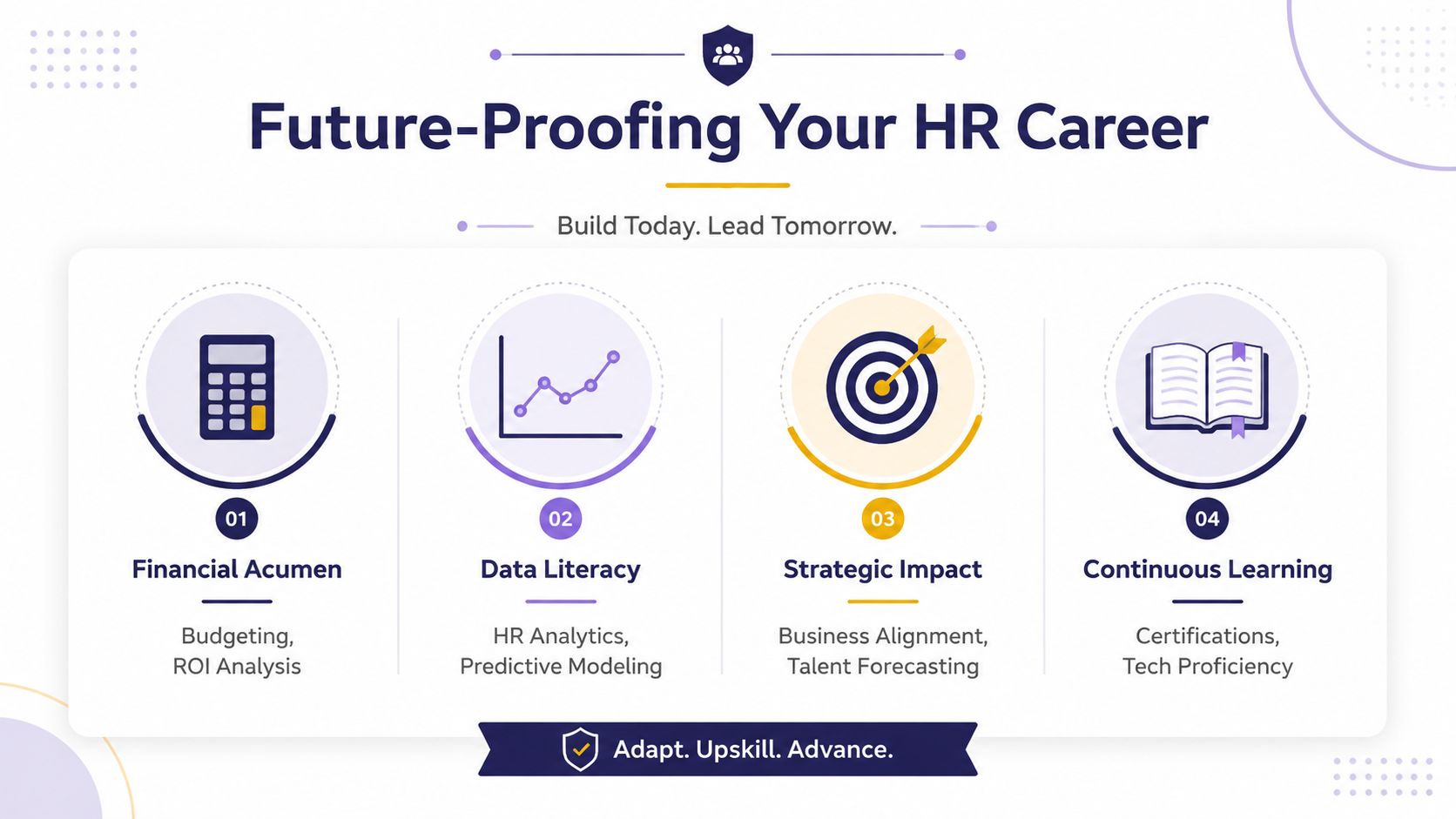
The duties of human resources are changing. Administrative work still matters, but it's no longer the whole story. HR now sits closer to workforce planning, compliance control, reporting and decision support than many people expect.
That shift is becoming more important because the labour market is harder to manage. The CIPD's 2024 labour market outlook highlights persistent recruitment difficulties and skills shortages in the UK, which raises HR's role from administration to strategic workforce planning focused on using data and analytics to solve talent gaps and improve retention, as noted in this discussion of the changing role of HR.
For job seekers, that's good news. It means there isn't just one route into HR. If you bring finance discipline, payroll confidence, systems knowledge or data analysis skill, you may already have a strong base for this field.
The future of HR will still need empathy, judgement and communication. But it will also need people who can work with evidence, protect process, understand numbers and help businesses make better people decisions.
If you want to build job-ready skills that connect directly to modern HR work, Professional Careers Training offers practical training in bookkeeping & VAT, advanced payroll, accounts assistant, final accounts, business analyst and data analyst pathways. Their support includes flexible study options, software training in Sage, Xero and QuickBooks, and career-focused help such as CV preparation, job search support and coaching for the UK market.