
If you're training to become a business analyst, or you already work as one, you've probably noticed AI tools turning up in more of your...
You've got the offer email, the interview went well, and now HR has asked for your right to work documentation. If you're a new graduate, that message can feel more stressful than exciting, especially when you're applying for your first bookkeeping, payroll, finance, or data role in the UK. The good news is that the process is structured, and once you understand what the employer is looking for, it becomes much easier to handle calmly and correctly.
For accountancy trainees, business analyst candidates, and international newcomers, this check sits right at the start of the working relationship. UK employers must complete it before employment begins, and they need the right evidence to do it properly so they can rely on a statutory excuse if a problem is later discovered. The process also helps applicants, because it creates a clear, documented record that your work permission was checked in the right way. A practical overview used by employers in busy sectors, including hospitality and staffing, is also helpful reading for people who want to see how these rules play out on the ground, such as Staffing compliance for independent pubs.
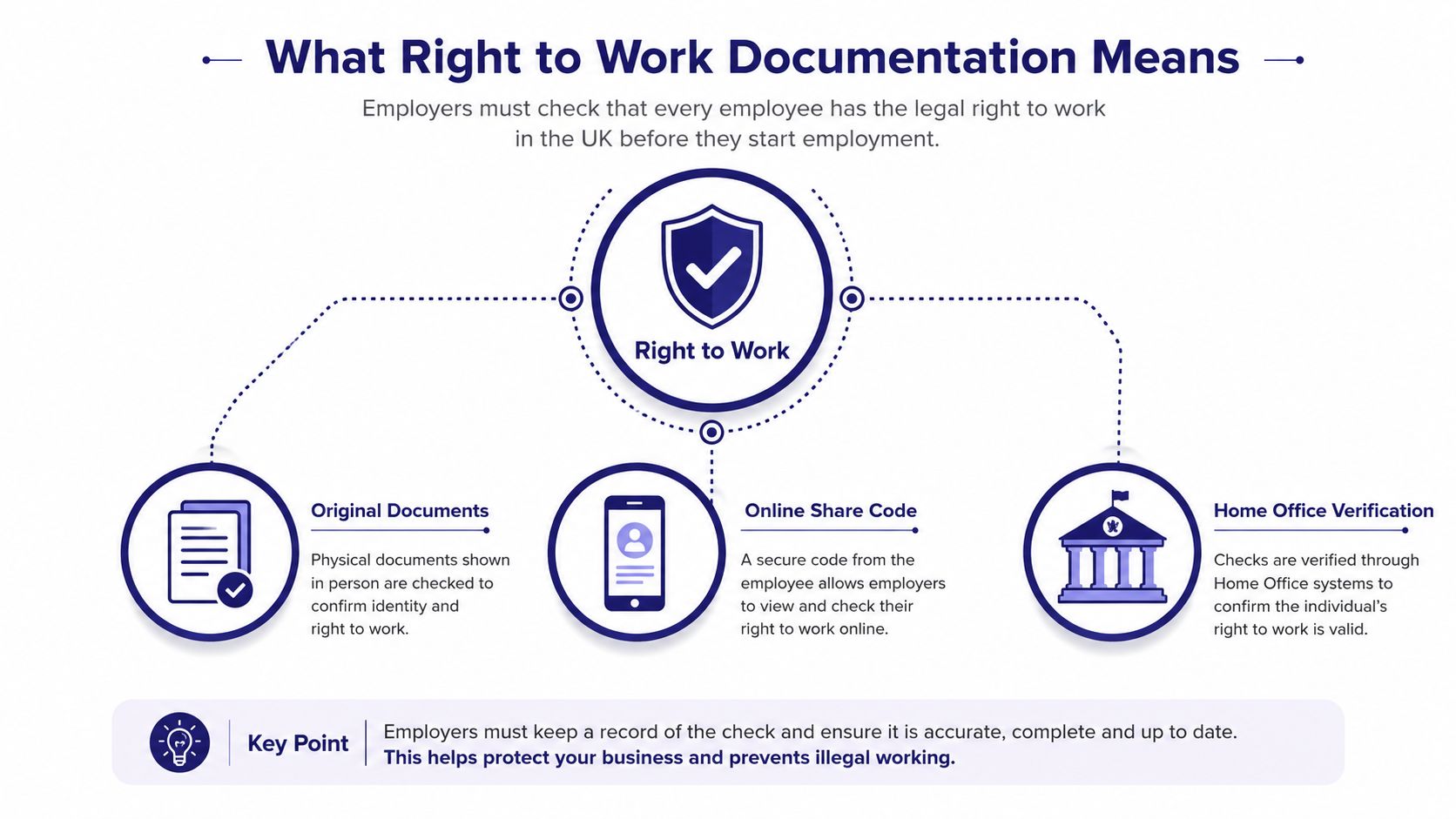
The simple way to think about it is this. Right to work documentation is the evidence that proves you're allowed to take the job, and the employer's check is the step that confirms it. For British and Irish citizens, that might be a passport or another acceptable document. For many international candidates, it may be a share code from the Home Office service, matched with the person's date of birth and status record.
Practical rule: the check is not just about collecting paperwork. It's about matching identity, status, and the job start date so the employer can record a compliant decision.
That's why these documents matter for both sides. If the employer does the check properly, they reduce legal risk. If you provide the right evidence early, you avoid delays to onboarding, software access, training schedules, and payroll setup.
What Right to Work Documentation Means in the UK
A lot of first-time applicants think this is just an HR formality. It isn't. Right to work documentation is the evidence an employer uses to confirm that you can legally take the role, and the check has to happen before you start work. If the employer skips it, or does it badly, they can lose their statutory excuse against a civil penalty, which is why the process is taken so seriously in UK hiring.
For a graduate starting in bookkeeping, VAT, accounts assistant work, business analysis, or data analysis, this usually means one of two routes. You may be asked to show original documents in person, or you may be asked for a valid online share code so the employer can check your status through the government service. The aim is not to create extra hassle. It is to make sure the employer is checking the right evidence, in the right way, at the right time.
Why employers insist on the check
Employers need to know two things. First, that the document or digital record is genuine. Second, that it belongs to the person in front of them. That is why the employer must inspect documents carefully, keep copies, and record the date of the check. They are building a paper trail, or a digital trail, that shows they did their job properly.
For candidates in advanced payroll, business analysis, or data analysis roles, the check may happen alongside software onboarding, security vetting, and induction. It can feel like a lot, especially if this is your first UK offer after university or you have just moved here. In practice, it is one of the earliest compliance gates in your career, a bit like the ID check before you are given building access. The employer is not questioning your skills, they are confirming they can hire you lawfully.
The move to digital checks
The system has become more digital over time. Employers can now use the Home Office online service with a share code and date of birth, and from 6 April 2022 they could also use Identity Service Providers with identity document validation technology for eligible passports and passport cards for eligible routes. Another major change came on 1 July 2021, when acceptable-document rules changed for many European national employees, who could no longer rely on a passport or national ID card alone and instead needed proof of status under the EU Settlement Scheme or another qualifying route.
That matters because the UK no longer relies on one simple paper process. It now uses a hybrid model of manual, online, and digital identity verification, which is why newcomers often feel unsure about which route applies to them. The safest approach is to match the evidence to the person's immigration status, then check that the record is current before any start date is confirmed.
For a role in bookkeeping and VAT, the employer may be working from a strict onboarding checklist. For a data analyst position, the hiring manager might be focused on deadlines and start dates. In both cases, the same rule applies. If the evidence is wrong or incomplete, onboarding stalls.
Clear documentation protects both sides. It helps the employer show compliance, and it helps you start work without avoidable back-and-forth.
A practical example helps here. If a new graduate is hired for an accounts assistant role at a firm that also serves hospitality clients, the employer may expect the same careful verification standards they would use in Staffing compliance for independent pubs. The setting is different, but the compliance logic is the same. The employer needs proof, not assumptions, before allowing work to begin.
Acceptable Documents by Immigration Status
A new graduate joining an accounts team, a bookkeeping trainee starting at a small practice, and a data analyst taking a first UK offer do not all prove their status in the same way. That is why the official list is easier to use when you sort it by immigration status first, then by the document the employer will see. A passport may be enough for one person, while another needs a digital check tied to their permission to work.
For British and Irish citizens, the route is usually straightforward. A valid passport is the normal starting point, and GOV.UK also allows certain birth, adoption, or registration documents with supporting evidence in some cases under the official right to work guidance under the official right to work guidance. For many non-British and non-Irish nationals, the check moves online and uses a share code linked to immigration status.
| Status | Manual Document | Online Route |
|---|---|---|
| British citizen | Valid British passport, or specified alternative documents where relevant | Not normally needed |
| Irish citizen | Valid Irish passport, or valid Irish passport card where eligible | Not normally needed |
| EU status holder | Proof of status through the Home Office service | Share code and date of birth |
| Skilled Worker visa holder | Immigration status linked to the Home Office system | Share code and date of birth |
| Student visa holder | Immigration status linked to the Home Office system, subject to work conditions | Share code and date of birth |
| Other temporary permission | Status or permit as recognised by the official route | Usually the Home Office online service |
For many people starting out in accountancy or data, the confusion begins here. They expect every applicant to arrive with a paper folder, but the system no longer works that way. One candidate may show a passport, another may show online permission, and a third may need a later follow-up if their permission is temporary.
What matters for each group
British and Irish passport holders usually have the simplest route, especially where automated identity verification is available. GOV.UK limits IDVT identity evidence to a valid British passport, a valid Irish passport, or a valid Irish passport card, so the employer knows exactly when the digital identity route can be used and when it cannot. The employer still needs to match the person in front of them with the document, because the point is to confirm that the right person has the right permission.
EU settled or pre-settled status holders, Skilled Worker visa holders, and Student visa holders usually rely on the Home Office digital service. The employer checks the online record, not just the paper in the applicant's hand. That matters in junior accounts, payroll, or analyst roles, where permission can depend on hours, expiry dates, or other conditions attached to the visa.
Temporary categories can be more complicated. Some give a continuing right to work, while others require a later check before the permission runs out. Employers need to read the status carefully and keep a reminder where a follow-up review will be needed.
A useful comparison point for employers familiar with U.S. verification systems is the logic behind E-Verify best practices for Tampa employers. The systems are different, but the compliance idea is similar. Employers need the right evidence, checked at the right time, with a record they can defend. Good records also matter for data handling, which is why many firms link the process to internal guidance such as training on data protection in recruitment.
How Employers Carry Out a Compliant Check
A compliant right to work check is not guesswork. Employers must follow one of two official routes, and the route has to match the person's status and the evidence they can provide. For a graduate applying for an accounts assistant role, a bookkeeping trainee post, or a junior business analyst job, that usually means either showing original documents in person or using the Home Office online service with a share code and date of birth.
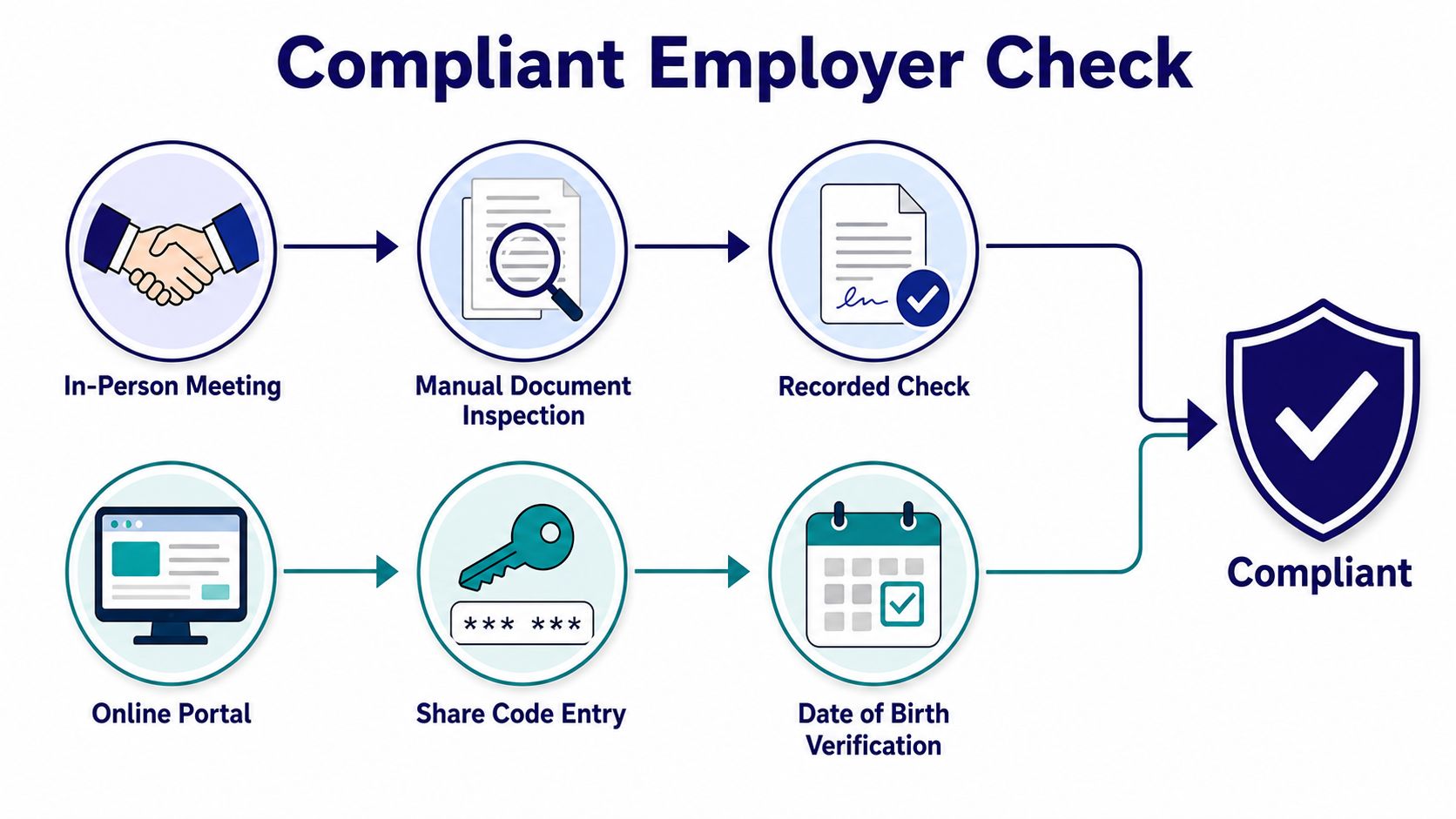
For a manual check, the employer must see the original documents while the applicant is present, inspect them carefully, and satisfy themselves that the documents are genuine and belong to the holder as required by the government guidance. They then keep copies securely for the duration of employment plus two years after it ends. That record matters because it shows the employer did the check properly at the right time, rather than relying on a quick glance or an informal promise.
The online route works differently, but the purpose is the same. The applicant gives a share code, the employer uses the Home Office service to view the immigration status, and the photograph on the screen should match the person starting work. This is often the cleaner option for international newcomers and recent graduates in sponsor-licensed roles, because the employer is checking the live status record rather than trying to interpret a paper document on its own.
What employers must record
A compliant check only exists if the employer keeps evidence. That means a copy of the document or online status record, plus the date of the check. For workers with time-limited permission, the employer also needs to diarise follow-up checks before visa expiry. If they miss that date, their excuse can fall away.
Some employers also use an Identity Service Provider route for eligible British or Irish passport holders. That route is narrower than many people expect, so HR should not assume every passport can be handled the same way under the official checklist.
Good record-keeping includes data protection as well as immigration compliance. Employers handling onboarding files, payroll records, and copies of identity documents need clear controls on storage, access, and retention, which is why many teams review training data protection guidance.
If the company gets the process right, it earns a statutory excuse. If it gets it wrong, it may still face liability later, even if the worker seemed genuine at the time.
The safest habit is simple. Check, copy, date, and diarise. Every time.
Applicant Checklist for a Smooth First Check
The easiest way to avoid delays is to prepare before HR asks. If you're applying for an accounts assistant job, a bookkeeping and VAT trainee post, or a business analyst role, treat the right to work check like any other part of professional preparation. Keep the evidence ready, keep the names consistent, and don't wait until the day before your start date.
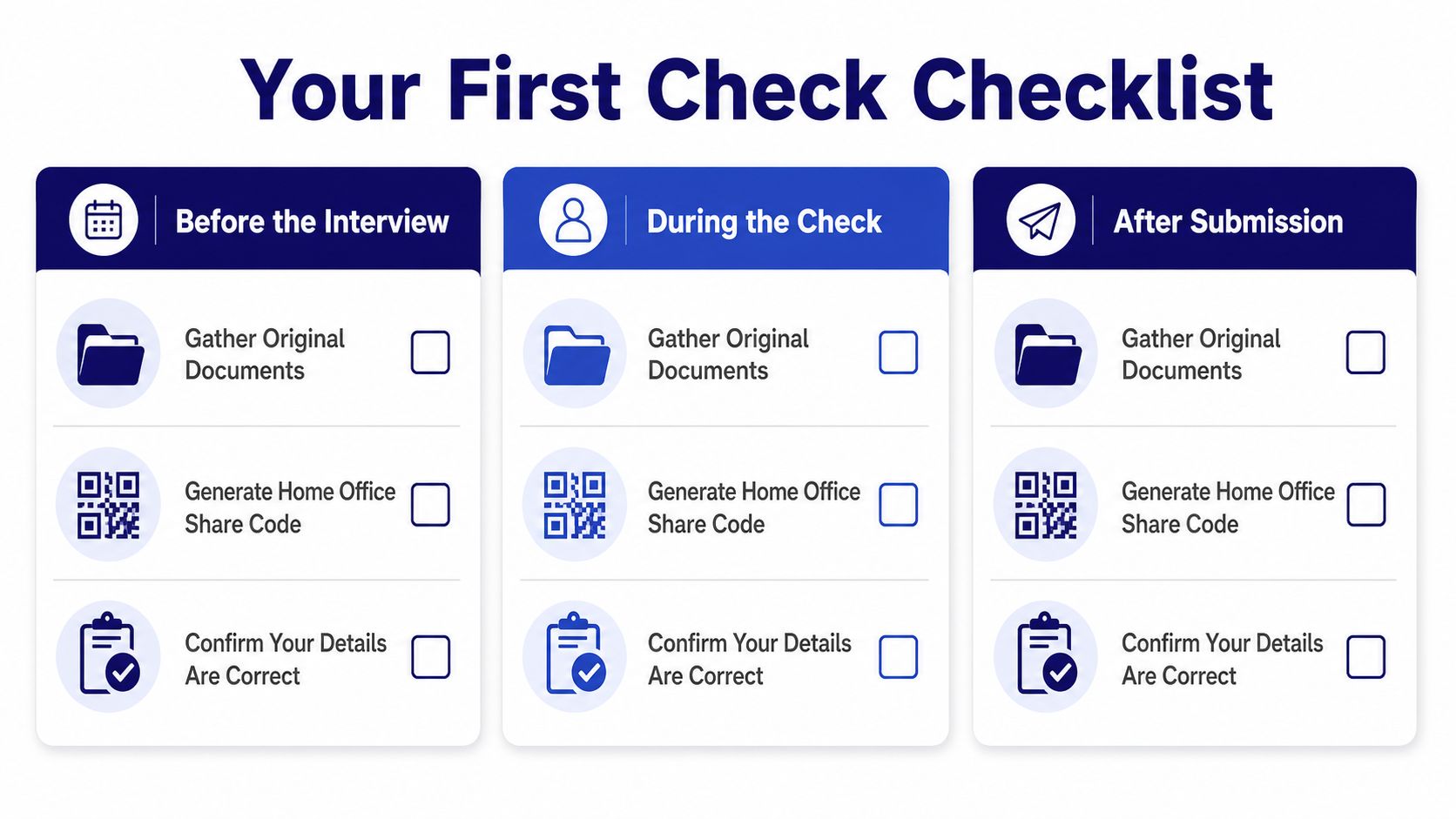
Before the interview
- Gather the right document type. If you're a British or Irish citizen, that may be a passport. If you're relying on immigration status, check whether you need a share code instead.
- Check dates and spellings. Make sure your passport is in date, and that your name matches your job application and offer letter.
- Save your status details. If you use the Home Office service, keep your login details and status information somewhere secure.
During the check
- Show the document clearly. If the employer wants a manual check, take the original document to the interview or onboarding meeting.
- Generate the share code if needed. Use the Home Office view and prove service so the employer can verify your status online.
- Answer questions clearly. If HR asks whether the permission is time-limited, tell them plainly. That helps them plan any follow-up check.
After submission
- Keep your own copy. Even though the employer keeps the official record, it helps to keep a note of what was shown and when.
- Watch for expiry dates. If your permission changes later, you'll need to update the employer promptly.
- Save the confirmation email. If you used an online route, keep the system confirmation for your records.
If you want to see how early preparation fits into a broader job search, the advice in how to use LinkedIn for job search can help you present yourself well before onboarding even begins.
A small habit makes a big difference here. A candidate who can produce the right evidence quickly looks organised, reliable, and ready to work.
Proving Your Status When Documents Are Missing
A missing document does not always mean a missing right to work. For a graduate taking a first role in bookkeeping, accountancy, business analysis, or data analysis, the usual pressure point is simple. The job offer is in hand, HR wants proof, and the usual paper has not turned up yet. A passport may have been lost in transit. A Biometric Residence Permit may still be on its way. A settled status holder may never have received a paper letter at all. The answer is to use the correct evidence route and let the employer check the status in the right way.
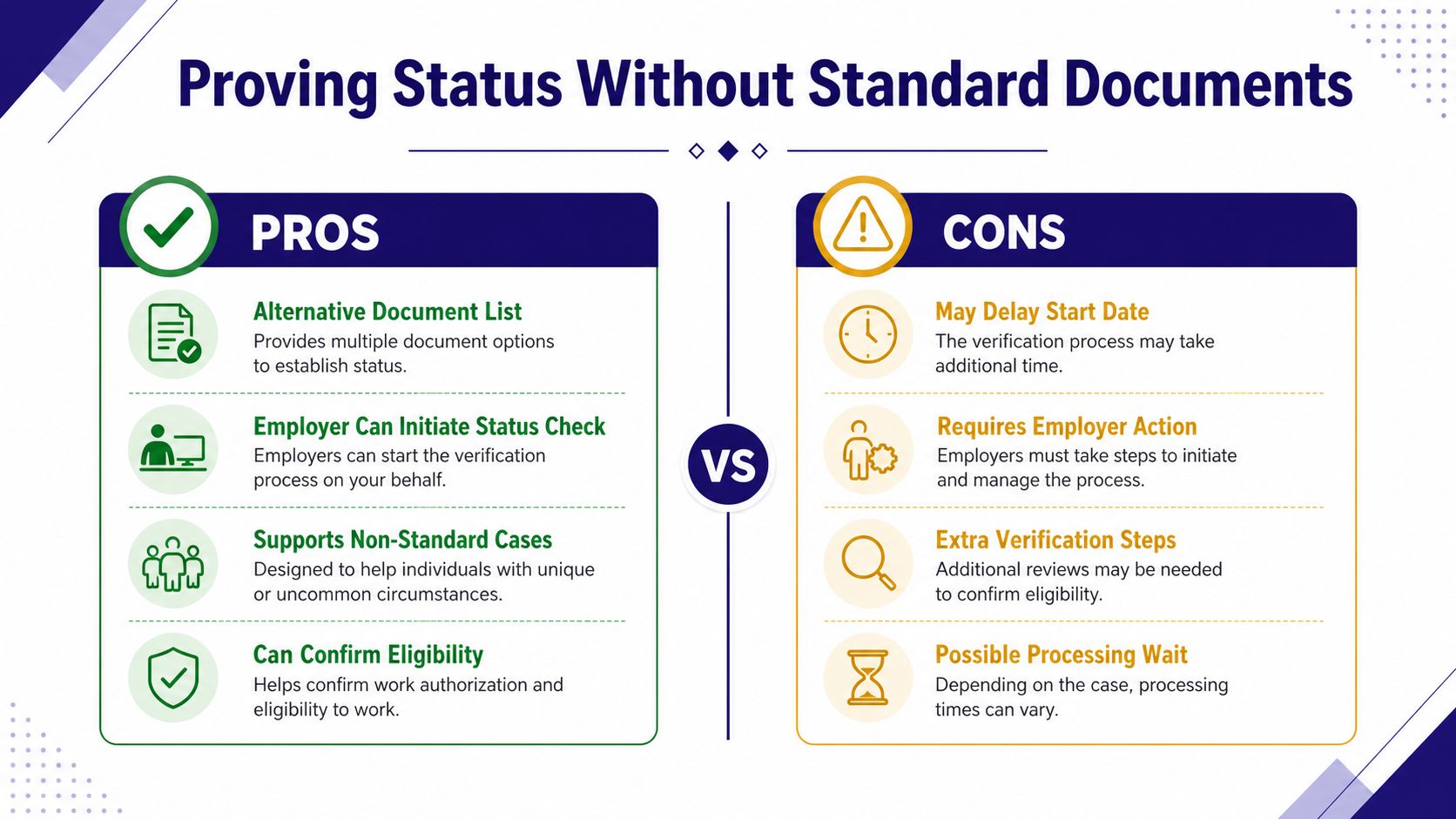
The main route is the online prove your right to work service. It gives the applicant a share code that the employer can use to view the immigration status directly in the Home Office system. That route is useful where a physical document is missing, but the person's permission already exists digitally.
Two common scenarios
A Skilled Worker visa holder whose BRP has not arrived should not guess which paper to send or try to stitch together unrelated documents. If the status is already visible online, the share code route is usually the cleanest option. The employer can confirm the details without waiting for a card to arrive.
An EU settled status candidate who never received a paper outcome letter is in a similar position. The letter is not the main proof point. The digital record is. HR checks the online evidence, confirms the photo matches the person in front of them, and keeps the record in the normal file.
When a physical document is lost
If a Biometric Residence Permit has been reported stolen or lost, the applicant should deal with the replacement process through the Home Office route rather than trying to use a missing or expired card. In practice, that means relying on the online service where it applies and telling the employer if the replacement could affect the start date.
If the Home Office system can show your status, that digital record usually matters more than the missing paper document.
The key point is simple. Missing paper does not always mean missing permission. It often means the evidence needs to be shown in a different format. For employers, that keeps the compliance check on track. For applicants, it means a first job offer does not have to stall just because one document is late, lost, or never issued in paper form.
Common Mistakes and How to Avoid Them
The biggest mistakes are usually simple, which is why they cause so much trouble. A candidate brings an out-of-date passport. An employer assumes a share code will still work after it has expired. Someone forgets to diarise a follow-up check for time-limited permission. Each error is easy to make, and each one can delay a start date.
The fixes are just as simple.
- Out-of-date passport. Replace it or use the correct alternative evidence if your status allows it.
- Expired share code. Generate a fresh one before the employer needs to check it.
- Missed follow-up check. Put the expiry date in your calendar and the employer's HR system.
- Confusing a national ID card with work permission. Check whether the document is acceptable for the route you're using.
- Using the wrong route for the person's status. British and Irish passport holders, online status holders, and time-limited permission holders do not all follow the same process.
The civil penalty risk is serious. UK guidance says the penalty can be up to £20,000 per illegal worker under the official employer rules. That figure is one reason employers are so strict about identity checks, record retention, and follow-up dates.
For job seekers, the safest habit is to treat every document like a compliance document. If it's nearly expired, renew it. If it's digital, check whether the code is still valid. If your name has changed, make sure the application and evidence match. Those details sound minor, but they're exactly the details HR teams rely on when they decide whether onboarding can continue.
Tailored Tips for Graduates and International Newcomers
A first job in bookkeeping, payroll, or data analysis often arrives just when you're least ready for admin. That's normal. The best approach is to match your documentation to your situation, then keep the rest of your onboarding files tidy so HR doesn't have to chase you.
A UK graduate with a British passport usually has the simplest path. Bring the valid passport, make sure the name matches your offer letter, and keep a note of the date the employer checked it. That small bit of organisation helps in entry-level roles where the company wants to get you onto systems, training, and payroll quickly.
An international student moving into a Skilled Worker role needs a different routine. The share code route is usually the cleanest way to prove status, especially if the person is waiting for a card or has changed visa category. That matters in sponsor-licensed jobs, where the employer needs to know your permission is linked to the right status and work conditions.
A career changer returning to the UK labour market may need to re-check settled status details or update old documents. That's especially useful if the last time they job-hunted, the system still relied more heavily on paper. Today, digital verification is often faster, cleaner, and less confusing for everyone involved.
For employers building an efficient first-day experience, onboarding strategies for small businesses can be a useful companion idea, because good onboarding and good document handling usually go hand in hand.
If you're applying for roles through accounting jobs for graduates, the message is simple. Keep your documents ready, keep your dates visible, and keep your records consistent. That makes you easier to hire and easier to trust.
A Confident Start to Your UK Career
Right to work checks can feel intimidating the first time you face them, but they're really a test of preparation, not a test of worth. If your documents are correct, your name matches, and your status is shown in the right way, the process becomes routine. That's exactly what employers want from trainees in accountancy, payroll, and analyst roles, calm accuracy and clean records.
The final checklist is straightforward. Confirm your identity document or share code, check the expiry date, keep your details consistent, and be ready for a follow-up if your permission is time-limited. Do that well, and you've already shown one of the qualities every UK employer values, careful administration.
A CTA for Professional Careers Training is simple, if you want to build the admin habits, software confidence, and job-ready discipline that help you start strong in UK bookkeeping, payroll, and analyst roles, explore the training and career support available there today.