Getting an interview for an accounts assistant role is often the easy part. Plenty of candidates with a decent CV and some bookkeeping knowledge get...
Getting an interview for an accounts assistant role is often the easy part. Plenty of candidates with a decent CV and some bookkeeping knowledge get through to this stage.
What separates the ones who get the offer is how they answer on the day, not how much experience they have on paper.
This guide covers what employers are actually checking for, how to prepare properly, the STAR method for behavioural questions, and ten of the most common accounts assistant interview questions with guidance on how to answer each one well.
What Employers Are Really Looking For
An accounts assistant interview rarely tests advanced accounting theory. Most employers are checking for a smaller, more practical set of things: can you be trusted with financial data, will you catch your own mistakes, and can you fit into the team.
See our full breakdown in Accounts Assistant vs Bookkeeper Training if you’re still weighing up which role fits you best.
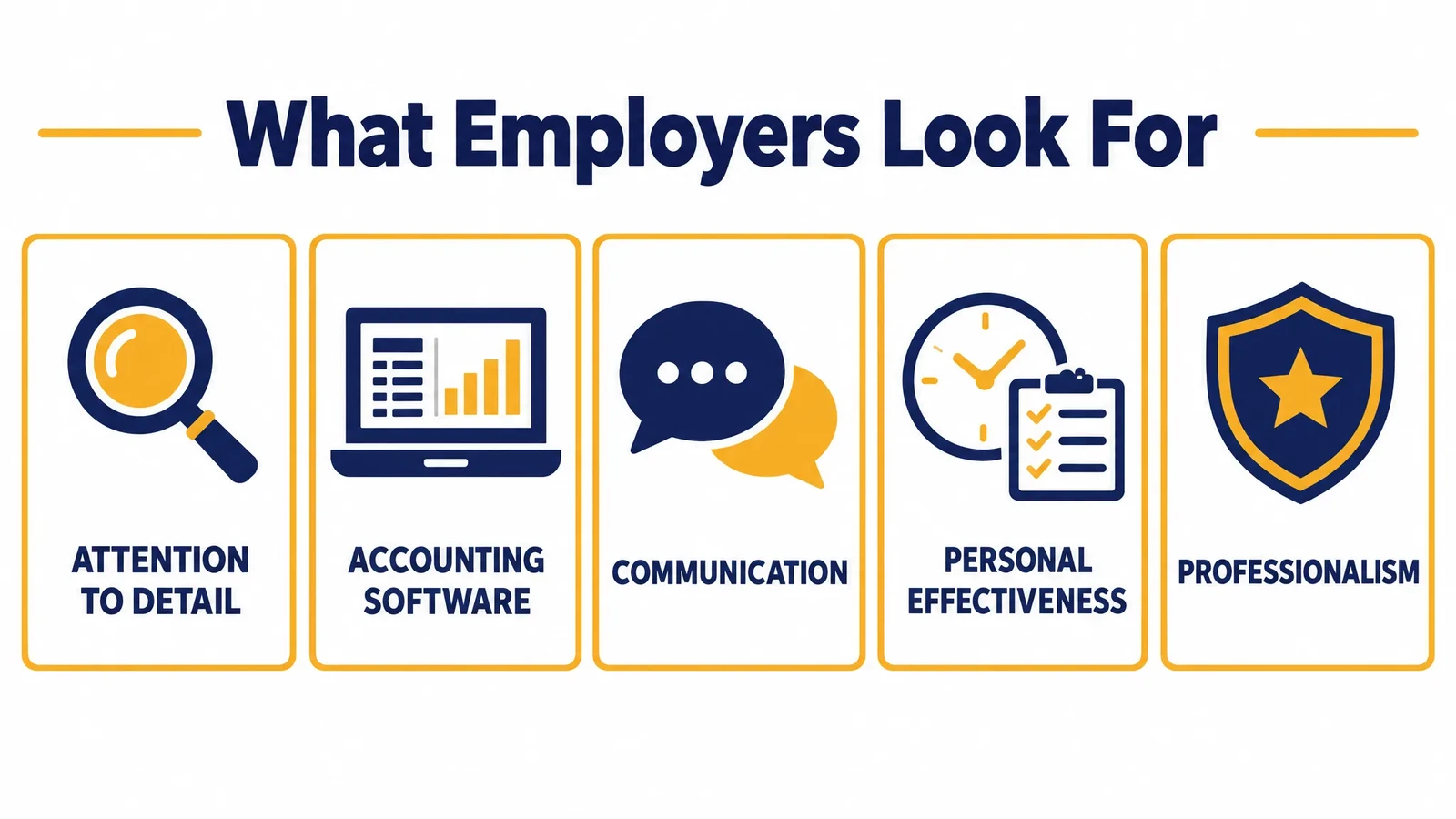
The official UK apprenticeship standard for this role sets out exactly what employers expect, and it is a useful checklist before any interview. It groups the requirements into knowledge, skills and behaviours rather than qualifications alone.
- Attention to detail: examining data for errors, reconciling figures, and correcting mistakes before they reach a manager or auditor.
- Accounting software skills: comfortably using packages like Xero, Sage or QuickBooks to enter and manage data accurately.
- Communication: explaining figures clearly to non-technical colleagues, without jargon.
- Personal effectiveness: organising your own workload, meeting deadlines, and knowing when to ask for help.
- Professionalism: following procedures, acting with integrity, and taking a “right first time” approach to the work.
An accounts assistant interview is less about accounting theory and more about proving you can be trusted with someone else’s financial data, every single day.
How to Prepare Before Your Interview
Good preparation for this role is specific, not general. Read the actual job advert again the morning of the interview and match your answers to the duties it lists, rather than giving generic responses that could apply to any office job.
- Refresh the basics of double-entry bookkeeping: debits, credits, and how a transaction moves through the ledger.
- Check which software the employer uses (it’s often in the advert) and be ready to talk about any hands-on experience with it, even from training.
- Prepare two or three real examples of catching an error, managing a deadline, or dealing with a difficult figure, even if they come from a non-finance job.
- Look up the company: what they do, their size, and anything recent in the news about them.
- Prepare two or three sensible questions to ask back, covering the team structure, software, or what success looks like in the first six months.
- Give your CV a final check against the job advert’s wording. Our UK CV writing tips guide covers what finance employers specifically look for.
Using the STAR Method to Answer Behavioural Questions
Most accounts assistant interviews include at least one “tell me about a time when” question. The STAR method is the simplest way to structure a clear answer rather than rambling or freezing up.
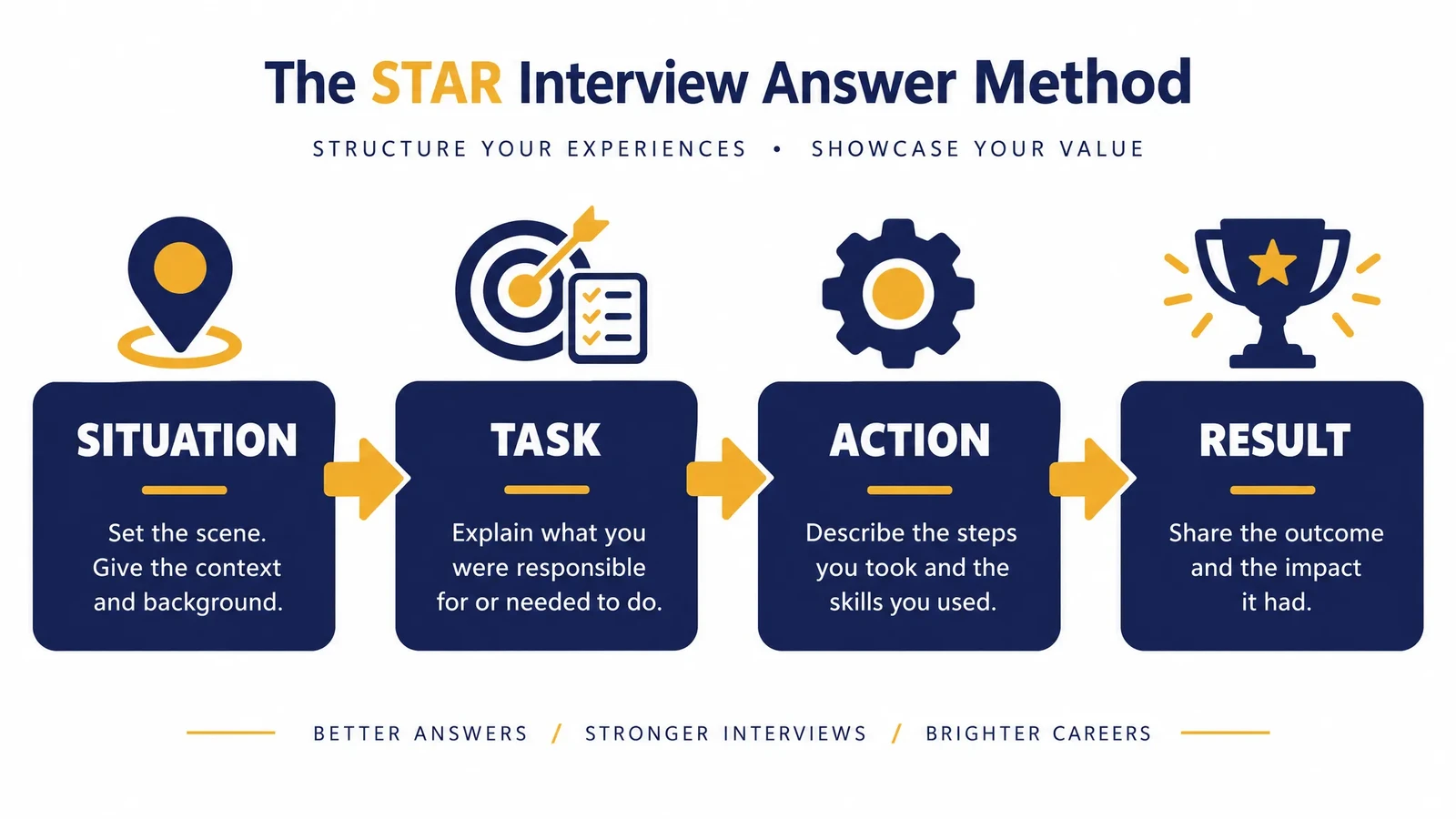
Situation
Give brief context: where you were working, what the team or project was, and roughly when it happened.
Task
Explain what you specifically were responsible for, not what the team as a whole was doing.
Action
Describe exactly what you did and why. This is the part interviewers care about most, since it shows how you actually think and work.
Result
Share the outcome, ideally with a number or concrete detail, and what you took from it. A result that wasn’t fully positive is still a fine answer if you explain what you learned.
What to Expect From a Practical or Numeracy Test
Many UK employers add a short practical test to an accounts assistant interview, either on the day or as a separate stage. It’s worth preparing for this specifically, not just the verbal questions.
Excel or spreadsheet exercises
A common format is a short Excel task: entering a batch of figures, running a simple formula like SUMIF or VLOOKUP, or spotting a deliberate error in a spreadsheet. Practise basic formulas beforehand if you’re rusty.
Basic bookkeeping or numeracy tests
Some employers set a short written test covering debits and credits, simple reconciliations, or percentage and VAT calculations. These are designed to check genuine understanding, not memorised answers, so work through a few practice questions rather than cramming.
Software walkthroughs
If the employer uses a specific package, you may be asked to talk through or demonstrate a basic task in it. Saying “I haven’t used this exact system, but here’s how I’d approach it” is a perfectly reasonable answer if you’ve never seen it before.
For a deeper look at how technical finance interviews work, see our guide to 8 Key Technical Interview Questions for UK Finance Roles.
A practical test rewards calm, methodical working more than speed. Talk through your reasoning out loud if you’re allowed to, rather than working in silence.
10 Common Accounts Assistant Interview Questions (and How to Answer Them)
These are the questions that come up again and again in accounts assistant interviews across the UK. None of them has one “correct” answer, but each is testing something specific.
1. Tell me about your experience with bookkeeping or accounts so far
Keep this focused on relevant tasks, not a full career history. Mention specific software, the volume of transactions you handled, and anything you reconciled or checked for accuracy.
2. Why do you want to work as an accounts assistant, and why with us?
Connect your own reasons (stability, structure, a route towards AAT or a wider finance career) to something specific about the company, not a generic answer you could give anywhere.
3. What accounting software have you used?
Name the packages honestly, including ones you’ve only used during training. If you haven’t used their specific system, say so and point to how quickly you picked up a previous one.
4. How do you make sure your work is accurate?
Talk about a real method: double-checking totals, reconciling against a second source, or building in a final review before submitting figures. Vague answers like “I’m just careful” don’t land well.
5. Describe a time you spotted an error. What did you do?
This is a STAR question. Walk through a specific mistake you caught (yours or someone else’s), how you fixed it, and what you changed afterwards to stop it happening again.
6. How do you manage several deadlines at once?
Give a practical answer: how you prioritise, whether you use a system or checklist, and what you do when two urgent things land at the same time.
7. What do you understand about double-entry bookkeeping?
Explain it plainly: every transaction has two sides, a debit and a credit, and the two sides must always balance. A clear, simple explanation beats a textbook definition.
8. How would you handle a disagreement with a colleague over a figure?
Employers want to see you’d check the data calmly rather than get defensive. Describe going back to source documents together and involving a manager only if it genuinely can’t be resolved.
9. What do you know about VAT?
You don’t need to be an expert, but you should be able to explain that VAT is a tax added to most goods and services, and that businesses above the VAT threshold must register, charge it and file returns.
10. Where do you see yourself in a few years?
Be honest about wanting to progress, whether that’s towards AAT, a senior accounts role, or further study. Employers like ambition more than a vague “I don’t know.”
| Question type | What it’s really testing | How to prepare |
|---|---|---|
| Software and systems | Whether you can get productive quickly with minimal training | List every package you’ve touched, including from a course |
| Behavioural (“tell me about a time”) | How you actually behave under pressure, not just what you say | Prepare 2-3 STAR stories in advance |
| Technical knowledge | Whether you understand the basics behind the task, not just the clicks | Revise debits/credits, VAT basics and reconciliations |
| Teamwork and communication | Whether colleagues outside finance will find you easy to work with | Have a real example of explaining a figure to a non-finance colleague |
| Motivation and career plans | Whether you’ll stay long enough to be worth training | Be specific about why this role and this company |
A strong answer is specific and honest. A weak one is vague and generic enough to fit any job advert going.
Common Mistakes That Cost Candidates the Job
Most accounts assistant candidates aren’t rejected for a lack of ability. They’re rejected because of a handful of avoidable mistakes in the interview itself.
- Giving vague, generic answers that don’t reference any specific software, task or example.
- Not knowing basic debits-and-credits terminology, even at an entry-level interview.
- Underselling attention to detail, which is the single most-tested skill for this role.
- Arriving with no questions prepared for the interviewer, which can read as a lack of genuine interest.
- Focusing only on technical skills and saying nothing about communication or teamwork.
Applying With No Direct Accounts Experience Yet
Plenty of people move into accounts assistant roles from customer service, retail, admin or cash-handling backgrounds. None of that experience is wasted in an interview if you frame it correctly.
Attention to detail, handling money accurately, working to deadlines and staying calm under pressure are all transferable, whatever job you learned them in. Say so directly rather than assuming the interviewer will make the connection themselves.
A structured qualification like AAT Level 2 closes the technical gap employers worry about most: whether you actually understand bookkeeping fundamentals rather than just office basics. See AAT vs ACCA vs CIMA if you’re deciding which qualification route makes sense for you.
PC Training’s Accounts Assistant Training course is built for exactly this situation: a practical route from no accounts background into a first role, with guaranteed recruitment support once training is complete, including CV help and interview coaching.
Career changers don’t need to apologise for a lack of accounts experience. They need to show the skills they already have translate directly to the role.
What Happens After the Interview
Most employers aim to give feedback within a week, though it can take longer at busier firms. If you haven’t heard back after a week, a short, polite follow-up email is completely acceptable.
Some employers run a second interview, particularly for larger finance teams, often with a more senior manager or a short meeting with the wider team. Treat it as seriously as the first stage rather than assuming the job is already yours.
If you’re offered the role, it’s reasonable to ask about start dates, probation length, and any training or onboarding plan before accepting. A good employer won’t mind being asked.
What You Can Expect to Earn
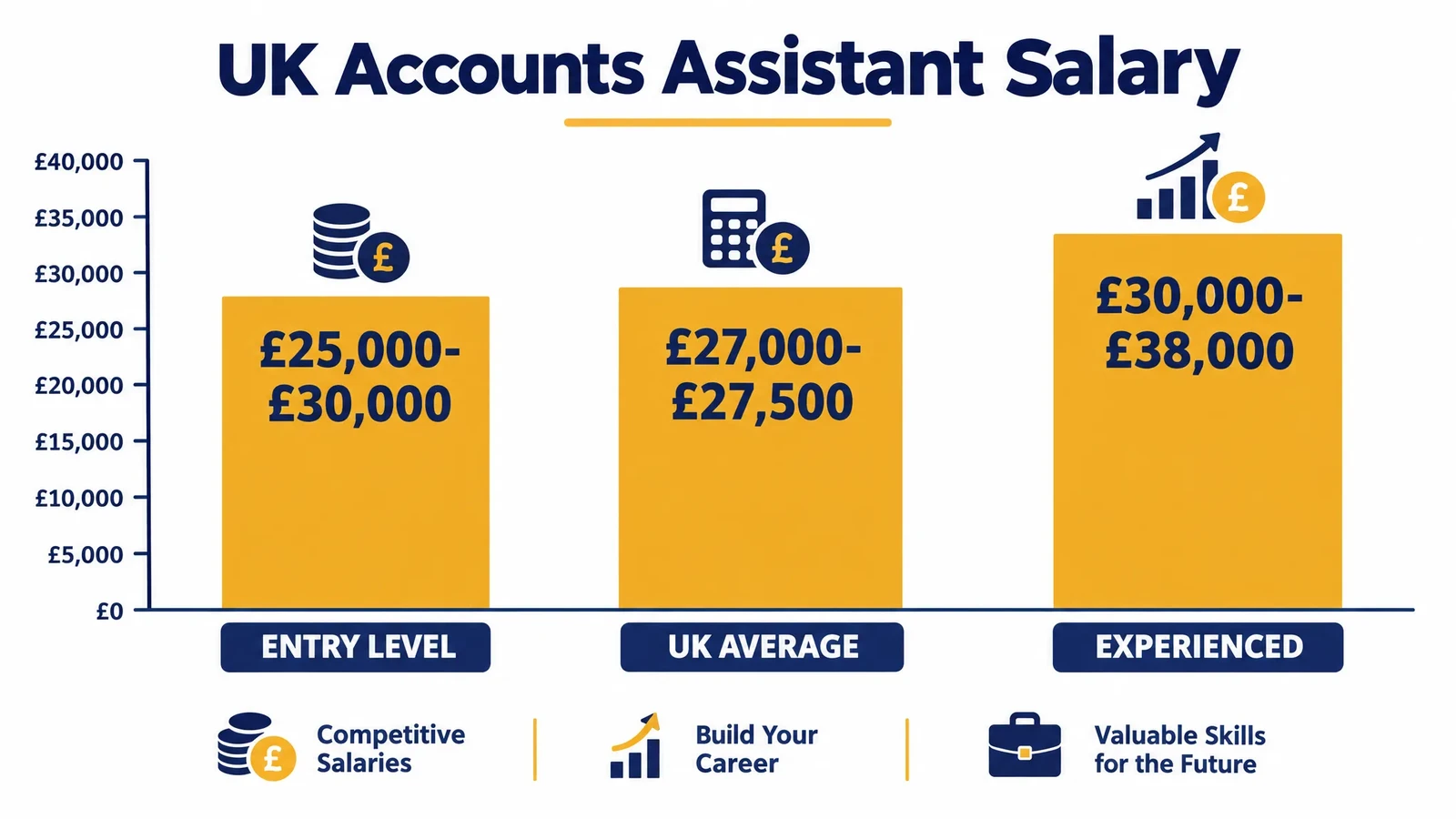
UK accounts assistant salaries typically start around £25,000 to £30,000, with the England average sitting near £27,000 to £27,500 and London roles closer to £29,000, based on current Indeed data. Experienced accounts assistants can reach £30,000 to £38,000.
Our full breakdown of duties, qualification routes and salary bands by experience level is in What Does an Accounts Assistant Do?, worth reading alongside this guide before your interview.
What should I wear to an accounts assistant interview?
Smart business dress is the safe default for most UK finance employers, even where the day-to-day office dress code is more relaxed. If in doubt, dress slightly smarter than you expect the role to require.
Do I need a qualification before I can apply?
Not always. Many employers will consider candidates with strong transferable skills and a willingness to study, though holding or working towards AAT Level 2 makes you noticeably more competitive.
How long does an accounts assistant interview usually take?
Most first-stage interviews for this role run 30 to 45 minutes. Some employers add a short practical test, such as a basic Excel or software exercise, either at the same stage or separately.
What if I freeze on a technical question?
Say so honestly and talk through how you’d find the answer, for example by checking a reference document or asking a colleague. Interviewers generally respect an honest “I’m not sure, but here’s how I’d check” over a guessed answer.
Should I bring anything with me to the interview?
Bring a printed copy of your CV, a notebook and pen, and a list of your own prepared questions. If you’ve completed any relevant training or a qualification, bring your certificate too.
Preparation is what separates candidates with similar experience on paper. Know what the role is really testing, and prepare real examples using the STAR method.
Be honest about what you don’t yet know. That combination consistently beats a longer CV with no interview prep behind it.