
Are you thinking about becoming an accountant, but still treating “accountant” as if it's one job title with one route in? That's a common misconception....
Are you thinking about becoming an accountant, but still treating “accountant” as if it's one job title with one route in? That's a common misconception. In the UK, accounting isn't a single lane. It's a family of roles shaped by qualifications, software, regulation, and the kind of work you want to do.
That matters because employers don't usually hire for a vague “accountant” profile. The UK profession has developed into a segmented, credential-led labour market, and job descriptions often ask for specific pathways such as ACA, ACCA, CIMA, or CIPFA rather than just “accountant”, as reflected in the Financial Reporting Council's Key Facts and Trends in the Accountancy Profession 2025. So if you want to move quickly, you need to choose a direction early and train for the work employers need.
That doesn't always mean a traditional chartered route from day one. Some people start in bookkeeping, payroll, finance operations, or accounts support and build from there. Others move into analysis-heavy finance roles by combining accounting knowledge with Excel, BI tools, and reporting skills. If you're self-employed or supporting small firms, this guide for Australian sole traders also shows how specialist accounting needs can vary by business type.
Below are 10 types of accountants that give you a practical UK career roadmap. For each one, you'll see what the role looks like, who it suits, and which training modules from Professional Careers Training can help you get job-ready faster.
1. Management Accountant
If you want to influence decisions, not just record them, management accounting is a strong fit. You'll work inside a business and help managers understand performance, costs, budgets, forecasts, and what needs to change next.
This role suits you if you like commercial thinking. A retailer such as Tesco needs finance staff who can compare store performance, margin pressure, and stock movement. An NHS trust needs people who can explain service costs and budget variance in plain English. Manufacturing firms need clear pricing and cost control, not just tidy ledgers.
What makes you employable
In practice, management accounting sits on the more analytical end of the spectrum. Industry guidance on accounting analytics highlights descriptive, diagnostic, predictive, and prescriptive approaches, with dashboards, drill-down analysis, and anomaly detection now part of how finance teams work with data at scale in Capterra's overview of data analytics for accounting.
That means you should train for insight, not just input.
- Build strong Excel skills: Learn lookups, pivot tables, variance analysis, and clean reporting layouts.
- Study final accounts properly: You can't explain business performance if you don't understand the numbers underneath.
- Use software with confidence: Sage, Xero, and QuickBooks all matter in commercial finance environments.
Practical rule: If you can turn raw transactions into a monthly management pack that a non-finance manager can understand, you're moving in the right direction.
A practical next step is to study how to prepare management accounts. Pair that with Final Accounts training and Advanced Excel so you can handle both the accounting logic and the reporting side of the job.
2. Financial Accountant
Financial accountants keep the formal record straight. They prepare year-end accounts, maintain ledgers, support audits, and make sure reporting meets the required standards and deadlines.
You'll see this role in listed companies, local authorities, larger private businesses, and accountancy firms. If you like structure, deadlines, reconciliations, and accuracy, this path makes sense. It's less about commercial storytelling and more about producing reliable financial statements that others can trust.
Where to start
A lot of people aim too high too early and miss the obvious entry point. Start with the work that feeds financial reporting. That means purchase ledger, sales ledger, bank reconciliations, journals, trial balances, and month-end routines.
An Accounts Assistant course is the right foundation because it teaches you how the numbers are built day to day. Once you've got that, move into Final Accounts so you can see how the full set of statements comes together.
Strong financial accountants don't guess. They reconcile, trace, review, and document.
Focus your training on:
- Accounts assistant skills: Learn ledgers, postings, and month-end tasks.
- Final accounts knowledge: Understand profit and loss, balance sheet, adjustments, and accruals.
- Software fluency: Sage and QuickBooks are especially useful if you're targeting SME or practice roles.
This route also lines up well with UK hiring patterns, where employers often screen for recognised qualifications and software confidence, not just job title, as noted in the NetSuite overview of accountant types.
3. Tax Accountant
Tax accountants deal with one of the most technical areas in finance. They help individuals and businesses stay compliant, submit correct returns, and make informed choices about tax treatment.
If you like rules, detail, deadlines, and problem-solving, tax can be a very smart specialism. You might work in practice, in-house, or eventually for yourself. Some tax professionals stay broad. Others go deep into VAT, personal tax, corporate tax, or indirect tax.
Why VAT knowledge matters early
For many trainees, VAT is the most practical place to begin. It appears in bookkeeping roles, accounts assistant jobs, finance officer posts, and tax support positions. If you can handle VAT returns correctly, you become useful very quickly.
That's why Bookkeeping & VAT training is such a strong starting point. It gives you a practical skill set that employers can test immediately.
- Learn VAT returns properly: Don't leave this as a vague theory topic.
- Get comfortable with tax software: You'll stand out faster when you can use the tools employers already have.
- Practise client-friendly communication: Tax knowledge is only valuable if you can explain it clearly.
For a more direct route into this specialism, study courses on taxation. If you're changing careers, combining tax basics with bookkeeping software training is one of the quickest ways to become employable in smaller firms.
4. Audit Accountant
Auditors test, challenge, and verify. External auditors review financial statements and supporting records. Internal auditors review controls, risk, and operational processes from inside an organisation.
This path suits you if you're sceptical in a useful way. You don't just accept a number because it looks tidy. You want to know where it came from, who approved it, and whether the evidence holds up.
A large firm such as EY may place you on statutory audits for major companies. An internal audit team at Tesco might ask you to review controls over stock, expenses, or process compliance. In the public sector, NHS internal audit work can involve governance, procurement, and financial control.
Skills that move you forward
Audit employers want evidence that you can work methodically and write clearly. They also value practical accounting knowledge because weak accounts preparation leads to weak audit work.
Your training should focus on:
- Preparing accounts: You need to understand the records before you can test them.
- Documentation: Good work papers matter.
- Communication: Audit is as much about asking clear questions as it is about checking files.
A strong auditor understands the business model, not just the ledger codes.
If audit appeals to you, build your base with accounts preparation and then move into courses in auditing. That combination helps you speak the language of both finance teams and audit managers.
5. Forensic Accountant
Forensic accountants investigate what happened when the numbers don't make sense. They work on fraud, disputes, suspicious transactions, missing money, and financial evidence for legal matters.
This is one of the most specialised types of accountants, and one of the most interesting. You'll trace flows, compare records, reconstruct activity, and explain your findings clearly enough for lawyers, insurers, or investigators to use.
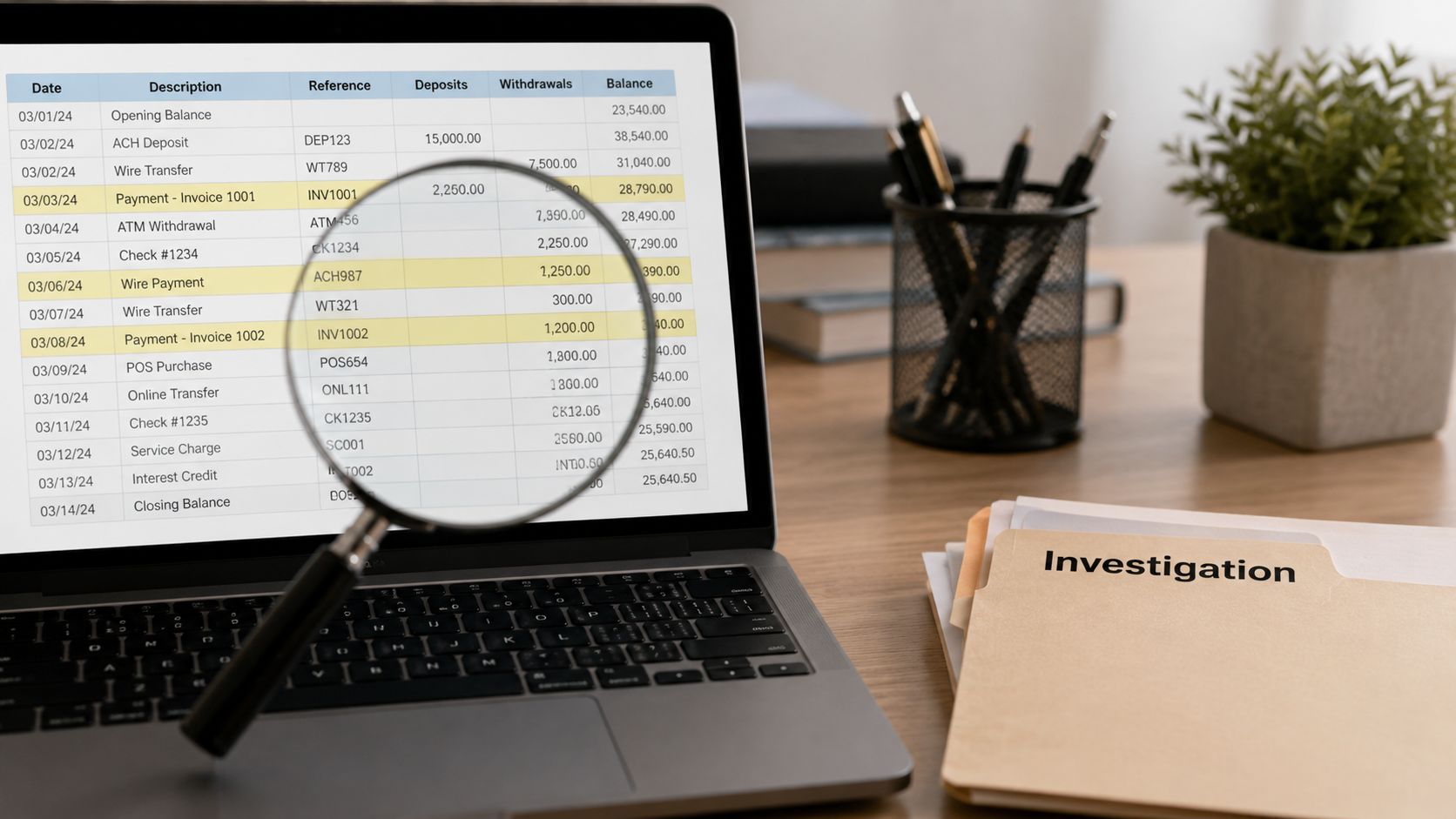
A team at Deloitte Forensics might review complex company records after suspected fraud. An insurer might need help on a disputed claim. Public authorities and specialist firms also rely on forensic finance skills when transactions need evidential reconstruction. This forensic accountant UK guide gives a useful picture of that real-world work.
How to prepare for this path
You won't usually jump straight into forensic accounting with no finance experience. A better route is to build from bookkeeping, financial accounting, audit, or analytics.
Forensic work increasingly rewards people who can:
- Analyse transaction data: Spot anomalies and unusual patterns.
- Write clearly: Findings must stand up under scrutiny.
- Use investigative logic: You need to follow evidence, not assumptions.
If this path appeals to you, take bookkeeping and final accounts seriously first, then add data skills such as Excel, SQL, and Power BI. That mix gives you a realistic route into fraud, disputes, and investigative finance later.
6. Cost Accountant
Cost accountants focus on what things really cost to produce, deliver, or support. That makes them especially important in manufacturing, operations, engineering, logistics, and large service environments.
This role is ideal if you enjoy detail but still want commercial impact. You'll look at materials, labour, overheads, stock, wastage, margin, and variance. A manufacturer needs to know whether a product line is profitable. A business with multiple sites needs to know where cost pressure is building.
Why this role rewards practical thinking
Cost accounting isn't abstract. If a production team changes a process, finance needs to know what happened to unit cost, stock valuation, and margin. That means the best cost accountants understand operations as well as accounts.
A company such as Rolls-Royce or Unilever needs finance staff who can connect system data to real production activity. SMEs need the same skill in a simpler setting. The title may differ, but the core work stays the same.
Train for this role by focusing on:
- Final accounts and management accounts: You need both views.
- Advanced Excel: Variance work and cost models live here.
- Business analysis skills: Process understanding matters just as much as accounting entries.
Don't stay behind the spreadsheet all day. Cost accounting improves when you understand how the work happens on the ground.
If you like process improvement, pricing logic, and operational finance, this can be one of the most practical and rewarding routes in the field.
7. Bookkeeper
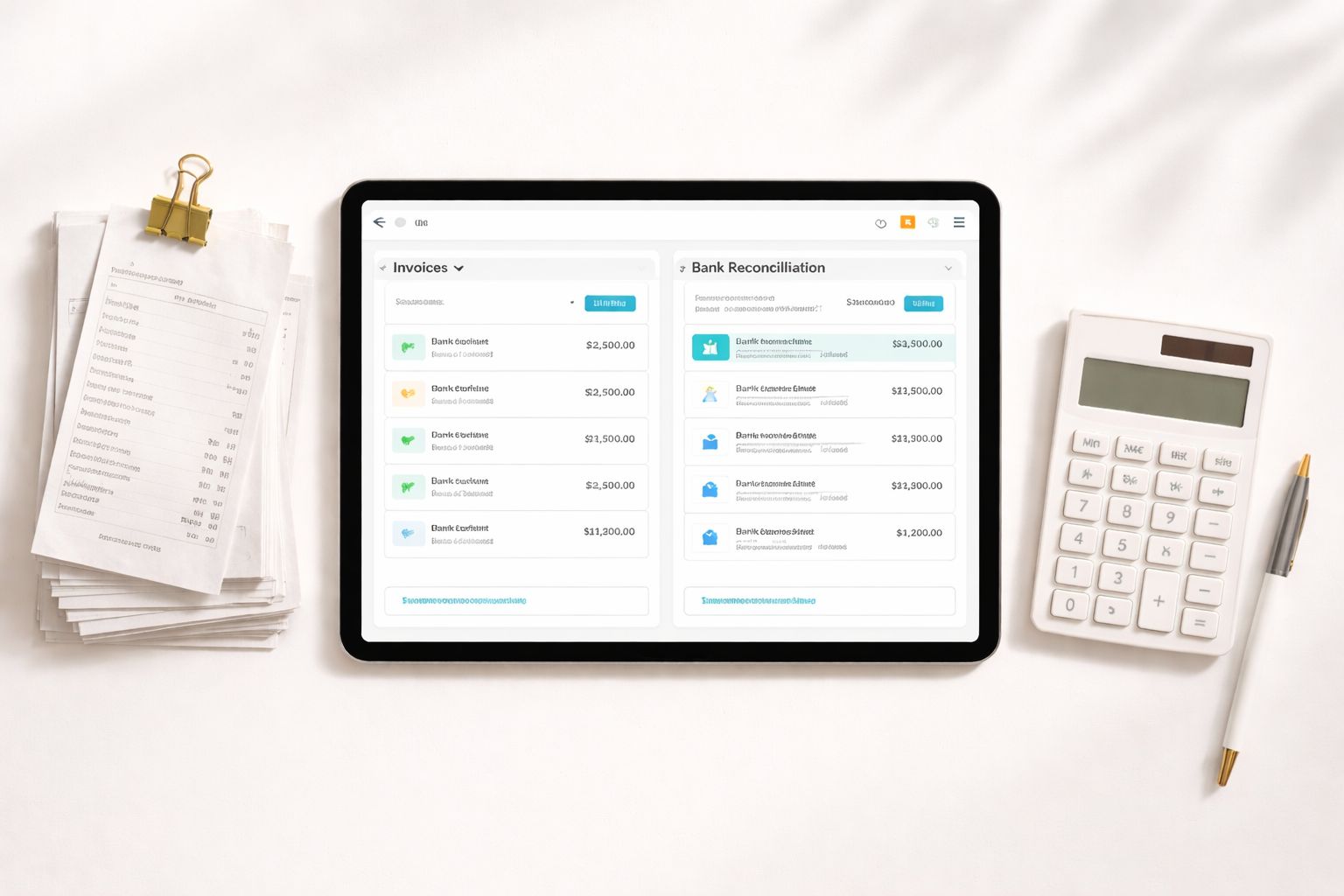
Bookkeeping is still one of the fastest ways into finance work in the UK. You record transactions, reconcile bank accounts, manage ledgers, process invoices, and keep the books accurate enough for reporting and tax work.
Many people dismiss bookkeeping as basic. That's a mistake. Good bookkeepers keep businesses running. Small firms, charities, practices, and sole traders all depend on reliable day-to-day records.
Why it's a smart entry route
One of the biggest gaps in generic career advice is the assumption that every accounting career starts with the same formal route. In reality, entry paths can include bookkeeping, payroll, practice support, and junior finance operations roles where software competence and work experience matter a great deal, as highlighted in the Rasmussen discussion of accounting roles beyond tax.
That makes bookkeeping a practical launch pad if you're a career changer, an international student, or someone who wants paid experience quickly.
Start with:
- Bookkeeping & VAT training: Learn the work employers test.
- Software certifications: Xero, Sage, and QuickBooks help your CV stand out.
- Bank reconciliation and control routines: Accuracy wins trust fast.
From there, you can move into Accounts Assistant work, payroll support, or junior accountant roles. If you want a route into employment without waiting for a traditional training contract, this is one of the strongest options.
8. Virtual or Remote Accountant
Remote accounting isn't a niche anymore. Many small businesses now expect cloud-based support, digital document sharing, online meetings, and software-led workflows.
This path suits you if you're organised, independent, and comfortable managing clients without sitting in the same office. You might work for a virtual practice, support start-ups, or build your own client base over time.
What clients expect from you
Cloud accounting tools are now mainstream in smaller firms, and UK demand is increasingly shaped by digital reporting, software fluency, and advisory work rather than pure compliance, as discussed in the MRI Network piece on changing accounting career paths.
So if you want remote work, don't market yourself as “good with numbers”. Market yourself as someone who can run cloud bookkeeping, explain reports, and keep clients organised.
Your priority training should include:
- Xero, Sage, and QuickBooks
- Bookkeeping & VAT
- Payroll if you want broader client support
- Communication and client-facing reporting
Remote roles reward consistency. If you can keep neat records, answer questions quickly, and produce clear monthly reporting packs, you become very valuable to smaller businesses that don't want a full in-house finance team.
9. Non-Profit or Charity Accountant
Charity accounting has its own logic, its own reporting pressures, and its own purpose. You won't just be tracking income and spend. You'll be dealing with restricted funds, grants, governance, trustees, and public accountability.
This route works well if you want your finance skills to support a social mission. Large organisations such as Oxfam or Cancer Research UK need strong finance teams. Smaller charities and community organisations need people who can keep systems tidy, meet filing duties, and explain cash position clearly.
What makes charity finance different
A charity accountant often has to balance technical work with practical communication. Trustees may not be finance specialists. Funders want reliable reporting. Operational teams need budget clarity.
That means your training should include:
- Bookkeeping and final accounts skills: The basics still matter.
- Excel and reporting: Clear grant and fund tracking is essential.
- Payroll knowledge: Many charities run lean teams, so broader finance support helps.
If you're aiming at this sector, learn to handle restricted funds carefully and communicate clearly. Charity finance employers value people who can be dependable, adaptable, and purpose-driven.
10. Data Analytics Accountant
If you like finance but don't want a purely traditional accounting role, this may be your best option. Data analytics accountants combine financial knowledge with tools such as SQL, Python, Power BI, and Excel to turn large data sets into useful business decisions.
They sit between finance, operations, and analytics. In a bank, that might mean transaction analysis. In retail, it could mean margin and customer trend reporting. In fintech or insurance, it might involve anomaly detection, claims review, or dashboard-led decision support.

Why this path is growing in importance
Analytical and systems-heavy accountant roles increasingly depend on software and data capability, not just bookkeeping knowledge. That includes management accountants, project accountants, and forensic accountants. Employers want people who can work with structured transaction data, perform variance analysis, and produce decision-ready output.
Business analyst and data analyst training becomes exceptionally valuable. If you already understand accounts, adding data tools gives you a high-value profile that many candidates don't have.
Focus on:
- SQL and Python: These make you more than a spreadsheet user.
- Power BI: Dashboards matter.
- Business analysis thinking: Learn to link data to decisions.
Here's a helpful introduction to the kind of skills used in modern reporting and dashboard work:
A lot of charity and fund-based organisations also benefit from stronger analytics and reporting workflows. This Grain fund accounting article is useful if you want to see how structured financial data supports more specialist reporting environments.
The strongest data analytics accountants don't just build dashboards. They explain what managers should do next.
10 Types of Accountants: Side-by-Side Comparison
| Role | Implementation Complexity 🔄 | Resources & Skills ⚡ | Expected Outcomes 📊 | Ideal Use Cases & Tips 💡 | Key Advantages ⭐ |
|---|---|---|---|---|---|
| Management Accountant | Moderate, periodic budgeting & modelling processes | ACCA/CIMA, advanced Excel, ERP/BI tools | Better cost control, reliable forecasts, KPI insights | Mid–large firms needing operational decisions; tip: master Excel and cross‑dept relationships | Strategic insight, clear career path |
| Financial Accountant | High, strict closing cycles and compliance procedures | AAT/ACCA, IFRS/UK GAAP, accounting software, audit experience | Accurate statutory accounts and regulatory compliance | Listed companies and audit practices; tip: standardise close checklists | Job security, audit exposure |
| Tax Accountant | High, complex legislation and seasonal peaks | ACCA/ATT/CTA, tax software (CCH/TaxCalc), VAT expertise | Minimised tax liabilities, compliance, risk mitigation | Corporates and advisory firms; tip: specialise (VAT/international tax) | Specialist demand, premium pay |
| Audit Accountant (Internal & External) | High, audit planning, sampling and documentation | ACA/ACCA, ISAs knowledge, audit software, strong testing skills | Assurance on controls, compliance, risk identification | Audit firms and internal audit teams; tip: hone sampling and client communication | Excellent training, industry exposure |
| Forensic Accountant | Very high, investigative rigour and legal scrutiny | ACCA/CFE, digital forensics, SQL/data analytics, legal knowledge | Fraud detection, recovery, expert reports for litigation | Fraud investigations and litigation support; tip: get CFE and data‑analysis skills | High impact cases, strong remuneration |
| Cost Accountant | Moderate–high, detailed costing and shop‑floor integration | CIMA/ACCA, ERP/SAP, manufacturing process knowledge, Excel | Accurate product costing, margin control, inventory valuation | Manufacturing and production; tip: spend time on factory floor | Direct link to profitability, continuous improvement |
| Bookkeeper | Low–moderate, transactional and routine processes | Bookkeeping & VAT training, Xero/QuickBooks/Sage certification | Clean ledgers, reconciliations, VAT-ready records | SMEs, charities, freelancers; tip: certify in cloud software | Accessible entry, flexible/remote options |
| Virtual/Remote Accountant | Moderate, multi-client digital coordination | AAT/ACCA progression, Xero/QBO certification, collaboration tools | Scalable remote services, timely client reporting | Freelancers and virtual firms; tip: build online presence and niche | High flexibility, low overhead |
| Non‑Profit / Charity Accountant | Moderate, fund accounting and regulatory reporting | ACCA/AAT, SORP knowledge, grant reporting systems | Proper fund stewardship, impact reporting, compliance | Charities and social enterprises; tip: train in SORP and grant management | Meaningful work, sector expertise |
| Data Analytics Accountant | High, combines technical programming with accounting | Accounting qualification + SQL/Python, Power BI/Tableau, advanced Excel | Automated dashboards, predictive models, actionable insights | Large corporates, fintech, analytics teams; tip: build portfolio and certify BI tools | High salaries, future‑proof skillset |
Your Next Step From Learning to Earning
By now, the main point should be clear. There isn't one accountant career. There are many types of accountants, and each one rewards a different mix of strengths. Some roles suit people who love process, control, and precision. Others suit people who enjoy analysis, problem-solving, business strategy, or client-facing advisory work.
That's good news for you. It means you don't need to force yourself into the wrong path. If you enjoy structure and accuracy, bookkeeping, financial accounting, audit, or payroll-linked finance work could be right for you. If you prefer insight and decision support, management accounting, cost accounting, business analysis, or data analytics may suit you better. If you want a mission-led environment, charity finance can be a strong choice. If you want flexibility, virtual accounting creates real opportunities.
The smartest move now is to stop thinking in vague terms and pick a route. Then train for the tasks employers ask about in interviews. That usually means software, reconciliations, reporting, VAT, payroll, final accounts, Excel, dashboards, and practical examples you can talk through with confidence.
Professional Careers Training is built for exactly that step. Instead of leaving you with theory alone, it helps you build job-ready ability through training in Bookkeeping & VAT, Advanced Payroll, Accounts Assistant work, Final Accounts, Business Analyst skills, and Data Analyst tools. That matters because employers hire people who can do the work, not just describe it.
You also need more than course content. You need support that helps you turn learning into a role. Professional Careers Training provides 1-2-1 support from ACCA qualified chartered accountants and CPD approved trainers, flexible learning times that fit around work and life, official certification in Sage, Xero, and QuickBooks, plus practical software support. Just as important, you get recruitment help with CV preparation, LinkedIn optimisation, job search strategy, and employer referrals.
If you're a recent graduate, a career changer, or new to the UK market, that mix is especially valuable. It gives you structure, practical experience, and a clearer way into employment. Choose the accountant type that fits your strengths, then back that choice with targeted training. That's how you move from interest to income.
If you're ready to turn your career plans into practical skills, explore Professional Careers Training. You can train in bookkeeping, VAT, payroll, accounts, final accounts, business analysis, and data analytics with flexible 1-2-1 support, recognised software certifications, and recruitment guidance that helps you move into real UK job opportunities.