If you're training to become a business analyst, or you already work as one, you've probably noticed AI tools turning up in more of your...
You've probably had this moment already. You've finished a degree, or you've spent years in another job, and now you're looking at coaching and thinking it could fit your strengths. You like helping people move forward, you're comfortable with structure, and you want work that feels meaningful, but the route in looks fuzzy. That's where coach career opportunities start to become clearer when you break them down properly.
In the UK, coaching is no longer a loose, informal sideline. UK Coaching was established in 2001 to professionalise coach development, and it has since overseen the growth of around 1.2 million coaches in paid and voluntary roles as reported in this overview of UK coaching statistics. That matters because it shows coaching has become a real occupation with standards, progression, and expectations.
The strongest opportunities now sit where coaching meets structure. Employers want people who can guide others, but they also want coaches who understand systems, records, compliance, and results. That is where targeted training in bookkeeping & VAT, advanced payroll, accounts assistant, final accounts, business analyst, and data analyst starts to matter. These courses can give a coach a sharper professional edge, especially in organisations where trust, data, and measurable outcomes matter as much as encouragement.
Introduction to Coaching Career Opportunities
A recent graduate might think coaching is only for former athletes or senior executives. A career changer might assume it is all about motivational talks and one-to-one conversations. In practice, the field is broader and more practical than that, because coaches work with people who need guidance, direction, accountability, and sometimes a very clear plan.
The UK sector has grown into something more formal over time. Since 2001, UK Coaching has helped professionalise coach development, and the scale of the workforce now runs to around 1.2 million coaches in paid and voluntary roles according to UK coaching statistics. That breadth tells you something important. Coaching is not one narrow job, it is a family of roles spread across sport, personal development, work, and performance.
Practical rule: if a role depends on trust, progress tracking, and repeat conversations, coaching skills are useful, even when the job title does not say “coach” first.
That's why people with accounting or data training often stand out. A coach who can also manage invoices, track client payments, or read performance data has more to offer than someone relying on conversation alone. In competitive niches, those extra skills can make the difference between sounding helpful and being genuinely hireable.
Understanding Core Coaching Types
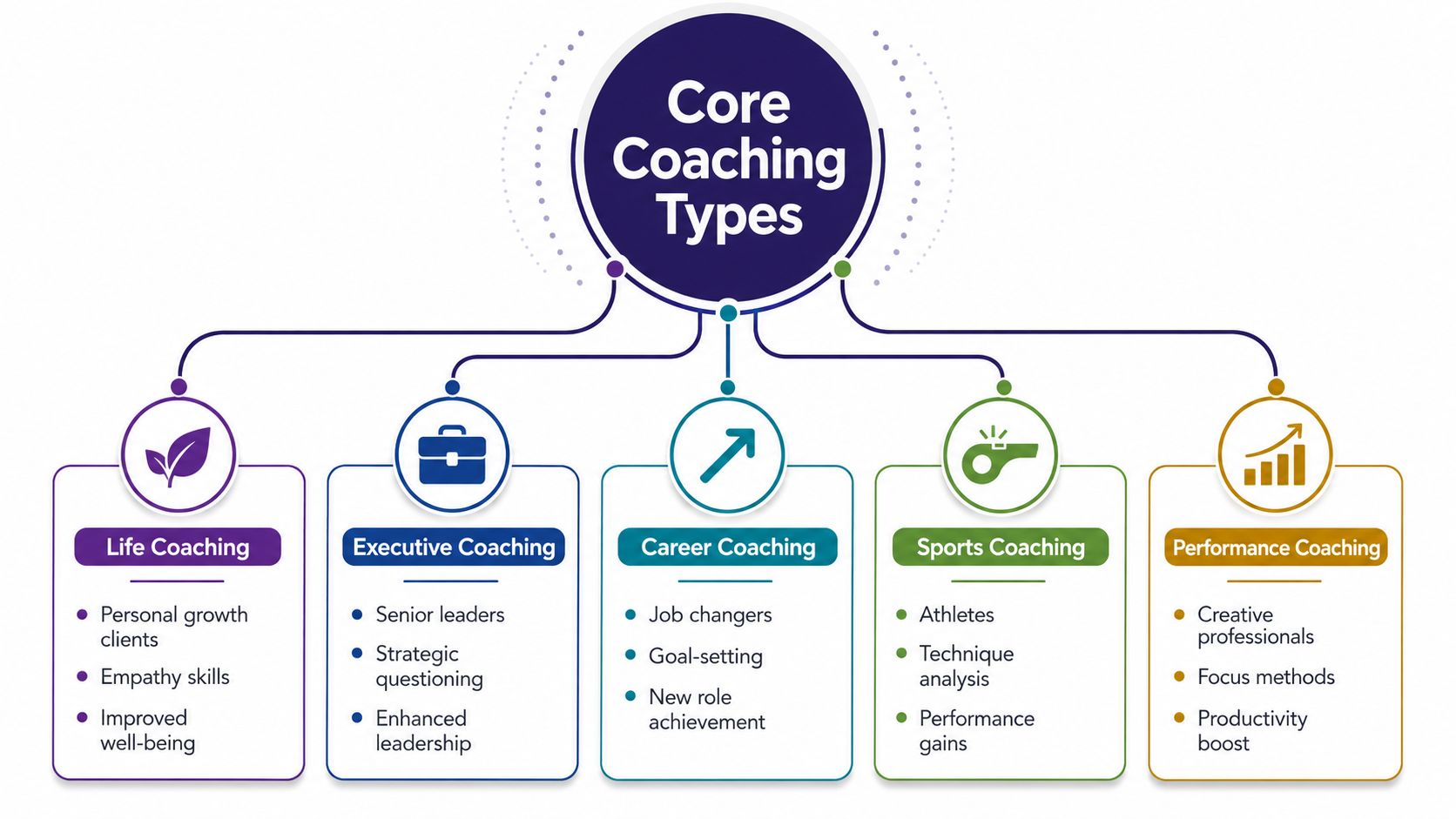
The word “coach” covers several different professions. A graduate who groups every coaching role together will miss the link between client needs, delivery style, and the coach's own background. A straightforward way to approach it is to compare the client, the outcome, and the methods used in each role.
Life, executive, and career coaching
Life coaching usually supports people who want better routines, clearer goals, or a steadier sense of balance. These clients may feel stuck rather than broken, and the coach often uses reflection, goal-setting, and accountability to keep progress visible. Executive coaching sits higher in the organisational structure, where the client may be a manager or senior leader who needs stronger decision-making, leadership presence, or confidence with stakeholders. Many executive coaches back this specialism with a formal change management qualification, since that is often exactly what senior clients are navigating.
Career coaching is often the most practical starting point for graduates and career changers. Clients may need help with CVs, job search strategy, interview preparation, and the confidence to step into a new role. If your interest lies in helping people make sense of work transitions, this can be a natural specialism. A useful resource if you are still deciding is a detailed analysis of coaching specialties.
Sports and performance coaching
Sports coaching is the model many people recognise first. The coach works with athletes, teams, or participants who want better technique, stronger discipline, and more reliable execution. Performance coaching is close in spirit, but the client may not be an athlete at all. Creative professionals, founders, and business teams often seek sharper focus, steadier habits, and better delivery under pressure.
Those differences matter because each specialism draws on a different mix of strengths. A life coach needs empathy and active listening. An executive coach needs sharper questioning and awareness of organisational priorities. A sports coach may need technical knowledge and on-field judgement, while a performance coach often needs a blend of behavioural insight and practical systems.
Good coaches do not try to be everything to everyone. They choose a lane, then build trust by showing they understand the client's world.
For readers comparing coach career opportunities, the clearest next step is to separate each role by client type, setting, and outcome rather than by title alone. That simple filter makes the field easier to read, especially for graduates and career changers who want to find a coaching path that fits their skills.
Examining Market Demand and Salary Ranges
A graduate who is weighing coach career opportunities often wants a simple question answered first, where is the demand coming from? In the UK, participation, workplace change, and the need for structured support all shape that demand. In England, 63.1% of adults were active in Sport England's 2023/24 Active Lives Survey as noted in the available evidence base. That matters beyond sports coaching, because active lifestyles connect to wellbeing, confidence, retention, and the wider support people seek when they want to improve their habits.
The broader coaching and mentoring market was estimated at about £1.9 billion in 2023 in the referenced market snapshot. That figure gives a useful signal, but it does not show how uneven the field can be. Coaching is spread across self-employed practitioners, employers, schools, clubs, and membership organisations, so income can vary a great deal by niche, reputation, and delivery model.
What demand looks like in practice
Demand is easiest to see through client need. Life and career coaching tend to attract people during periods of change, executive coaching fits organisations looking for leadership development, and sports coaching remains tied to clubs, schools, and community provision. Performance coaching is often chosen when people need accountability, structure, and steadier routines in settings where pressure is high.
A different pattern appears once you compare employed and freelance work. A salaried coach in a business, leisure centre, school, or professional body is usually paid for a defined set of duties. A self-employed coach may charge by session, package, or programme, which can make income feel more like a tide than a fixed wage, rising with referrals and repeat clients, then easing when demand slows.
For anyone comparing roles, this is a bit like comparing a classroom timetable with private tutoring. The subject may be similar, but the working pattern changes the whole experience.
Why accounting and data skills change the picture
Accounting and data training can make a coach easier to trust before a client ever sits down for a session. A coach who understands bookkeeping & VAT can invoice cleanly and keep records tidy. Someone with advanced payroll knowledge can support teams or set up a back-office process if they run a growing practice. Accounts assistant and final accounts training can also help coaches who want to work inside small businesses, training firms, or membership organisations where financial literacy carries real weight.
The practical benefit is simple. Better financial training reduces admin mistakes, and cleaner admin gives more time for delivery.
On the data side, business analyst and data analyst skills help coaches show what their work is doing. Instead of relying on broad impressions, they can track patterns, attendance, retention, or progression. That kind of evidence is especially useful in corporate or performance settings, where decision-makers often want to see clear results before they commit budget. For readers exploring how these skills connect with coaching practice, coaching for career development is one example of how training can support a more structured route into the field.
Mapping Qualifications and Training Pathways
Coaching is one of those careers where good intentions are not enough. People may like the idea of helping others, but employers and clients often want proof that you can organise your work, follow standards, and keep improving. That is why formal qualifications and CPD matter, especially if you want to work in organisations rather than only on your own.
Build the coaching side first
Most coaching routes begin with a recognised coaching qualification or a CPD-aligned development path. The point is not just to collect certificates. The point is to show that you understand boundaries, ethics, safeguarding, and how to structure a useful coaching conversation. If you are working with young people, club members, or private clients, those habits matter every day.
The same logic applies when you bring in specialist study. Accounting and data courses help because they strengthen the parts of a coaching business that clients never see at first glance, but still judge you on later. Clean records, accurate billing, and clear performance reporting all make your coaching practice feel more professional.
| Course | Duration | Certification | Outcome |
|---|---|---|---|
| Bookkeeping & VAT | Varies by provider | CPD-style or software-linked certification | Helps you manage invoices, VAT-aware records, and basic client finance systems |
| Advanced Payroll | Varies by provider | Professional training certificate | Supports payroll understanding for business-facing coaching or back-office roles |
| Accounts Assistant | Varies by provider | Job-ready accountancy certificate | Builds practical skills for admin, finance support, and practice operations |
| Final Accounts | Varies by provider | Assessment-based certificate | Improves confidence with year-end reporting and financial accuracy |
| Business Analyst | Varies by provider | Training certificate | Helps you map needs, define outcomes, and structure client or team projects |
| Data Analyst | Varies by provider | Training certificate | Strengthens reporting, metrics, and evidence-based coaching decisions |
If you want a structured learning route that links coaching with practical career development, the resource at coaching for career development is a sensible place to review how coaching fits into broader employability planning.
Why these courses help in real roles
A coach who understands bookkeeping can talk to small business owners without losing the thread when money comes up. A coach with payroll knowledge can be more credible when working with managers or HR teams. A coach with data training can interpret patterns instead of guessing what clients need next.
The more your work touches business, the more valuable it becomes to understand numbers as well as people.
That is especially true in corporate environments, where a coach may need to show that a programme improved engagement, strengthened consistency, or supported a team's goals. Accounting and data study do not replace coaching skill. They make the coaching skill easier to trust.
First Steps to Launch Your Coaching Practice
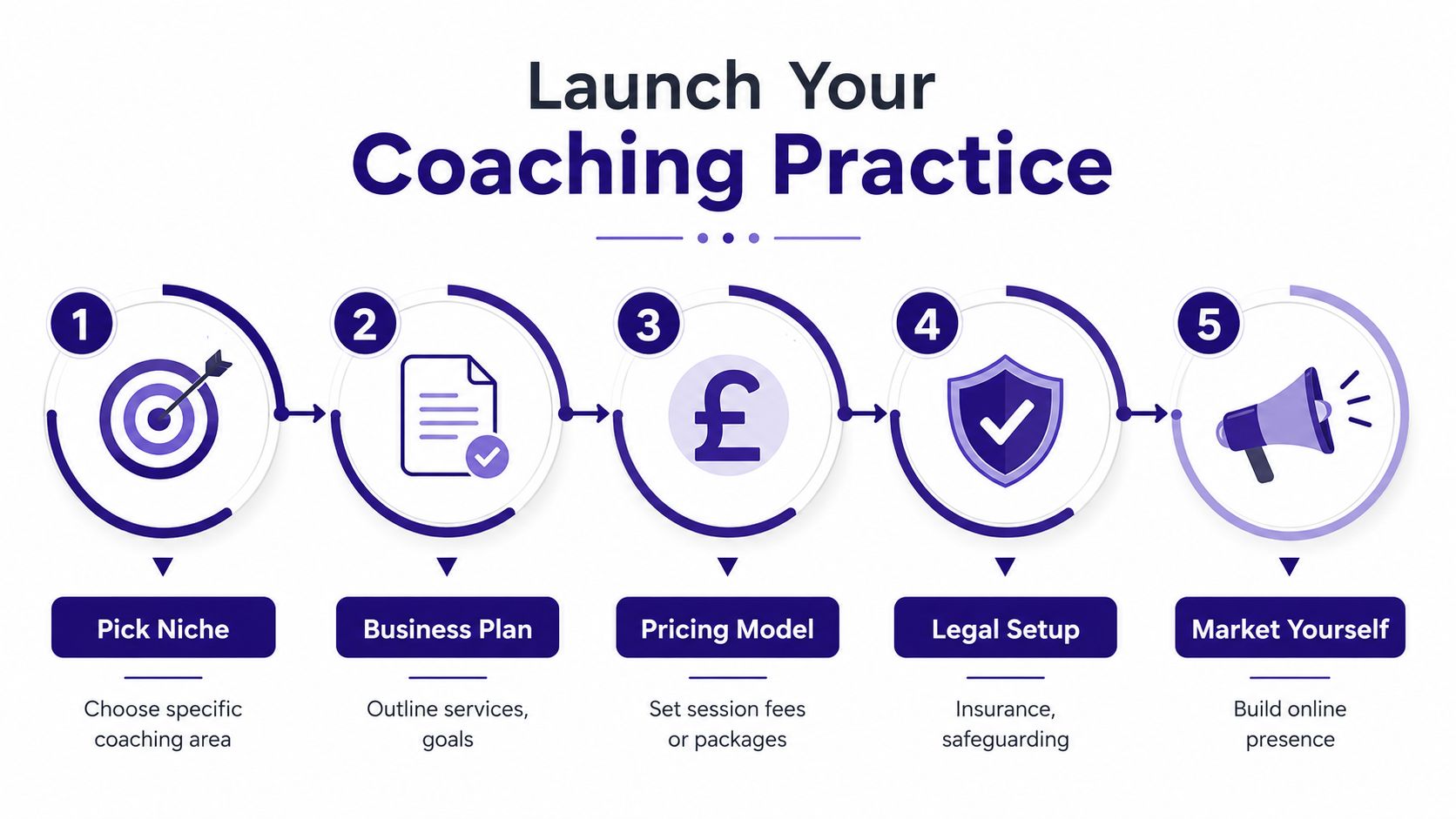
The easiest mistake is to start too broad. If you say you coach everyone, you usually attract no one in particular. A clearer niche makes it easier for clients to understand what you do, and it makes it easier for you to build simple offers, sensible pricing, and a reliable message.
The UK coaching and mentoring market was estimated at about £1.9 billion in 2023, but earnings can vary widely for self-employed practitioners as noted in the market reference. That makes planning important. If you want coaching to become a real income stream, you need a business model, not just enthusiasm.
Start with a niche and a simple offer
Pick one audience first. That might be graduates, junior managers, amateur athletes, or people trying to rebuild confidence after a career break. Then define a clear offer, such as one-to-one sessions, short programmes, or group support. This makes your messaging cleaner and helps clients know what they are buying.
Put the back office in place early
Use bookkeeping habits from day one. Keep invoices tidy, separate business and personal records, and make sure your pricing is easy to understand. If you expect to work with organisations, data tracking helps too, because you can show attendance, progress, and repeat engagement without scrambling through notes later.
Cover the legal and professional basics
Insurance and safeguarding should not be an afterthought. If you work with young people, vulnerable adults, or clients in regulated settings, you need the right checks and procedures. If you want a more structured CPD route for keeping your practice current, what CPD certification means is worth reading alongside your training plan.
Professional systems matter because clients trust what looks organised. That is where accounting and data skills support coaching in a very practical way. They help you build a practice that feels stable, not improvised.
Finding Employment and Niche Coaching Roles
Some people will build a freelance practice. Others will do better inside an organisation where the work is more structured. Both routes are valid, but they ask for different habits, different CVs, and different ways of proving value.
One niche that shows how the market is changing is the Data Coach role. A London-based posting lists Excel, SQL, Power BI, GitHub and Python as core application skills, and gives a salary range of £35,000 to £65,000 per year in the job listing reference. That is a good example of how coaching titles are starting to overlap with technical and analytical work.

Employed roles versus freelance work
Employed coaching roles often come with clearer expectations. You may work inside a school, membership body, leisure organisation, business, or sports environment. Hiring processes usually focus on skills, safeguarding awareness, communication, and evidence that you can work with people at scale.
Freelance coaching gives you more control, but you carry more responsibility. You need to find clients, manage admin, and keep your brand consistent. That is why a strong LinkedIn profile matters, especially if you are trying to look credible to recruiters, managers, or corporate buyers.
The skills that help you get noticed
A coach-adjacent role today may ask for more than listening and motivation. Project delivery, stakeholder management, data literacy, and the ability to coordinate across teams can matter just as much as subject knowledge. That is why business analysis and data analysis training can be useful for people aiming at internal roles.
The job search itself should be practical. Use a CV that shows outcomes, not just responsibilities. Keep your LinkedIn profile sharp, make it easy to understand what niche you serve, and reach out to people already working in the space you want.
Later in the process, your application needs to show fit. If you are aiming at a data-heavy coaching role, employer expectations will look closer to analytical hiring than to traditional mentoring. For a useful checklist on positioning yourself well online, LinkedIn profile optimisation is worth using as part of your preparation.
Conclusion and Next Steps
Coach career opportunities are broader than many people first expect. The field includes life, executive, career, sports, and performance work, but it also reaches into roles where coaching meets administration, finance, and analytics. If you can combine people skills with bookkeeping & VAT, advanced payroll, accounts assistant, final accounts, business analyst, or data analyst training, you are no longer relying on enthusiasm alone. You're building a profile that employers and clients can trust.
The clearest next move is to choose one niche and build a training path around it. Then add the practical skills that make your coaching more credible in the actual world. That combination is what turns coaching from an idea into a workable career.
Professional Careers Training offers accountancy and data training that can support a coaching career, especially if you want stronger systems, better reporting, and more confidence with business-facing work. If you're ready to connect coaching ambition with job-ready skills, visit Professional Careers Training and look at the courses that fit your next step.