Making Tax Digital for Income Tax is now live. The first sole traders and landlords became mandatory users on 6 April 2026, and HMRC started...
You’re probably in one of two places right now. You’ve either opened a CT600 for the first time and thought, “This looks far more technical than I expected,” or you’ve seen it mentioned in a job advert and realised it’s one of those practical skills employers assume you understand.
That reaction is normal. The CT600 looks dense because it sits at the point where bookkeeping, final accounts, tax rules, software, and professional judgement all meet. For a trainee accountant, accounts assistant, bookkeeper, payroll professional moving into broader finance work, or even a business analyst supporting finance teams, learning how it fits together is a real career step.
A good ct 600 guide doesn’t just tell you which box to fill in. It teaches you how company records turn into a Corporation Tax return, why deadlines matter, how software validates figures, and where higher-value work sits, especially once you move beyond basic data entry into review, reconciliation, and analysis.
Decoding the CT600 Your Essential First Look
It is 4:45 pm on a Friday. Your manager drops a Corporation Tax job on your desk, the client has sent a trial balance, the year-end accounts are nearly final, and someone asks whether the CT600 can go out today. That is often the moment a trainee first realises the return is not just another form. It is the point where accounting records, tax adjustments, software, and review discipline all have to line up.
The CT600 is the main return UK companies use to report taxable profits, losses, reliefs, and Corporation Tax information to HMRC. In practice, it works like the cover sheet to a wider tax file. The figures come from the accounting records, the statutory accounts, and the Corporation Tax computation, then the return pulls those strands together into a format HMRC can process.

Why the form carries weight
Corporation Tax has been part of the UK tax system since 1965, and HMRC still treats the company tax return as a central compliance document, as outlined in HMRC’s Company Tax Return guide. This history reveals a clear point. The CT600 is not an administrative extra added at the end of the accounts process. It is one of the main ways a company explains its tax position to HMRC.
For anyone starting out in accounts, that has a direct career implication. Employers do not just want someone who can post entries. They want someone who understands how those entries flow through to tax, review points, and filing output. The logic behind double entry bookkeeping training feeds directly into CT600 work, because weak postings, unreconciled balances, or misclassified costs usually become tax problems later.
A good trainee learns to trace the route from source records to final submission. If you need a refresher on the accounts side before tax adjustments begin, this guide on how to prepare financial statements is a useful starting point.
The digital side now matters just as much
The CT600 is filed online, and that changes the job. You are no longer dealing only with tax knowledge on paper. You also need to work comfortably with software, tagged accounts, validation checks, and submission routines.
That shift is one reason CT600 experience stands out on a CV. A trainee who can review bookkeeping, understand the accounts, follow the computation, and handle the filing process brings more value than someone limited to basic data entry. In a finance team, that often marks the difference between an entry-level processing role and work that involves review, explanation, and client or manager trust.
Practical rule: Treat the CT600 as the final product of a chain. If the bookkeeping is accurate, the accounts are clean, and the tax adjustments are supported, the return becomes far easier to complete with confidence.
What beginners often misunderstand
A few early misconceptions cause trouble.
- They see the CT600 as a form-filling task. In reality, it is the output of good records, sound accounts preparation, and correct tax adjustments.
- They assume tax work starts after the accounts are finished. In practice, tax thinking starts much earlier, while reviewing ledgers, provisions, accruals, and classifications.
- They treat CT600 knowledge as niche. Employers often see it as evidence that you can handle real compliance work under deadlines.
That is why learning the CT600 has value beyond one filing. It helps you read accounts more critically, ask better questions, and understand how finance information is turned into a formal submission. For aspiring accountants, bookkeepers, and analysts, that is the kind of practical skill Professional Careers Training is designed to build, because technical confidence is what moves you from trainee support work into broader responsibility.
Understanding Your Core Corporation Tax Obligations
A trainee’s first CT600 often goes wrong before the return is even opened. The problem is rarely the software. It is more often a missed deadline, the wrong period, or accounts that do not tie back to the tax computation.
Start with the obligations, because they set the timetable for everything else.
Who has to file
An active UK limited company has Corporation Tax responsibilities whether it made a profit, broke even, or made a loss. A company can still need to submit a CT600 even when there is no Corporation Tax to pay.
That point catches new starters again and again. They see a nil liability and assume the compliance work disappears. HMRC does not work that way. The return, accounts, and tax computation still need to match the company’s position for the period.
For a trainee accountant, this is one of the first signs that tax work is about discipline as much as calculation. Good finance staff do not wait for a liability figure to tell them whether a filing matters.
What period the return covers
The CT600 relates to an accounting period for Corporation Tax. In practice, that means you need to pin down the exact period HMRC is taxing before you do anything else.
A simple way to picture it is to treat the accounting period as the container and the tax computation as the contents. If the container is the wrong size, nothing inside it will fit properly. Dates on the accounts, computations, and return all need to line up.
If you are still building confidence with the accounts side, this guide on how to prepare financial statements is a useful refresher before you start making tax adjustments.
The deadline many trainees confuse
Payment and filing follow different clocks. One date tells you when the tax must be paid. The other tells you when the return must be submitted.
For most companies, Corporation Tax is due 9 months and 1 day after the end of the accounting period, and the CT600 must be filed within 12 months of the end of that period, according to HMRC’s guidance on filing your Company Tax Return.
This gap is significant. New trainees often work backwards from the filing date and miss the earlier payment deadline. In practice, that can lead to interest, pressure from managers or clients, and a rushed year-end process that was avoidable.
What the return is built from
A reliable CT600 starts with orderly finance records. You need the underlying pieces to agree before the tax work can stand up.
That normally includes:
- Accurate bookkeeping records that support income, costs, and balance sheet figures.
- Final accounts prepared correctly, because the tax return begins with those numbers.
- Tax adjustments for items where accounting rules and tax rules differ.
- Supporting schedules for claims and disclosures such as capital allowances, R&D, or director-related items.
This is why CT600 work is so useful for career development. It pulls together bookkeeping, year-end accounts, reconciliations, and tax logic in one assignment. When an employer sees that you can follow that chain properly, they see someone ready for more than data entry.
Filing problems often start with incomplete records, weak reconciliations, or missed dates, not with difficult tax law.
Why this matters for job-ready skills
Understanding obligations makes you more useful in a finance team. You stop being the person who only enters figures and start becoming the person who checks whether the whole submission is ready.
That shift matters. An accounts trainee who can ask for the final accounts, confirm the period end, spot a missing computation, and question whether supplementary pages are needed is already working at a higher level. The same applies to bookkeepers and analysts who support finance teams. If you understand the compliance cycle behind the numbers, your work becomes more accurate, more commercially aware, and easier for senior staff to trust.
This is one reason Professional Careers Training treats CT600 knowledge as practical job preparation, not just exam theory. Learning how obligations fit together helps you perform better in trainee roles now and build toward broader tax, accounts, and finance responsibilities later.
A Guided Tour of the Main CT600 Form
Once the basics are clear, the main form starts to make sense. Don’t read it as a wall of boxes. Read it as a sequence. Company details first. Profit figures next. Tax adjustments after that. Then the declaration and submission details.
That flow is what makes the form manageable.
Start with identity and period details
The first area is administrative, but it’s not trivial. You’ll confirm the company’s name, registration details, tax reference, and the accounting period covered by the return.
If those dates are wrong, everything that follows is at risk. Tax rates, filing logic, and attached accounts all depend on this starting point. Trainees often rush this part because it looks simple. Don’t. A technically perfect tax computation can still fail if the return period doesn’t match the accounts and computations.
Follow the journey from accounts to taxable profit
The middle of the form is where the core work happens. This is the heart of any ct 600 guide because it’s where raw accounting data becomes a tax figure.
A simple way to think about it is this:
- Begin with income and accounting profit from the company records and final accounts.
- Adjust for tax rules such as disallowed expenses or capital allowances.
- Apply relevant reliefs or deductions where available.
- Arrive at taxable profits and the Corporation Tax due.
The CT600 asks for structured figures rather than a narrative. That means your bookkeeping and final accounts work must already be organised. If the trial balance is messy, the tax return becomes slow and error-prone.
Key boxes that matter most
Some boxes carry more weight than others because they drive the tax outcome. The official CT600 V3 guidance highlights this clearly. The CT600 V3 (2026) specifications support automated validation of key calculations, including final taxable profits in Box 55. That figure determines liability using FY2026 rates of 19% for profits under £50,000 or 25% above £250,000, and incorrect associated company counts can inflate tax by up to 6% on marginal bands, according to HMRC’s CT600 technical specifications and artefacts.
That single point tells you a lot about how to approach the form.
- Box 3 matters because it feeds the calculation of profits before deductions.
- Box 51 matters where marginal relief applies.
- Box 55 matters because it lands on final taxable profits.
You don’t need to memorise every box number at the beginning. You do need to understand the chain linking the accounts to those boxes.
Review habit: When a final tax number looks odd, don’t start by doubting the rate. Trace the journey back through profit adjustments, reliefs, and associated company details.
Associated companies catch people out
This is one area where even capable trainees can struggle. The associated company position affects thresholds and can change the tax result. If you miss it, the company may pay too much or too little.
Strong analytical habits are beneficial. Don’t just copy the prior year. Ask whether the company group has changed, whether there are common ownership links, and whether the current year facts still support the same treatment.
For a business analyst or data analyst moving into finance work, this is a useful reminder that structure data matters. Entity relationships aren’t abstract. They affect real tax outcomes.
Main form sections at a glance
| Main area | What it captures | Why it matters |
|---|---|---|
| Company information | Identity details and accounting period | Sets the legal and reporting frame |
| Tax calculation | Profits, deductions, reliefs, taxable result | Drives the liability |
| Additional information | Specific disclosures HMRC requires | Supports compliance and accuracy |
| Payment details | Corporation Tax payment position | Connects return to settlement |
| Declaration | Confirmation the return is accurate | Final sign-off responsibility |
What software does and what it doesn’t do
Modern software can validate calculations and flag inconsistencies, which is helpful. But software doesn’t replace judgement. It won’t always know whether a cost was correctly classified in the bookkeeping. It won’t always understand the commercial reality behind a director transaction. It won’t fix weak reconciliations.
That’s why final accounts training is such a strong foundation for CT600 work. If you understand accruals, prepayments, depreciation, fixed asset treatment, payroll postings, and ledger review, the form becomes far less intimidating.
A confident preparer sees the CT600 as the end product of disciplined accounting work, not as an isolated form.
Navigating Key Supplementary Pages and Schedules
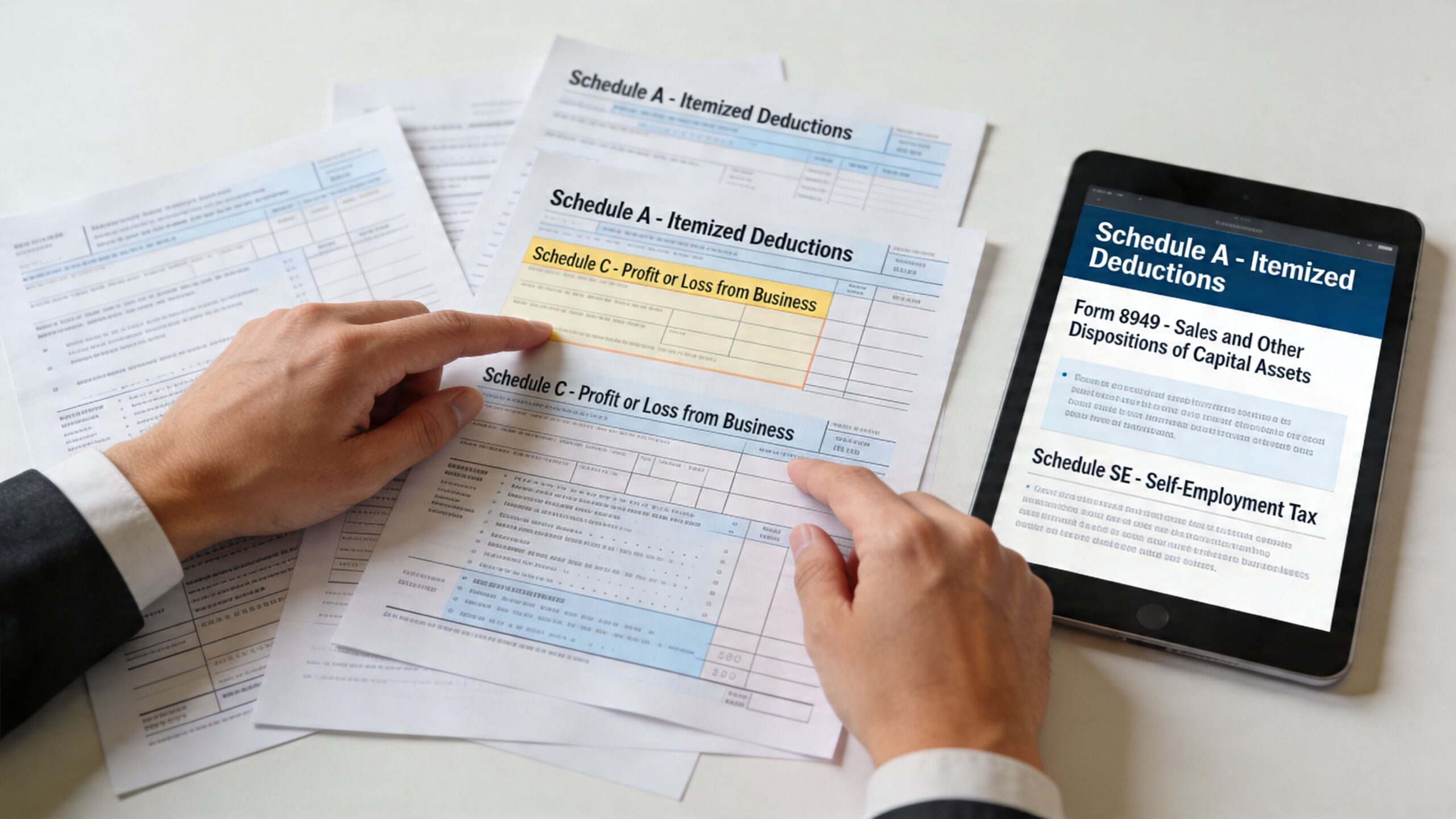
Many new trainees feel comfortable once they understand the main CT600, then lose confidence the moment they see supplementary pages. That’s normal. These extra schedules are where company-specific issues appear, and they often involve more judgement.
The good news is that they also create some of the most valuable learning opportunities.
CT600A and director-related issues
CT600A is commonly relevant where a close company has made loans or advances to participators, often involving directors or shareholders. This area matters because director-owned businesses frequently mix personal and company finances more than they should.
If you’ve worked in bookkeeping or accounts assistant roles, you’ll know the warning signs. A director’s loan account doesn’t reconcile. Personal spending appears in company records. Entries have been posted to suspense and left there. These are not just bookkeeping tidying points. They can change the tax position and determine whether a supplementary page is needed.
A careful preparer doesn’t wait until tax season to deal with these issues. They review ledgers during the year, ask questions early, and build a proper audit trail.
CT600L and the value of R&D knowledge
CT600L is one of the most commercially valuable supplementary pages because it relates to R&D tax relief claims. Supplementary schedules like CT600L for R&D tax relief enable UK SMEs to reclaim up to 186% enhanced deductions. HMRC’s 2025 statistics show £5.8bn was claimed, but 25% of claims were rejected for insufficient technical narrative, as summarised in this CT600 overview with R&D context.
That rejection point is where many trainees learn an important lesson. A claim doesn’t succeed just because expenditure exists. The technical narrative matters. The company needs to explain the scientific or technological uncertainty and how work was carried out to resolve it.
For trainees, this creates a clear career opportunity:
- Bookkeepers can improve the quality of cost capture and coding for qualifying projects.
- Accounts assistants can support reconciliations between ledger data and claim schedules.
- Final accounts trainees can understand how the claim links back to profits and tax computations.
- Business analysts and data analysts can help structure project data, cost tracking, and evidence packs.
A strong R&D claim is part finance exercise and part evidence exercise. If the numbers are right but the explanation is weak, the claim can still fail.
A useful refresher sits below if you want a visual explanation before going further.
CT600B and hybrid mismatch disclosures
CT600B is more specialist, but that’s exactly why it matters for career growth. It becomes relevant in more complex structures, particularly where multinational groups or international investors are involved.
The compliance gap here is real. Newer disclosure requirements around hybrid mismatch arrangements are not always explained in trainee-friendly language. If you’re aiming to work in a larger practice, in-house tax team, or global finance environment, basic awareness is no longer enough. You need to recognise when a structure may trigger deeper review.
How supplementary pages change your career value
There’s a big difference between someone who can copy figures into a main form and someone who can identify the need for an additional schedule, gather the evidence, and explain the tax logic.
That difference often marks the shift from junior processing work to more trusted responsibilities.
Here’s where these pages tend to strengthen your profile:
| Supplementary page | Typical issue | Skill it develops |
|---|---|---|
| CT600A | Director or participator loans | Ledger review and compliance judgement |
| CT600L | R&D relief claims | Evidence gathering and advisory thinking |
| CT600B | Hybrid mismatch disclosures | International awareness and technical analysis |
If your long-term goal includes tax advisory, finance business partnering, or data-led compliance work, these schedules are worth studying carefully.
Your Step-by-Step Guide to Filing the CT600
By the time you’re ready to file, most of the technical work should already be done. Filing is not where accuracy begins. Filing is where prepared information gets packaged correctly and submitted without errors.
Step 1 Get the accounts and computations ready
Start with the statutory accounts and the tax computation. Make sure the figures reconcile to the underlying bookkeeping and final accounts work. If something doesn’t tie, stop there and fix it.
A surprising number of filing problems begin because someone assumes software will “sort it out”. It won’t. Software can validate structure. It can’t repair poor accounting records.
If you need a refresher on how the accounts should look before tax filing starts, this guide on preparing financial statements is a useful starting point.
Step 2 Choose suitable commercial software
From the 2026 change covered earlier, commercial software becomes central to CT600 filing. In practice, many trainees encounter tools connected to Sage, Xero, or QuickBooks workflows, sometimes alongside specialist tax software used by firms.
When comparing options, focus on practical points:
- Compatibility with your accounts process. Does it fit the way the year-end figures are produced?
- Support for iXBRL attachments. That matters for digital readability and submission.
- Validation features. Good software highlights missing fields and inconsistent data.
- Ease of review. A clear audit trail matters when a senior reviews your work.
Step 3 Enter data carefully and review mapping
Input the company information, accounting period details, profit figures, tax adjustments, and any supplementary page data. Be methodical. Don’t jump around the form.
At this stage, review mapping between the accounts, tax computation, and return. If income, expenses, capital allowances, or relief figures have been pulled across incorrectly, the error can flow all the way to submission.
Step 4 Attach the required files
A complete Corporation Tax submission normally involves more than the CT600 itself. The accounts and computations must also be attached in the required digital format.
Keep filenames clear, final versions controlled, and supporting documents stored in a way another reviewer can follow. That sounds basic, but file confusion wastes time and creates avoidable stress.
Submitters who stay calm on filing day usually did one thing well earlier. They organised the file logically before opening the software.
Step 5 Run validations before submission
Use the software’s checks properly. Don’t treat validation warnings as an irritation. Treat them as a free review tool.
Look closely at:
- Dates
- Company identifiers
- Profit figures
- Supplementary schedules
- Attachments
- Declaration details
Then review the return as a human, not just as a software user. Does the end result make commercial sense for the company you’re filing for?
Step 6 Submit and keep evidence
After submission, keep the filing acknowledgement, final accounts, tax computation, and working papers together. If the return is queried later, a clean file will save hours.
That habit matters for more than compliance. It’s the kind of disciplined working style that helps trainees progress quickly. Employers trust people who can not only complete a filing, but also leave behind a tidy, reviewable record.
Avoiding Common CT600 Filing Mistakes
It is 4:30 pm on filing day. The software shows a clean submission, but your manager spots one detail the return does not reflect: the accounting period in the computation does not match the dates in the accounts. Nothing is wrong with the typing. The problem is that the return does not tell one consistent story.
That is how many CT600 errors arise. They are rarely dramatic. They come from small breaks between bookkeeping, accounts, tax calculations, and disclosure. For a trainee, learning to spot those breaks is more than good compliance work. It is one of the clearest signs that you are progressing from data entry to professional judgement.
Mistakes that appear again and again
Some errors start with incomplete records. Others come from treating the form as a box-ticking exercise instead of the final summary of the company’s year. Watch closely for these recurring problems:
- Wrong accounting period dates. The accounts, tax computation, and return need to match exactly.
- Missing supplementary pages. Some companies need more than the main CT600 form.
- Incorrect associated company treatment. This can change thresholds and the tax calculation.
- Accounts and computations missing or prepared in the wrong format. Without them, the submission is incomplete.
- Director’s loan accounts reviewed too late. Ledger mistakes can turn into disclosure issues and tax adjustments.
- Specialist claims supported poorly. R&D and other reliefs need clear technical evidence.
- Hybrid mismatch disclosures overlooked. Cross-border structures can trigger extra reporting requirements.
Hybrid mismatch disclosures deserve special care. HMRC introduced the CT600B supplementary page for these rules, and companies with more complex funding or international arrangements may need extra attention to complete it correctly.
This is significant for trainees at firms with international clients. A structure can look ordinary in the trial balance while still creating a disclosure issue once you examine who paid, who deducted, and which countries are involved.
Why these mistakes happen
The cause is often one of three things:
- The preparer started with incomplete bookkeeping.
- The preparer concentrated on entering figures, rather than checking what happened in the business.
- Technical review began too late, after assumptions had already shaped the return.
A CT600 works like the final exam paper for the year-end file. If the learning and working papers underneath are weak, the mistakes show up at the end. Good preparers build the return from reconciled records, clear tax adjustments, and documented reasoning.
If a return feels rushed, review the basics again.
CT600 Pre-Submission Checklist
| Check Item | Verification Step | Done? |
|---|---|---|
| Company details | Match company name, UTR, and registration details to source records | ☐ |
| Accounting period | Confirm dates agree across accounts, computations, and CT600 | ☐ |
| Main profit figures | Trace taxable profit back to final accounts and computation | ☐ |
| Associated companies | Recheck current year position and any group changes | ☐ |
| Supplementary pages | Confirm whether CT600A, CT600L, CT600B, or others are required | ☐ |
| Director balances | Review loan accounts and unusual ledger postings | ☐ |
| Attachments | Ensure accounts and computations are complete and in the right format | ☐ |
| Technical claims | Confirm supporting narrative and evidence are ready | ☐ |
| Validation checks | Run software checks and clear any warnings properly | ☐ |
| Final review | Sense-check the tax outcome against the company’s actual year | ☐ |
The habit that reduces risk most
The strongest safeguard is a review mindset. Ask whether another accountant could follow the working papers, understand the assumptions, and defend the filing if HMRC raised questions.
That standard changes your approach. You document judgments. You reconcile figures properly. You raise uncertainties earlier, while there is still time to fix them. Those are the habits employers notice when they decide who is ready for more responsibility.
If you want to build those habits in a structured way, taxation courses that connect technical rules to real accounting work can help you move from preparing returns mechanically to understanding why each figure belongs there.
From Trainee to Tax Pro with Professional Careers Training
Learning the CT600 well changes how you see accounting work. It stops being a series of disconnected tasks and starts to look like one joined-up process. Bookkeeping feeds final accounts. Final accounts feed tax computations. Tax computations feed the return. Software supports the process, but judgement holds it together.
That’s why CT600 knowledge is valuable across several career paths. If you’re building foundations in bookkeeping & VAT, you need clean records and correct treatment of transactions. If you’re studying advanced payroll, you need to understand how payroll data affects year-end accounts and company deductions. If you’re working towards an accounts assistant role, you need confidence in reconciliations, ledgers, and period-end routines. If your focus is final accounts, the CT600 is where those year-end figures become a compliance outcome. And if you’re moving into business analyst or data analyst work, understanding tax reporting logic helps you support finance systems, reporting quality, and entity-level analysis with far more credibility.
For anyone planning a long-term finance career, tax isn’t a side topic. It’s part of professional fluency. A solid grounding in compliance also creates a route into more specialist work, especially in areas like R&D claims, director loan issues, and international disclosures.
If you want structured learning after this ct 600 guide, explore taxation courses and training resources. They help turn theory into practical workflow, which is what employers test in interviews and on the job.
The strongest trainees aren’t the ones who memorise the most rules. They’re the ones who can take a set of records, ask the right questions, prepare the accounts carefully, and complete a filing with confidence.
If you want practical, job-ready finance training, Professional Careers Training offers support that goes beyond theory. You can learn with 1-to-1 guidance from ACCA-qualified trainers, build hands-on skills in Sage, Xero, and QuickBooks, and connect CT600 knowledge to bookkeeping & VAT, advanced payroll, accounts assistant, final accounts, business analyst, and data analyst pathways. Their flexible timetable, software support, and career help with CV preparation, LinkedIn optimisation, and job hunting make them a strong option if you’re ready to turn tax knowledge into employable skills.